
Session
Achieving End-to-End Observability in a Multicloud World: Architecture, Patterns, and Best Practices
As enterprises expand across AWS, Azure, GCP, Oracle Cloud, and private cloud platforms, observability becomes exponentially harder and more critical. This session provides a practical roadmap for building unified observability in multicloud environments. Attendees will learn architectural patterns, distributed tracing strategies, cross-cloud log analytics, metrics standardization, and AI-driven incident detection. We will explore vendor-neutral tools (OpenTelemetry, Prometheus, Grafana), cloud-native services, and reference architectures that ensure reliability, performance, and security across heterogeneous cloud ecosystems.
Multicloud adoption is accelerating, driven by the need for resiliency, cost optimization, workload portability, and regulatory flexibility. But with this shift comes a new operational challenge i.e. visibility fragmentation. Each cloud provides its own observability ecosystem, CloudWatch, Stackdriver, Azure Monitor, Oracle Logging, and more, thus creating silos that make troubleshooting slow, multi-step, and error-prone.
The session will addresses the central question: How do we achieve consistent, real-time observability across multiple clouds?
The talk will introduce a vendor-neutral observability blueprint built on open standards such as OpenTelemetry, Prometheus, and OpenMetrics, enabling consistent instrumentation across clouds. We will discuss architecture patterns for distributing traces, correlating logs, unifying metrics, and integrating cloud-specific telemetry into a single, coherent view. Participants will learn how to design cross-cloud telemetry pipelines, evaluate ingestion strategies, and leverage AI/ML for anomaly detection and performance optimization.
The session will include reference architectures, real-world use cases, and examples of multicloud observability maturity, from basic log aggregation to predictive analytics and self-healing systems. We also cover governance, data retention strategies, cost considerations, and common pitfalls in multicloud observability deployments.
Attendees will leave with a clear understanding of how to build a scalable, resilient observability platform that spans AWS, Azure, GCP, Oracle Cloud, and on-premise systems.
Key Takeaways for Attendees:
1. Understand why observability becomes harder and more essential in multicloud environments.
2. Learn open standards and tools that enable cross-cloud instrumentation (OpenTelemetry, Prometheus, Grafana, Elastic).
3. Explore architectural patterns for unified logging, distributed tracing, and metrics correlation.
4. Learn to integrate cloud-native telemetry systems (CloudWatch, Azure Monitor, Stackdriver) into a single pane of glass.
5. Understand governance, cost control, and data residency considerations for multicloud observability.
6. See real-world multicloud observability designs and maturity models.
The views expressed here are my own and do not necessarily reflect the official policy or position of my employer
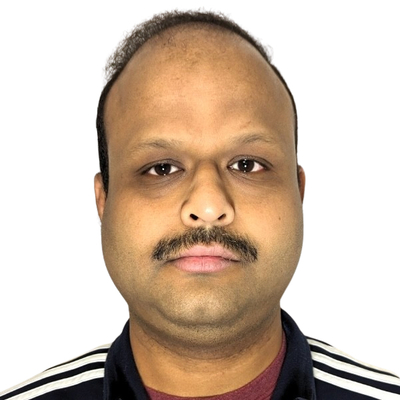
Priya Ranjan Sahoo
Principal Engineer, Oracle America Inc.
San Francisco, California, United States
Links
Please note that Sessionize is not responsible for the accuracy or validity of the data provided by speakers. If you suspect this profile to be fake or spam, please let us know.
Jump to top