
Session
Secure Your Coding Agent Like It’s Malware
Autonomous coding agents resemble powerful malware: they can write, execute, and modify code, access secrets, and call services—often opaquely.
Building on pioneering work from a year ago on safely applying AI to legacy codebases, this session extends that proven approach to the even riskier setting of autonomous agents. The agent itself is treated as untrusted and clamped down with tightly hardened containers and strict network firewalls that isolate execution, constrain file and tool access, and restrict communication to a minimal allowlist, drastically limiting blast radius and data-exfiltration paths.
The architecture mitigates core risks such as prompt injection, model misuse, and supply-chain abuse, while still enabling meaningful automation for real-world systems. Finally, the session outlines upcoming layers—fine-grained policy engines, runtime behavior monitoring, and end-to-end supply-chain verification—to build a robust, defense-in-depth stack for secure coding agents.
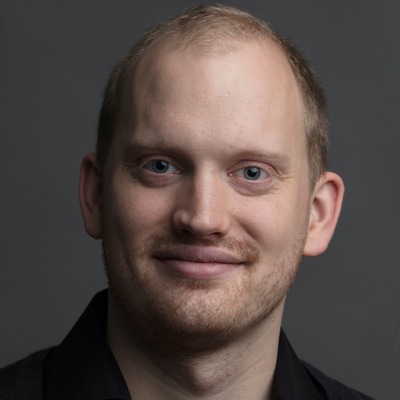
Richard Groß
Head of Software Archaeology
Frankfurt am Main, Germany
Links
Please note that Sessionize is not responsible for the accuracy or validity of the data provided by speakers. If you suspect this profile to be fake or spam, please let us know.
Jump to top