
Session
Building Voice Agents with MCP: Architecture Patterns for Contextual Voice Applications
Voice agents have a 200-millisecond problem. That's the threshold where conversation feels natural versus broken. When you add Model Context Protocol (MCP) to retrieve dynamic context, you're injecting network calls and API fetches into the most latency-sensitive path in your application. Standard MCP patterns designed for chat don't work when users can hear the difference between 180ms and 250ms response times.
The voice pipeline latency budget breaks down as: Speech-to-Text (80ms) → Context via MCP (20ms target) → LLM (80ms) → Text-to-Speech (60ms) = 240ms total. You're already over budget before accounting for multiple MCP servers, network hops, or the fact that your context might span three different APIs. This talk explores architecture patterns for voice + MCP when milliseconds matter.
We'll dive into parallel context fetching i.e. querying 5 MCP servers simultaneously and merging results in under 30ms. Which servers do you prioritize when you can't wait for all? Do you respond with partial context or wait? The architecture needs to handle streaming context updates: what happens when context arrives mid-sentence? Do you interrupt the response, buffer it, or incorporate it in the next turn? These patterns are critical for real-time context synchronization.
Latency optimization reveals hidden costs that kill your budget. TLS handshakes alone can cost 40ms. We'll explore connection pooling strategies, local sidecar versus remote MCP servers, and gRPC versus HTTP tradeoffs for internal communication. Voice-specific MCP servers look different too—telephony integration, speaker identification as context, and audio quality metrics all need special handling. Building MCP servers that respond in under 15ms requires specific patterns.
Graceful degradation becomes essential when an MCP server times out at 200ms. Do you wait, respond without context, or acknowledge the gap to the user? Circuit breakers for unreliable context sources prevent cascading failures. Common failure modes include the slow context cascade where one 800ms MCP server blocks the entire response, late context that arrives after the LLM has already generated a response with stale data, circular dependencies between context sources, and connection pool exhaustion at scale.
You'll leave with a reference architecture including detailed latency budgets, MCP server templates optimized for real-time applications, parallel context fetching code patterns, monitoring dashboards tracking P50/P95/P99 latency per server, and a decision matrix for when to use MCP versus direct API calls. This talk addresses the architectural challenge where "add more context" conflicts with "respond in real-time" and shows the patterns that make both possible.
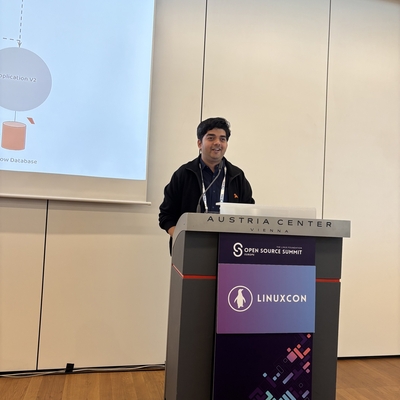
Animesh Pathak
DevRel Engineer, Harness Inc | CNCG Noida Organiser
Bengaluru, India
Links
Please note that Sessionize is not responsible for the accuracy or validity of the data provided by speakers. If you suspect this profile to be fake or spam, please let us know.
Jump to top