
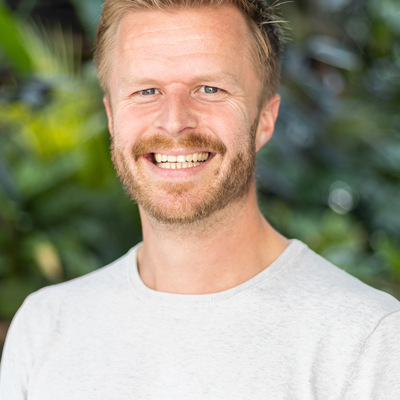
Sander van Surksum
Web Performance Consultant
Amsterdam, The Netherlands
Actions
Sander is an international expert in website performance optimisation, and the founder of Iron/Out. Over the years, he has helped numerous companies improve the speed of their websites and make their users more happy.
As a professional in this field for 20 years, he has extensive knowledge and experience. Besides being blessed to have an incredibly inspiring wife, he is also a devoted father of four daughters.
Area of Expertise
Topics
All about Core Web Vitals: INP (Interaction to Next Paint)
This session offers a comprehensive deep dive into the Core Web Vital metric: Interaction to Next Paint (INP). We'll break down what INP is, how to measure it, and why it matters for your website. Learn how improving your INP can improve user experience, drive more engagement, and ultimately increase revenue. We'll also share real-world examples of companies that have successfully improved their INP scores and the benefits they've seen. This session is packed with practical tips and insights to help you make the most of your web performance. Don't miss out on this opportunity to boost your online success!
Winning the TTFB fight as a Frontend Developer
Every frontend developer knows the usual performance playbook: compress images, preload the hero, remove render-blocking JavaScript, reduce bundle size. Those optimisations matter, but they stop making a meaningful difference when the server itself needs more than a second to respond. At that point, the bottleneck has moved somewhere deeper in the stack.
This talk is about what happens after you’ve exhausted the obvious wins. I’ll break down where TTFB actually comes from and how to improve it at the source. That means looking beyond frontend payloads into framework-level caching with use cache and ISR, edge rendering strategies, HTTP/3, 103 Early Hints, and using Server-Timing to measure what’s really happening instead of relying on assumptions. But reducing TTFB is only part of the story. In many cases, the better approach is making sure the user never experiences the delay in the first place. We’ll explore how Speculation Rules allow browsers to prefetch or fully prerender pages before navigation happens, turning what would normally be a 1.2-second wait into a transition that feels instand. Alongside that, we’ll look at A/B test data from live e-commerce environments showing the impact these techniques can have on user behaviour and conversion.
We’ll also dive into the back-forward cache, one of the fastest navigation mechanisms available in modern browsers. When it works, pages are restored instantly from memory. Expect live coding and showing real production data.
Vibe coding made the web sick. Now it can fix it.
Since AI coding tools went mainstream, the web has been gaining weight fast. Research shows the average site's JavaScript has grown three times faster than before. The reason is simple: AI writes code that looks right, not code that runs fast. And here's the irony, most AI crawlers can't even read the heavy sites that AI built, because they don't run JavaScript.
The good news: the same AI agents that caused this can help fix it. In 2025, Chrome DevTools MCP gave AI agents the ability to actually measure what they build. Combined with Agent Skills, we can turn an AI agent into something closer to a careful performance engineer.
In this talk we look at three things:
- The data: what really happened to the web after November 2022
- The cause: why AI writes slow code, and why it couldn't see what it shipped
- The fix: a working protocol you can use, with Chrome DevTools MCP and a performance skill you can install today
You leave with a ready-to-use performance skill, real before/after numbers, and a clear way to make AI build faster sites instead of heavier ones.
Target audience: Frontend developers, performance engineers, tech leads working with AI coding tools.
Level: Intermediate. You should know what LCP and bundle size mean. You don't need to know what MCP or Agent Skills are, we'll cover that.
Preferred duration: 30 minutes. Can be extended to 40 with more case studies, or condensed to 20.
Technical requirements: Projector, audio, stable wifi for live demo. A recorded backup of the demo is included.
Languages: English. Dutch on request.
Sources: Based on research by Ethan Gardner (HTTPArchive analysis), Addy Osmani (Web Performance Engineering in the Age of AI, O'Reilly 2026), and Vercel's AI crawler study.
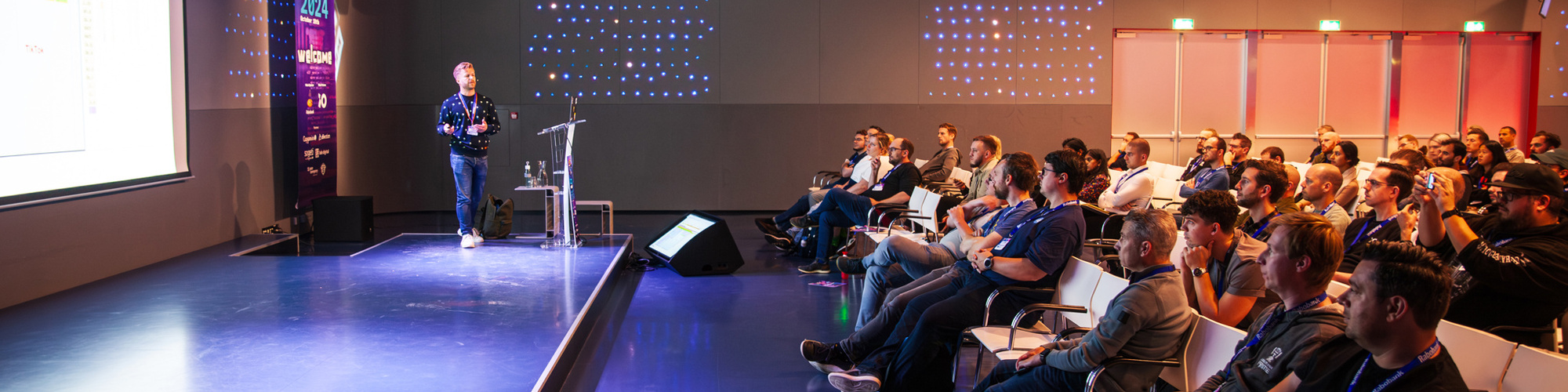
Frontmania 2024 Sessionize Event
Please note that Sessionize is not responsible for the accuracy or validity of the data provided by speakers. If you suspect this profile to be fake or spam, please let us know.
Jump to top