
Shenandoah Chefalo
Trauma-informed leadership for human-centered workplaces, systems, and communities.
Traverse City, Michigan, United States
Actions
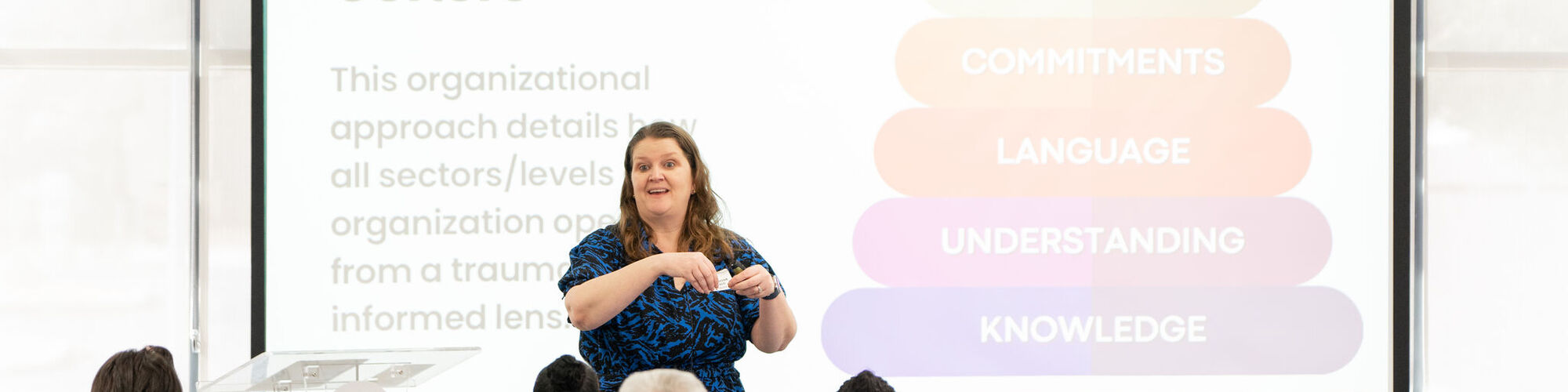
Shenandoah Chefalo is a speaker, author, and trauma-informed workplace consultant who helps organizations build more human-centered systems of care, leadership, and accountability.
As the author of Garbage Bag Suitcase and creator of the Best Bunny children’s book series, Shenandoah brings both lived experience and professional expertise to conversations about foster care, trauma, resilience, organizational culture, workforce burnout, and meaningful systems change. Her work bridges personal story, neuroscience, leadership practice, and implementation strategy to help audiences move beyond awareness and into action.
Through Chefalo Consulting, Shenandoah works with public agencies, courts, schools, healthcare systems, nonprofits, CASA/GAL programs, child welfare organizations, treatment court professionals, and human-service agencies to move trauma-informed principles from concept to daily practice. She has provided speaking, training, and implementation support for state and county CASA organizations, child welfare and foster care audiences, healthcare and human-service systems, education leaders, public-sector teams, and organizations seeking to strengthen workplace culture and workforce wellbeing.
Her sessions are especially relevant for audiences focused on trauma-informed leadership, human-centered workplace culture, burnout prevention, secondary trauma, psychological safety, staff retention, foster care, child welfare, treatment courts, systems change, and implementation.
Learn more about Shenandoah’s speaking and training work through Chefalo Consulting at chefaloconsulting.com, or contact shen@chefaloconsulting.com.
Area of Expertise
Topics
From Burnout to Belonging: Rebuilding Human-Centered Workplace Culture
Burnout is not simply a personal wellness problem. In many organizations, it is a signal that workplace culture, communication patterns, expectations, and systems of support are no longer sustainable.
This session explores how leaders can recognize the organizational conditions that contribute to burnout, disengagement, mistrust, and turnover. Shenandoah Chefalo introduces a trauma-informed and human-centered approach to workplace culture that helps teams move beyond survival mode and toward greater clarity, connection, accountability, and belonging.
Participants will leave with practical strategies for strengthening psychological safety, reducing chronic stress, supporting workforce resilience, and creating environments where both people and performance can improve.
Best suited for leadership conferences, workplace culture events, HR audiences, healthcare, education, public-sector agencies, nonprofits, child welfare, behavioral health, and human-service organizations. Available as a keynote, breakout, workshop, webinar, or staff development session. Preferred duration: 45–90 minutes for conferences; 2–3 hours for leadership teams. No special technical requirements beyond standard presentation setup.
The Hidden Cost of Helping: Secondary Trauma, Retention, and Organizational Wellbeing
People who work in helping professions often carry the weight of the stories, crises, and systems they serve. Over time, secondary trauma and chronic stress can affect communication, decision-making, trust, morale, retention, and the overall health of an organization.
In this session, Shenandoah Chefalo helps participants understand how secondary trauma and vicarious stress show up not only in individuals, but also in teams and organizational culture. The session connects trauma-informed principles to real workplace practices that support resilience, boundaries, supervision, accountability, and staff wellbeing.
Participants will explore how organizations can better care for the people doing the work without reducing expectations, avoiding responsibility, or losing sight of the mission.
Best suited for CASA/GAL programs, child welfare, courts, behavioral health, healthcare, education, nonprofit organizations, advocacy programs, victim services, public agencies, and other helping professions. Available as a keynote, breakout, workshop, webinar, or professional development session. Preferred duration: 60–90 minutes; can be expanded to a half-day training. Standard presentation setup requested.
Beyond the Buzzwords: Moving Trauma-Informed Care from Training to Daily Practice
Many organizations have been introduced to trauma-informed care, but struggle to move from awareness to implementation. Teams may know the language, attend the training, and believe in the principles, yet still find that daily practice, leadership decisions, policies, and workplace culture remain unchanged.
This session focuses on what it actually takes to implement trauma-informed principles across an organization. Shenandoah Chefalo explores the gap between knowing and doing, and helps participants identify the leadership behaviors, communication practices, team structures, and implementation strategies needed to create meaningful and sustainable change.
Participants will leave with a clearer understanding of how to move trauma-informed care beyond a checklist or one-time training and into the everyday culture of their organization.
Best suited for organizations that have already been exposed to trauma-informed care and are ready to deepen implementation. Strong fit for public agencies, courts, schools, healthcare systems, child welfare, CASA/GAL programs, behavioral health, nonprofits, and leadership teams. Available as a breakout, workshop, webinar, half-day training, or full-day training. Preferred duration: 75–90 minutes for conferences; 2–6 hours for implementation-focused work. Standard presentation setup requested.
Garbage Bag Suitcase: Lived Experience, Foster Care, and the Systems That Shape Us
Based on Shenandoah Chefalo’s memoir, Garbage Bag Suitcase, this session brings together lived experience, storytelling, and systems-level reflection to examine the long-term impact of foster care, trauma, displacement, and disconnection.
Shenandoah shares insights from her own experience in the foster care system and connects those experiences to the systems, practices, and relationships that shape outcomes for children, families, and communities. This session invites participants to look beyond individual stories and consider how organizations, courts, agencies, schools, and communities can create more human-centered systems of care.
This session is especially powerful for audiences working in child welfare, CASA/GAL, adoption, courts, education, human services, and community advocacy.
Best suited for CASA/GAL programs, child welfare professionals, foster care and adoption audiences, courts, schools, universities, nonprofits, advocacy organizations, and community events. Available as a keynote, author talk, plenary session, breakout, panel presentation, or professional development session. Preferred duration: 45–75 minutes. Can include book signing, moderated Q&A, or audience discussion if desired. Standard presentation setup requested; microphone preferred for larger rooms.
Trauma-Informed Leadership: Building Cultures of Safety, Trust, and Accountability
Trauma-informed work is often introduced as a framework for serving clients, students, patients, families, or community members. But the same principles must also shape how organizations lead, communicate, supervise, and make decisions internally.
In this session, Shenandoah Chefalo helps leaders understand how chronic stress, burnout, secondary trauma, and mistrust show up inside workplace culture. Participants will explore how trauma-informed leadership can strengthen psychological safety, accountability, trust, retention, and team resilience without lowering standards or avoiding hard conversations.
This session is designed for organizations that want to move trauma-informed care from concept to daily practice and create cultures where people feel safer, more supported, and more capable of doing meaningful work.
Best suited for leaders, supervisors, managers, HR professionals, public agencies, schools, courts, healthcare systems, nonprofits, CASA/GAL programs, and human-service organizations. Available as a keynote, breakout session, workshop, webinar, half-day training, or full-day training. Preferred duration: 60–90 minutes for a conference session; 2–3 hours for a deeper workshop. No special technical requirements beyond standard presentation setup, projector/screen, and microphone for larger rooms.
Please note that Sessionize is not responsible for the accuracy or validity of the data provided by speakers. If you suspect this profile to be fake or spam, please let us know.
Jump to top