
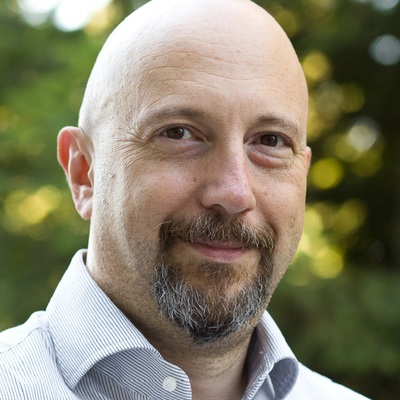
Silvano Coriani
Product Management - Postgres on Azure
Milan, Italy
Actions
Silvano Coriani is a Program Manager in Azure Database for PostgreSQL team at Microsoft. He has over 25 years of experience in application development and database design, troubleshooting, and performance tuning. He is specialised in data access libraries, query optimisation, and distributed system design. He is also an author and speaker in many international industry conferences.
Badges

Area of Expertise
Topics
Meet the PG: PostgresSQL in Azure
Come and meet the team for PostgreSQL in Azure! We're happy to chat about your experience working with our services, including specific requirements, product gaps and interesting stories.
Unlocking the Power of Fabric Mirroring for Azure Database for PostgreSQL flexible server
In this session, we will explore the seamless integration of PostgreSQL data with OneLake to harness the full potential of Fabric Mirroring and all its more recent updates. Discover how to deliver near real-time analytics, data science, machine learning (ML) & artificial intelligence (AI) experiences, and cross-database querying, all while safeguarding your operational databases from the strain of analytical queries.
Learn how to effortlessly stream PostgreSQL data from Azure to Microsoft Fabric with zero ETL processes, leveraging Azure Database for PostgreSQL's unique AI integration and centralized identity management capabilities.
Plus, see it in action with a live demo!
Who’s Afraid of the Big Bad Serverless Database?
For a technology with such obvious upside, serverless databases are still oddly… niche. Market research firms estimate the serverless database market at ~15-20% of the broader cloud database market. In other words: plenty of teams are still defaulting to provisioned capacity even when their demand is anything but predictable. Meanwhile, “serverless” more broadly has gone mainstream everywhere… except where the data lives.
So what are we leaving on the table? The core promise is simple: stop guessing capacity and optimize costs! Modern serverless relational offerings can auto-scale with workload demand, charge per-second based on consumed capacity, and—even more provocatively—scale down to zero when idle, reducing overprovisioning and “always-on” waste.
In this talk, I’ll walk through the real reasons teams hesitate (predictability, performance, operability, and “database physics”), then share the practical engineering work we’re doing to make Azure HorizonDB Serverless real.
PostgreSQL di nuova generazione su Azure: HorizonDB per gli sviluppatori
Le applicazioni moderne richiedono database capaci di crescere senza limiti, garantire continuità operativa e integrarsi con i flussi di lavoro degli sviluppatori. HorizonDB è il nuovo servizio PostgreSQL completamente gestito su Azure, pensato per semplificare la vita a chi sviluppa. In questa sessione vedremo come HorizonDB assicuri failover immediati, repliche di lettura per una disponibilità costante e funzionalità avanzate basate sull’intelligenza artificiale.
Taming Unpredictable PostgreSQL Workloads with Azure HorizonDB
Running PostgreSQL today often means choosing between overspending on idle capacity or risking performance dips when traffic suddenly spikes. Teams face unpredictable workloads—burst‑heavy APIs, event‑driven pipelines, seasonal peaks, analytics surges, and multi‑tenant SaaS patterns that don’t respect fixed sizing. Traditional provisioning forces a compromise: pay for headroom you rarely use, or manually resize under pressure when demand changes.
This session looks at a more adaptive PostgreSQL consumption approach where compute aligns with workload intensity instead of static guesses. Sudden surges sustain performance without manual resizing, while quiet periods avoid burning budget on idle resources. The goal: reduce operational friction, improve predictability under load, and simplify day‑to‑day management—without changing applications or re‑architecting your environment.
Attendees will leave with a clear mental model of why variability is so hard to plan for, how consumption‑aligned compute mitigates those challenges, and what patterns make PostgreSQL deployments more resilient, cost‑efficient, and easier to operate.
Integrate PostgreSQL in your inner and outer loops of modern app development
In this training, you’ll learn how to couple Postgres artifacts -such as schemas, tables, and procedures - with client application code as part of the inner and outer loops of your team's development workflows, for both Azure and open-source PostgreSQL.
You will learn about local development during the inner loop, addressing schema evolution, testing, and query optimization with commonly used OSS tools and programming frameworks like Visual Studio Code, Python, Node.JS, .NET and more.
Then you'll focus on how the outer loop encompasses deployment, monitoring, and scaling, emphasizing CI/CD practices and scaling strategies for both traditional on-premises and cloud environments.
Next, you'll cover tools and techniques to automate deployment of both infrastructure (Infrastructure as Code with Terraform, Bicep and other options) and application plus database artifacts using tools like GitHub Actions and more, with best practices for maintaining a secure, robust, integrated development workflow using Azure Database for PostgreSQL as a reference.
Unlocking Innovations: Latest Updates in Azure Database for PostgreSQL for Developers and Data Pros
This session dives deep into recently released and brand new features and integrations that are revolutionising how we optimise, analyse, and integrate PostgreSQL databases in the cloud. From Automated Index Tuning recommendations to the latest news on Generative AI developments, with vector, azure_ai and azure_local_ai extensions. Whether you're a seasoned developer looking to leverage cutting-edge tools or a data professional aiming to stream or mirror PostgreSQL data in Microsoft Fabric, this session will equip you with the knowledge and practical insights to harness the full potential of Azure Database for PostgreSQL. Join us to explore real-world use cases, best practices, and exciting new announcements for Azure Database for PostgreSQL that can transform your data management strategies.
PostgreSQL for SQL Server and .NET Professionals
This session will provide an overview of PostgreSQL architecture, its key differences and similarities from Microsoft SQL Server, drawing parallels between the two technologies and compare their features from a .NET application developer's perspective. We will cover areas like indexing, partitioning and the programming surface including JSON, geospatial data types, time series and more.
We will see also how Azure Database for PostgreSQL is a fully managed and intelligent service that allows developers to focus on application innovation, reducing repetitive database management tasks.
If you’re interested in PostgreSQL and are wondering what of your SQL Server existing skills can be reused and what need to be worked on, this session is for you!
Business continuity at a glance with Azure Database for PostgreSQL
Implementing a highly available and resilient database tier for mission critical applications with PostgreSQL is not a walk in the park, and requires a combination of using the right technologies, defining effective workflows and involve people with the right skills. Those are the ingredients that a cloud vendor like Microsoft is actually baking into a PaaS service like Azure Database for PostgreSQL so that customers can get business continuity out of the box. In this session, we will cover available options and capabilities offered by the service, from local and zone-redundant high availability to multi-region disaster recovery scenarios and requirements. We will also see how new features like Virtual Endpoints and Read Replica's Promote to Primary can be leveraged by architects and app developers to create highly reliable solutions with minimal effort.
Building Multi-tenant SaaS solutions on PostgreSQL
SaaS model is taking cloud application business by the storm. Companies are less and less developing in-house solutions and are instead more relying on 3rd party SaaS solutions for larger chunks of their application portfolios, from HR to Finance to Production and procurement. Multi-tenant design is a critical aspect for every SaaS company to increase resource utilisation, cost efficiency and achieve desired margins as, in most cases, databases are the biggest item in their monthly bill. No matter if big or small, finding the right multi-tenancy model at the database layer is a complex subject, and it requires the right trade-off between performance, costs, tenant isolation, security and other critical areas. In this session you will learn some of the most successful design patterns and implementation details that support different requirements and use cases, from few users to millions, and see how these can be applied to your own scenarios.
Application development with PostgreSQL and .NET: a deep dive on your modern toolset!
Building scalable and reliable applications using PostgreSQL as back end requires a good mix of selecting the right toolset and adopting some good design and implementation practices. In this session you will learn about .NET, the free, open-source, cross-platform framework for building modern apps and powerful cloud services. In particular, you will dig into Npgsql and Entity Framework Core, and explore some common data access patterns you can leverage to optimise your database tier.
Build your next .NET app with PostgreSQL on Linux
In this demo-heavy session, you'll learn how to build cross-platform apps—from web to mobile—using .NET and PostgreSQL on Linux. We'll explore data access with Npgsql's ADO.NET and Entity Framework Core providers for data access and schema management, and take a spin through the new VS Code extension for PostgreSQL that's been generating serious interest.
You'll learn how to develop and debug on Linux and containers, and how to streamline deployments using .NET Aspire—on-prem, on Azure, or on any cloud.
Whether you're new to PostgreSQL and Linux, or just looking to sharpen your .NET workflows, this session is packed with tips, demos, and my favorite tools for building better apps, faster.
Discover the open source trio you didn’t expect: .NET and PostgreSQL on Linux
Open source isn’t just for hipster stacks, learn how to build modern cloud-native apps with tools you’ll actually want to use. Today, .NET is fully open source—and when you pair it with PostgreSQL and Linux, you’ve got a modern, cross‑platform stack that’s built to last. In this demo‑packed session, we’ll show you how to build web and mobile apps with .NET, tap into PostgreSQL’s flexibility, and run everything on Linux containers. You’ll explore Npgsql, EF Core, and the new VS Code PostgreSQL extension, plus see how .NET Aspire makes deployments seamless across any cloud. If you’re looking for a stack you can bet on for the future, this is it.
From SQL Server to PostgreSQL: Your Skills, Reimagined
Think PostgreSQL is a whole new world? Not really. If you know SQL Server, you already have a head start. In this session, we’ll map your existing skills to PostgreSQL, highlight key differences, and explore modern features like JSON, geospatial types, and time series. We’ll also show how managed services like PostgreSQL in Azure takes care of the heavy lifting so you can focus on building. Walk away knowing exactly what transfers, what’s new, and why PostgreSQL is a future‑proof bet.
Next‑Gen PostgreSQL on Azure: HorizonDB for Modern Developers
Modern apps need databases that scale seamlessly, stay resilient, and integrate with today’s developer workflows. HorizonDB is Azure’s new fully managed PostgreSQL service designed with developers in mind. In this session, we’ll explore how HorizonDB delivers instant failovers, read replicas for always‑on availability, and advanced features powered by AI. Learn how open‑source Postgres meets Azure innovation to give you a stack that’s fast, flexible, and ready for the apps you’re building now.
Azure HorizonDB : Engineering A Next‑gen PostgreSQL Platform For Modern Cloud Applications
Modern cloud applications place new demands on PostgreSQL: fast and predictable failover, read scalability without operational complexity, and continuous availability under dynamic workloads. Meeting these requirements requires rethinking not just deployment, but core architectural and operational assumptions.
In this session, we take an engineering‑centric look at HorizonDB, a new managed PostgreSQL service on Azure, and the design decisions behind it. We will explore how HorizonDB approaches high availability, immediate failover, and read replication, and how these capabilities are delivered consistently without exposing application teams to operational burden.
This session is aimed at engineers and architects building or operating large‑scale PostgreSQL systems who want to understand the trade‑offs, constraints, and practical lessons involved in designing a next‑generation PostgreSQL platform for the cloud.
ORMs vs SQL in PostgreSQL: A Practical Framework for Performance, Plan Stability, and App Design
This talk provides an opinionated, PostgreSQL-focused framework for application developers navigating the trade-offs between ORMs and handwritten SQL. Using examples from Django ORM, SQLAlchemy, ActiveRecord, and EF Core, it analyzes how different approaches translate into PostgreSQL queries—and how those queries interact with the planner, statistics, and indexes.
The session covers:
- How ORM-generated SQL impacts execution plans and index usage
Effects of parameterization on plan selection and performance variability
- When to use SQL in application code vs server-side functions
- Common performance anti-patterns (N+1 queries, over-fetching, excessive round-trips)
A key focus is a practical workflow for diagnosing performance issues using PostgreSQL tools such as EXPLAIN (ANALYZE), with guidance on applying precise fixes instead of trial-and-error tuning.
Designed for all application developers, this talk offers clear decision criteria and performance-oriented best practices grounded in PostgreSQL behavior.
Same Problems, Different Defaults: What 25 Years of SQL Server Taught Me When I Switched to Postgres
After more than 25 years helping customers and partners build and troubleshoot SQL Server applications, both on-premises and in the cloud, I began working with PostgreSQL and quickly discovered that some of the things I assumed were “obvious” were not universal after all.
Not the fundamentals: an 8 TB database with roughly 80% unused indexes, or a supposedly “slow” web page firing off 63 separate database queries—those problems still exist 😊. But the defaults, the tools, and especially the failure modes are different enough to create trouble if you are not paying attention.
This talk comes out of those moments. We’ll walk through a few patterns I’ve encountered—and sometimes introduced myself—including chatty applications, accidental N+1 queries, parameterization surprises, pagination that breaks down at scale, and schema changes that seemed safe until they were not.
For each one, we’ll look at how it appears in PostgreSQL, why it behaves that way, and how to fix it, often contrasting it with the approaches I used on SQL Server.
We’ll also look at cases where the platforms are just different. For example, without built-in resource governance, one bad query can suddenly slow everything else down—and now the fix is no longer in the database, but in how your application behaves.
This is not about comparing databases. It is about building a mental model you can carry with you. You’ll leave with practical ways to read execution plans, think about indexes, and troubleshoot performance issues without instinctively blaming the database.
PostgreSQL at Scale Starts in Your Code: Batching, Pooling, and Reliability
PostgreSQL performance issues often show up first in the application: latency spikes, connection exhaustion, and unpredictable throughput under load. Because PostgreSQL connections are relatively expensive, “one request = one new connection” fails quickly at modern concurrency levels — across every language and framework.
This talk focuses on practical, cross-stack patterns that reduce overhead without rewriting your system. We’ll start with round-trip reduction (batching statements, using prepared statements effectively, and avoiding chatty ORM behavior), then move to application-level pooling patterns in common ecosystems (Java, .NET, Python, Node) and how to size pools sensibly.
Finally, we’ll connect the dots to production architecture: when client-side pools are enough, when you should introduce server side pooling like PgBouncer, and how to avoid the most common failure modes (stale connections, idle-in-transaction, pool storms). You’ll leave with a concrete checklist you can apply to any PostgreSQL-backed service.
POSETTE: An Event for Postgres 2026 Sessionize Event
Global Azure Milano 2026 Sessionize Event
European Microsoft Fabric Community Conference 2025 Sessionize Event
POSETTE: An Event for Postgres 2025 Sessionize Event
.NET Conference Italia 2024 Sessionize Event
PostgreSQL Conference Europe 2024
Logical replication - getting in and out of the cloud
SQL Konferenz 2024 Sessionize Event
European Microsoft Fabric Community Conference Sessionize Event
POSETTE: An Event for Postgres 2024 Sessionize Event
PostgreSQL Conference Germany 2024
What enterprises need & want in Azure Database for PostgreSQL
SQLBits 2024 - General Sessions Sessionize Event
SQLBits 2023 - General Sessions Sessionize Event
SQLBits 2023 - Full day training sessions Sessionize Event
.NET DeveloperDays 2022 Sessionize Event
SQLBits 2022 Sessionize Event
IoT summit 2021 Sessionize Event
Azure Summit Sessionize Event
LightUp Sessionize Event
Please note that Sessionize is not responsible for the accuracy or validity of the data provided by speakers. If you suspect this profile to be fake or spam, please let us know.
Jump to top