

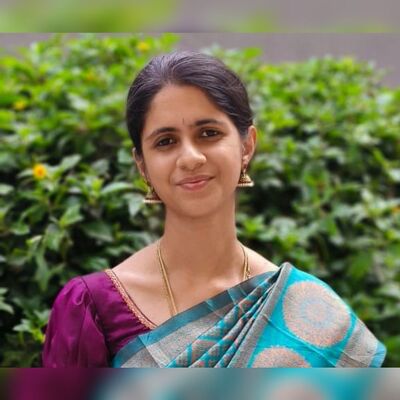
Sneha Sankaran
Automotive Software Product Owner & AI Practitioner, Bosch | Agentic AI | MCP | Safety-Critical Engineering
Coimbatore, India
Actions
Sneha Sankaran is an Automotive Software Product Owner and AI Practitioner at Bosch with over 10 years of experience spanning requirements engineering, full-stack software development, system design, testing, and validation in safety-critical environments. She specializes in bridging the gap between cutting-edge autonomous AI frameworks and the rigorous engineering standards required by global enterprise operations.
On the development side, Sneha focuses on the end-to-end translation of complex multi-agent backend logic into high-utility developer experiences. Her architectural work includes designing Model Context Protocol (MCP) tool schemas and custom interface endpoints directly within integrated environments like VS Code extensions and Claude Desktop.
Engineering & Hackathon Milestones:
1st Place Winner: Microsoft Reactor Hackathon (Agentic System Architecture category) for the Agile Sprint Orchestrator.
Enterprise Operationalization:
Co-architected and successfully deployed the agentic framework within active production engineering pipelines at Bosch.
Live Technical Delivery:
Expert in live architecture walk-throughs, system execution telemetry, and interface deployment demonstrations
Links
Area of Expertise
Topics
From Hackathon Win to Enterprise Reality: What Broke When We Engineered an Agentic Software Factory
We won the hackathon. Then the real engineering started.
AI coding assistants can accelerate individual developers. But when AI is introduced across an engineering workflow, the hard problems quickly move beyond code generation: fragmented context, unreliable handoffs, non-deterministic decisions, verification gaps, integration constraints, and the question of where humans must remain accountable.
In this practitioner session, we share our journey from an award-winning agentic AI prototype toward enterprise implementation in a safety-critical automotive engineering environment.
Our Agile Sprint Orchestrator won the Microsoft Reactor Hackathon in the Agentic System Architecture category. Rather than present it as a finished product, we use it as a concrete engineering case study: a 7-phase, multi-agent workflow spanning backlog refinement, sprint planning, task assignment, development workflows, verification, retrospective learning, and sprint intelligence.
The most valuable lessons emerged after the hackathon.
We will show five reality checks that changed how we approached the architecture:
• More agents did not automatically mean more autonomy. We examine the trade-offs of decomposing software delivery into specialized agents, managing state and context, and coordinating handoffs across a multi-agent pipeline.
• LLM output could not become the source of truth. We show where deterministic rules, validation gates, and human-in-the-loop controls became necessary to constrain and verify non-deterministic AI behavior.
• A working prototype was not an enterprise architecture. We discuss what changed when security, compliance, integration, operational, and organizational constraints entered the design — and which assumptions required rethinking.
• MCP became an integration boundary, not just a tool interface. We demonstrate how Model Context Protocol tools exposed orchestrator capabilities to developer workflows through VS Code and Claude Desktop, and the engineering considerations that followed.
• A successful demo was not the finish line. We share what we can demonstrate today, what required architectural evolution, what remains open, and what we learned about the gap between an effective prototype and an architecture suitable for broader enterprise adoption.
We will also explain how we drew the boundary between local and cloud AI using Phi/Ollama and Azure GPT-4o as concrete examples, considering capability, data boundaries, latency, cost, and enterprise constraints.
The session includes a live demonstration of the orchestrator and its MCP-based developer workflow.
Attendees will leave with a practical blueprint for decomposing software-engineering workflows into agents, designing verification boundaries, integrating MCP-based tooling, and evaluating agentic systems beyond the "it works in a demo" stage.
The goal is not to present a perfect success story. It is to share the engineering lessons from the transition — from a hackathon-winning prototype toward enterprise reality — and the decisions we would make differently today.
Although our work comes from automotive engineering, the architectural challenges apply broadly to enterprises introducing agentic AI into software-development workflows.
Live system: https://agile-sprint-orchestrator-h9ks.vercel.app/
Sneha Sankaran
Automotive Software Product Owner & AI Practitioner, Bosch | Agentic AI | MCP | Safety-Critical Engineering
Coimbatore, India
Links
Actions
Please note that Sessionize is not responsible for the accuracy or validity of the data provided by speakers. If you suspect this profile to be fake or spam, please let us know.
Jump to top