
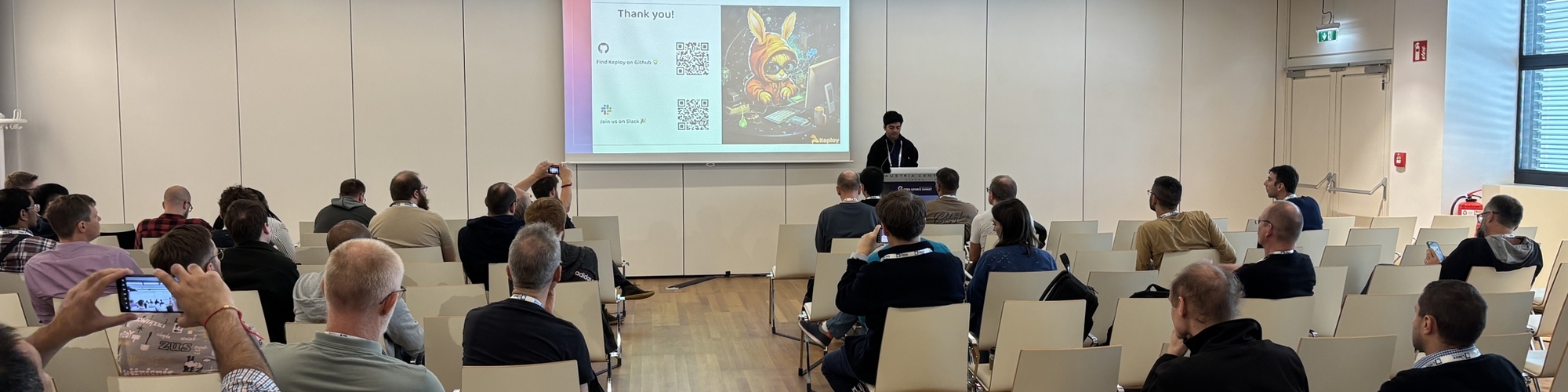
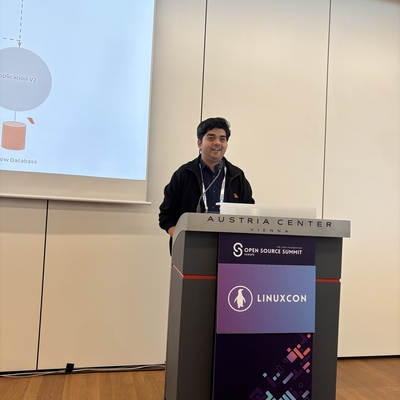
Animesh Pathak
DevRel Engineer, Harness Inc | CNCG Noida Organiser
Bengaluru, India
Actions
Animesh Pathak is a Developer Relations Engineer with a strong focus on Database DevOps, APIs, testing, and open-source innovation. Currently at Harness, he plays a key role in building and evangelizing scalable DBDevOps workflows, bridging the gap between developers and data teams to accelerate secure, reliable software delivery.
Previously at Keploy, Animesh actively contributed to open-source projects and empowered engineering teams by advocating for modern API testing practices. He brings deep experience in community building, technical storytelling, and developer enablement, having spoken at several developer events and authored technical content that simplifies complex DevOps concepts.
Area of Expertise
Topics
The Blast Radius Problem: Why Database MCP Servers Need Different Safety Primitives
There's a security reminder that comes up constantly in MCP database discussions: don't give agents write access to production databases. It's good advice. But it sidesteps the more interesting question what does responsible write access actually look like when you need agents to do useful things like run migrations, apply schema changes, or execute rollbacks?
This talk digs into the protocol-level problem. Database operations have blast radii that most MCP tool designs weren't built for. A dropped column isn't like a failed API call, it's potentially irreversible, it can reflect across the services, and the recovery window is measured in seconds. Standard MCP error handling, elicitation flows, and permission models weren't designed with this in mind.
I'll walk through what I've run into working on DB DevOps at Harness where the standard MCP primitives hold up, where they fall short, and what patterns we've found that actually work. Think scoped tool exposure by environment, migration dry-run as a first-class MCP operation, and coordinated rollback that spans both app and schema.
Why Agents Make Different Decisions With the Same Tools
You deploy an AI agent to production after it achieves a 90% success rate in testing. A month later, the underlying model is updated, and performance drops to 70%. Nothing in your application has changed, but the model now ranks and selects tools differently. The agent has silently degraded, and your existing monitoring may not explain why.
In this talk, we will explore why agents can make different decisions even when given the same task and access to the same tools through MCP servers. We will examine how model updates, sampling settings, context truncation, tool ordering, and schema verbosity can influence tool selection and introduce unexpected behavioural drift.
We will then introduce agent fingerprinting, a practical approach to capturing an agent’s baseline behaviour through repeatable, deterministic tests. Attendees will learn how to compare model and agent versions, detect changes in tool selection before deployment, and build agent-driven systems that are more predictable, testable, and reliable.
Approve Before You Deploy: Human-in-the-Loop Patterns for DevOps Agents
Everyone wants agents that can deploy, roll back, and flip feature flags. Almost nobody wants an agent doing those things unsupervised at 2am. The real design question isn't whether to put a human in the loop. It's where to put them, and how, without making the agent useless.
I work on database DevOps, where approval gates are a fact of life: risky changes pause for a human before they proceed. The same idea applied to agents is a harder problem than it looks. MCP's elicitation flow lets a server pause and ask the human a question mid-task, but the tuning is brutal. Ask on every step and operators switch the agent off inside a day. Ask too rarely and you have shipped an unsupervised production-breaker.
This talk covers the patterns I use for human-in-the-loop DevOps agents: when to gate on approval and when to let the agent proceed, how to surface enough context for a human to decide in five seconds, and how to give each tool a risk level that both the agent and the operator can read. I close with a live approval-gated deploy, end to end, including what happens when the human says no.
Skills Are Not MCP Servers: When to Use Which (and How to Make Them Work Together)
There's a running argument in the AI tooling world right now do you need MCP servers, or can you just use Skills? I've been on both sides of this. At Harness, I've built Claude Skills for DevOps workflows and worked with our MCP server that wraps the entire platform. And the honest answer is: it depends, but most people are picking the wrong one for the wrong job.
In this talk I'll break down where the boundary actually is. Skills are great when the knowledge is stable conventions, workflow logic, best practices. MCP servers earn their keep when you need live data, real-time API calls, or actions with side effects. The interesting part is what happens when you layer them: a Skill that knows how to debug a failed deployment, calling an MCP server that pulls live pipeline logs and execution data.
I'll walk through real examples I've built skills that started as simple "SKILL.md" files and grew into MCP-backed workflows, and cases where I over-engineered an MCP server when a markdown file would've done the job. If you're building agents and trying to figure out the right architecture, this talk should save you some wrong turns.
From SSE to Streamable HTTP: What Actually Changed in MCP's Transport Layer and Why You Should Care
When I started building MCP-powered agents and Claude Skills at Harness, I kept running into weird transport issues, connections dropping behind load balancers, SSE endpoints behaving differently across clients, tutorials that contradicted the actual spec. Turns out, MCP's transport layer had quietly gone through a major overhaul and most of the content out there hadn't caught up.
In this talk, I'll walk through MCP's transport journey, stdio for local tooling, the dual-endpoint SSE model that powered early remote servers, and the Streamable HTTP design that replaced it in the March 2025 spec update. More importantly, I'll explain why each shift happened: the scaling headaches SSE caused, the connection recovery gap, and the auth/CORS simplifications that Streamable HTTP unlocked.
I'll share code from actual migrations I've worked through, what breaks when you switch, what gets simpler, and the backward-compatibility gotchas that the docs don't warn you about. If you're building or maintaining MCP servers today, this should save you a few weekends of debugging.
Bringing AI into Your DevOps Pipeline - Without Losing the Database Plot
Most DevOps teams are curious about AI and ML, but when it comes to database delivery, things can feel… rigid. The workflows are precise, the rules are strict, and the stakes are high - one wrong change can break production.
In this session, we’ll explore how to weave AI, ML, and intelligent agents into your existing Database DevOps setup without turning it into an academic science project. We’ll keep things practical:
1. How AI can suggest, refine, and even auto-generate database changelogs
2. How intelligent agents can act as watchful copilots, catching anomalies and guiding rollback decisions
We’ll talk tools, examples, and real-world guardrails, so you leave with ideas you can actually try - not just buzzwords. Think of it as upgrading your Database DevOps from “smart” to “street-smart.”
Policy-driven Protection Against Open Source Supply Chain Attacks
In this session, I'll demonstrate how SafeDep's vet tool enables organizations to create and enforce customized security guardrails for their open source dependencies. "vet" leverages Common Expression Language (CEL) policies with comprehensive package security metadata to detect and prevent supply chain risks before they enter your codebase.
We will cover:
1. The rising threat of software supply chain attacks and why traditional approaches fall short.
2. How vet combines code analysis, vulnerability data, and package health metrics to create a holistic security assessment.
3. Real-world examples of detecting malicious code using SafeDep Cloud integration.
4. Implementing "Policy as Code" with CEL to align security guardrails with organizational requirements.
5. Practical CI/CD integration via GitHub Actions for continuous protection.
Accelerating Testing: Power Duo of eBPF and GenAI
Testing in cloud native environments can be complex, but new technologies like eBPF are making it easier and more efficient. In this session, we’ll explore how eBPF helps with deep observability, security, and performance insights and look at real-world examples of how eBPF improves software testing. Plus, we’ll see how Generative AI (GenAI) can enhance test coverage, detect issues, and improve software reliability.
Creating an Effective Open Source Test-Monitoring Ecosystem
A test monitoring ecosystem tracks manages and analyzes testing in real time. While similar tools exist, many users still rely on manual testing, which increases flakiness over time, especially with microservices as the complexity grows as applications scale.
This talk will show how to build an efficient test monitoring ecosystem using Keploy, an Open Source tool from the CNCF project landscape, it captures your application's API calls and queries, automatically generating test cases with higher coverage.
Later on, you will learn how to integrate the test results using Open Source visualization tools such as Grafana and analyze them dynamically and also be able to share the test results across teams to monitor real-time events, while also providing deep visibility into individual test case details.
Ship features faster with AI based Testing using Keploy
Keploy. has become one of the popular tools for software end to end testing. If you can test your application with enough time to market that, this is what you're likely to use.
In this talk, we will classify end to end testing and discuss application areas for Keploy and traditional testing framework, and discuss which tool to choose for each use-case. And why not both? We will discuss using Keploy side by side with existing testcases to get even higher coverage with real-time based edge scenarios.
P.S: We will focus on enterprise grade application with Node, Java, but the same approaches can be used everywhere since Keploy is language agnostic.
Understanding eBPF tracing to generate Test Cases in production
eBPF is a powerful tool for network monitoring and troubleshooting. In this talk, we will discuss how to use eBPF to trace HTTP traffic using Keploy. We will cover the following topics:
1. How does Keploy work?
2. What is eBPF?
3. How Keploy trace API calls to create Test Cases.
We will also discuss some of the benefits of using eBPF for network tracing and replaying, such as:
1. High performance
2. Language Agnostic
3. Easy to use
4. Extensibility
The talk will begin with an introduction to Keploy eBPF. I will discuss what eBPF is, how it works, and some of its benefits. I will cover how API call capturing works and how it can be used to create Test cases and realistic Data Mocks/Stubs. Which can be used to integrate with existing CI/CD Pipeline to be used in even production.
ContainerDays & AI Context Singapore Sessionize Event Upcoming
MCP Dev Summit Bengaluru 2026 Sessionize Event
Cloud Native Group Noida User group Sessionize Event
API World 2024 Sessionize Event
DevOpsDays Bengaluru Sessionize Event
Please note that Sessionize is not responsible for the accuracy or validity of the data provided by speakers. If you suspect this profile to be fake or spam, please let us know.
Jump to top