
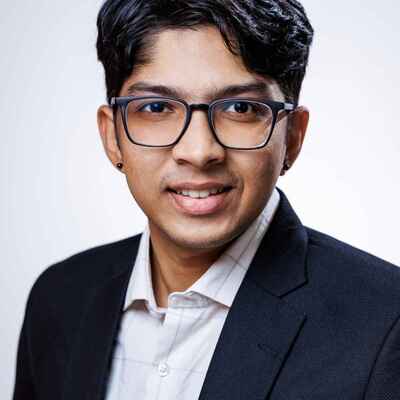
Sreeram Venkitesh
Senior Software Engineer at DigitalOcean Kubernetes
Kochi, India
Actions
Sreeram is an active contributor to the Kubernetes project who has worked on several features on the kube-apiserver and the kubelet around container lifecycle management. He was part of the Kubernetes release team from v1.29 to v1.36. He helps write and edit the Last Week in Kubernetes Development newsletter (lwkd.info). He works at DigitalOcean as a Senior Software Engineer in the managed Kubernetes team responsible for provisioning and managing DigitalOcean's GPU enabled Kubernetes clusters.
Links
Area of Expertise
Topics
The KEP Lifecycle: How the Release Team Guides Enhancements to Stability
Kubernetes Enhancement Proposals (KEPs) define how new features, deprecations and design changes are introduced into Kubernetes. Over time, the KEP and release processes have evolved to improve traceability, stability and production readiness.
As part of the Release Team’s Enhancements subteam under SIG Release, we track and guide enhancements through each milestone, managing freezes such as Enhancements & Code Freeze, and the newly enforced PRR Freeze (which was a soft deadline before), now requires production readiness reviews to be completed earlier.
This session covers the KEP lifecycle from two perspectives: the Release Team, who ensures enhancements are on track and meet requirements and contributors, who author and implement them. We’ll discuss recent process changes, including the introduction of a hard PRR Freeze, how it enforces production readiness earlier in the cycle and how it affects the broader release timeline (Enhancements & Code Freeze and Exception handling).
Stop Wrapping Endpoints, Start Wrapping Intent : Why Great APIs Make Bad MCP Servers
When you build MCP servers you must've noticed your agent makes more tool calls than it should or gets stuck halfway "even" when you gave it every tool it needs. The problem is not the server, it's the way we design it. Most of us build MCP servers like we build APIs: expose endpoints as tools and let the agent figure out the rest. Exactly the "figuring out" part is the problem.
We're handing agents too many planning responsibility instead of giving them exact intent. We'll test the idea by building same workflow in 2 different ways and you will see see how a simple chnange in our design made one process leading to unnecessary planning or tool calls while other is more effortless .
You'll leave knowing how to design from the agent's perspective instead of the developer's so next time you're deciding what tools to expose and how much abstraction your server needs, the answer is obvious instead of a guess. And hopefully you can make your agent's life easier (work smarter, not harder!!!) :)
Hacking Kubernetes with custom container runtimes - A crash course on CRI internals
The Container Runtime Interface (CRI) was first introduced in Kubernetes v1.5 in 2016 and has been a crucial part of the system ever since. CRI lets you build Kubernetes in a container runtime agnostic manner. This talk goes into the details of how the CRI works and how you can work with the CRI to add new features with the example of KEP 4960: Container Stop Signals
This KEP added the StopSignal field to container lifecycle allowing users to set custom stop signals to their containers from the deployment spec. Previously it was only possible to configure this from the container image. As part of this KEP I had to learn how the CRI works, how we can develop and test changes to the CRI and different container runtimes locally and how you can build and test Kubernetes locally with these changes. This will be useful for anyone interested to start contributing to the kubelet and CRI areas of Kubernetes.
This talk will be my newly updated version of the talk I presented at KCD Taipei 2025
Embracing Culture and Breaking Language Barriers: A Story of Fostering Global Opensource Communities
Open source communities are a celebration of our different cultures. The single reason open source communities are able to build and ship software like Kubernetes, which is used so widely, is because of the collaboration of people from all around the globe.
This also means a lot of challenges when people are working together, like language barriers, cultural differences and timezones. In this talk I'll be sharing some lessons I've learnt about fostering open source communities amidst the differences. In the last two years, serving in the K8s release team and as the SIG Docs New Contributor Ambassador, I've experienced first hand how challenges like language barriers can hinder enthusiastic contributors. This talk is about these different challenges and how we can overcome them.
In an effort to inspire everyone in the open source community to embrace our differences and welcome everyone as we work together, I'm learning Nihongo to attempt giving this talk in the Japanese language.
Addressing Non-Deterministic Scheduling: Introducing the Node Readiness Controller
Kubernetes nodes report “Ready” before critical dependencies, such as CNI plugins, storage drivers or device plugins are fully functional. This “readiness gap” causes non-deterministic scheduling, where sensitive workloads immediately fail upon placement.
Since our KubeCon NA Unconference discussion, this initiative has matured into an official SIG-Node subproject. In this session, its maintainers will present the architecture of the Node Readiness Controller, which uses ‘NodeReadinessRules’ to declaratively manage taints based on custom conditions, ensuring a protected node initialization.
This session is designed for platform builders and contributors. We will discuss:
-Architecture patterns: Leveraging existing node-problem-detector ecosystem as a unified mechanism for readiness reporting.
-Roadmap: Discuss current status, upcoming features and potential integration pathways.
-Cross-SIG alignment: how the controller interacts with existing scheduling primitives and autoscalers.
A field guide to integrating CEL in the Kubernetes codebase
Common Expression Language (CEL) is fast growing in adoption in the Kubernetes project with more features adding CEL support each release. Today we have CEL being used in CRD validation, validating and mutating admission policies, and is even being added in Dynamic Resource Allocation. This talk will be about CEL and all of its moving parts which you need to understand if you want to add CEL support to your feature in Kubernetes.
This talk will go into the details of how CEL works, what the apiserver/cel package adds on top of the upstream google/cel-go package such as EnvSets and DeclTypes and how we use them for integrating CEL with the Kubernetes codebase.
This talk would be useful for anyone interested in learning how CEL works and maintainers who want to add CEL support to Kubernetes - be it within the apiserver or somewhere else, like DRA. The topics covered in this talk would also be useful for maintainers who want to work with existing code in the apiserver which touches CEL.
The Hitchhiker's Guide to Testing Kubernetes
A vital part of contributing to Kubernetes is testing. Reading existing tests lets you understand how a particular component works. You're also expected to write tests when making changes to the code base. The K8s codebase has different kinds of tests like unit, end to end and conformance tests. Given the scale of K8s, all of these are important to make sure that a feature works as intended and no edge cases come up when all the components are deployed in a production environment.
If you're getting started with contributing to K8s, learning the entire testing infrastructure can be overwhelming. This talk aims to give an introduction of the different types of tests in K8s and how you can setup your dev environment to run them locally. Along with unit tests, the talk also aims to give a demo of setting up tools like kubetest2 and hydrophone to run e2e and conformance tests with a kind cluster. After the talk you'll be ready to write your own tests for K8s and improve the test coverage.
Tutorial: An accelerated introduction to AI model deployment with cloud native
The future of AI will be on cloud because of various reasons like scalability, computing power, features like Dynamic Resource Allocation and being able to run AI workloads across multiple clouds. However, the fields of cloud native and machine learning are still somewhat separated. We aim to bridge this gap with this tutorial.
We plan on giving a brief introduction to machine learning with scikit-learn and cloud native with Kubernetes, then dive into a hands-on tutorial. We will show different ways to train and run ML models on and off the cloud (CPUs vs GPUs, public cloud vs on-prem, different flavors of Kubernetes) and evaluate performance in terms of training speed and cost.
Additionally, training ML models is a complicated task and requires a lot of research. Optimizing your cloud setup on top of this makes it more difficult. There is no single solution, and we will explore a few of these options during this tutorial.
The Two Sides Of The Kubernetes Enhancement Proposals (KEPs)
Kubernetes Enhancement Proposals (KEPs) are pivotal in proposing, communicating, and coordinating new efforts within the Kubernetes project.
As members of the Release Team (the team responsible for releasing the next version of Kubernetes) especially Enhancements Team under SIG-Release, we play a vital role in maintaining the active status of enhancements and facilitating communication between stakeholders, be it a deprecation or a feature update.
In this talk, we look at the KEP lifecycle from the perspective of the release team, exploring the process (enhancements freeze, code freeze, and the exception process), major themes, and more. Additionally, we will discuss the developer's viewpoint on KEPs, highlighting the process, deadlines, and best practices for proposing, reviewing, and implementing KEPs effectively.
Join us to know how KEPs drive innovation and collaboration within the Kubernetes community, empowering contributors to shape the future of Kubernetes development.
KCD Taipei 2025 Sessionize Event
KubeCon + CloudNativeCon Japan 2025 Sessionize Event
KCD Bengaluru 2025 Sessionize Event
Maintainer Summit: KubeCon + CloudNativeCon Europe 2025 Sessionize Event
KubeCon + CloudNativeCon India 2024 Sessionize Event
KubeCon + CloudNativeCon + Open Source Summit + AI_Dev China 2024 Sessionize Event
Sreeram Venkitesh
Senior Software Engineer at DigitalOcean Kubernetes
Kochi, India
Links
Actions
Please note that Sessionize is not responsible for the accuracy or validity of the data provided by speakers. If you suspect this profile to be fake or spam, please let us know.
Jump to top