
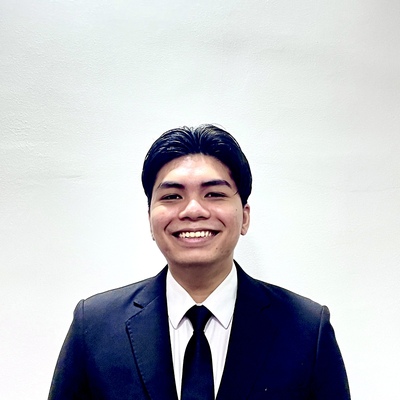
Muhammad Suzaril Shah bin Zakaria
Senior IT Systems and Customer Engineer at Swift
Kuala Lumpur, Malaysia
Actions
I am a Microsoft MVP (Azure AI Platform), Microsoft Certified Trainer and a Technophilic! I like exploring technology, especially the Cloud, IoT, and Networking. I am more of an IT Infrastructure person than I am a Software Developer/Engineer, and even so, I like to code! I am pursuing a Master in Engineering Technology (Electrical and Electronics) at Universiti Kuala Lumpur, and my research objective is to integrate Cloud (Azure) functions into IoT applications. Putting all my technical experiences aside, I also like to lead, and my goal is to empower and contribute as much as possible to the community. Given my past experiences as a Microsoft Learn Student Ambassador, I have hosted countless events and workshops for my student community at my university. I also like creating tech-related videos (https://www.youtube.com/@suzarilshah) and blogs ( https://blog.suzarilshah.uk ).
Links
Badges
Area of Expertise
Topics
Integrating Microsoft Foundry with OpenClaw
If you have been keeping up with the AI agent space, you already know how fast things are moving. Honestly, who doesn't know about OpenClaw these days, evolved from ClawdBot to Moltbot to now, OpenClaw! It has quickly become the ultimate open-source framework for developers who want a personal AI assistant that can actually execute tasks, run shell commands, and control browsers locally. However, OpenClaw is only as smart as the underlying models powering it. This is exactly where Microsoft Foundry comes into play. Having spent so much time exploring these tools within the Foundry MVP community, I can confidently say that it provides the perfect backend architecture. With a massive catalog of over 11,000 models, from Anthropic's Claude Opus 4.6 to the brand-new GPT-5.2 series and DeepSeek V3.1, Azure AI Foundry delivers the enterprise-grade reliability and reasoning power required for complex autonomous workflows. In this post, I am going to show you how to bridge the gap. We will walk through the technical steps of configuring your preferred models in Microsoft Foundry and setting them up to run flawlessly on your local OpenClaw instance. Grab your favorite coffee, fire up your terminal, and let us start building!
Developing with Foundry Local - on Device AI solution
Looking to save cost on AI usage for your application? Look no further as we shift the AI usage cost onto the end-user's device using the Foundry Local SDK.
It provides an easy-to-use SDK (C#, JavaScript, Rust, and Python), a curated catalog of optimized models, and automatic hardware acceleration — all in a lightweight package.
User data never leaves the device, responses start immediately with zero network latency, and your app works offline. There are no per-token costs and no backend infrastructure to maintain.
The catalog covers chat completions (for example, GPT OSS, Qwen, DeepSeek, Mistral and Phi ) and audio transcription (for example, Whisper). Every model goes through extensive quantization and compression to deliver the best balance of quality and performance
Introduction to Azure OpenAI Services
This informative session delves into the exciting world of Azure's Open AI Services, exploring their capabilities and applications. Whether you're a developer, business owner, or just curious about the latest AI advancements, this video is a must-watch. Join us as we break down key concepts, showcase practical examples, highlight Azure's Open AI Services, such as Chat, Completion, and Dall-E playgrounds, and deploy Azure Open AI Chat to a web app.
Creating your own ChatGPT with OpenWeb UI and Azure AI Foundry
Slide Presentation:
1. Overview of Azure AI Foundry
2. Introduction to Open Web UI - Open Source, Self Hosted compared to ChatGPT
3. Limitation of OpenWeb UI as of April 2025
4. Solve the limitation using LiteLLM - also Open Source, Self Hosted compared to OpenRouter
5. High Level Overview of what we are going to achieve
Demo:
1. Deploy a model on Azure AI Foundry
2. Install and Configure LiteLLM on VM
3. Configure the model endpoint and API key on OpenWeb UI
4. List out the models on OpenWeb UI
aMPKL 2025 Sessionize Event
Global AI Bootcamp 2025 - Kuala Lumpur Sessionize Event
Muhammad Suzaril Shah bin Zakaria
Senior IT Systems and Customer Engineer at Swift
Kuala Lumpur, Malaysia
Links
Actions
Please note that Sessionize is not responsible for the accuracy or validity of the data provided by speakers. If you suspect this profile to be fake or spam, please let us know.
Jump to top