
Syed Ahmer Shah
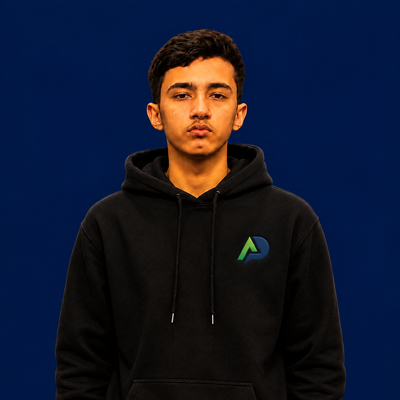
Full-Stack Developer | Laravel, PHP & SQL | Building Scalable, High-Performance Web Systems | SWE Student (BS + ADSE)
Hyderabad, Pakistan
Actions
Syed Ahmer Shah is a Software Engineering student at HITMS and is completing an Advanced Diploma in Software Engineering (ADSE) at Aptech Pakistan. He works across full-stack web and app development, databases, and software engineering.
His interests include Laravel, MERN, Flutter, React Native, Java, Python, C#, ASP.NET, and modern AI-assisted development using tools such as Cursor, GitHub Copilot, and Claude.
He focuses on clean code, practical architecture, and building reliable software through continuous learning and hands-on projects.
Badges

Area of Expertise
Topics
What if the AI Revolution Started in 2006?
What would software engineering look like if Large Language Models had arrived before the smartphone? This session explores a counterfactual history of technology, examining how the last 20 years of development would have shifted if AI-driven workflows had been the standard in 2006.
We will dive into the technical constraints of that era—from hardware limitations to data availability—and discuss how our current engineering principles like clean code and scalable architecture would have been forced to evolve much sooner.
Key Takeaways:
1. Infrastructure Analysis: Could 2006 hardware have sustained the birth of LLMs?
2. The Developer Shift: How the transition from manual syntax to AI-assisted logic would have happened a decade earlier.
3. Future Predictions: Using this historical "what-if" to better understand the trajectory of software engineering toward 2036.
Target Audience: Software engineers, computer science students, and tech enthusiasts interested in the evolution of engineering tools.
Preferred Duration: 30–45 minutes.
Technical Requirements: Stable internet connection and HDMI/USB-C output for a slide-heavy presentation.
First Delivery: This would be the first public delivery of this session.
Topic Category: Technology Trends / AI History / Software Engineering Evolution.
I Almost Lost Commerza to 9,800 Lines of Raw Code
What happens when you build a production-grade e-commerce system without a framework? You learn the hard way that AI is a tool, not an architect. After an AI refactoring error butchered 40% of my backend—and without a Git backup—I had to rebuild from the wreckage.
This session is a deep dive into "defensive engineering." We’ll move past the "rookie mistakes" and look at the raw mechanics of web security, transactional databases, and server routing. I’ll show you how I built a "fortress" using strict row-locking, multi-layered CAPTCHAs, and server-side session revocation—all without a single artisan command.
Small print:
Target Audience: Backend Developers, Software Engineering Students, and CTOs.
Technical Level: Intermediate.
Duration: 45 minutes.
Key Topics: Raw PHP/MySQL, Database Concurrency, Security Architecture.
The Death of the "Code Monkey": Surviving the Agentic Era
If the AI Big Bang happened in 2006, the "Full-Stack Developer" would already be extinct. We are currently living in a pivot point where writing syntax is becoming less valuable than orchestrating systems.
In this session, I explore the transition from being a developer who "centers divs" to a Systems Architect who manages multi-agent workflows. We’ll discuss the shift from writing logic to writing constraints, and why the developers who survive the next five years won't be the ones who write the fastest code—they’ll be the ones who build the smartest, zero-trust systems.
Small print:
Target Audience: Full-Stack Developers, AI Enthusiasts, and Career Strategists.
Technical Level: All levels / Thought Leadership.
Duration: 30–45 minutes.
Key Topics: AI Agents, Future of Work, System Orchestration.
One Missing Line: How Anthropic Handed Over Their Kingdom
On March 31, 2026, a tech giant accidentally leaked over 512,000 lines of proprietary code. It wasn't a hack; it was a forgotten line in an .npmignore file. This session deconstructs the Anthropic leak to reveal the brutal reality of modern DevOps.
We will analyze how a simple build-pipeline configuration error can lead to a catastrophic IP exposure. This is a masterclass in production discipline. I’ll show you why your automated pipelines aren't enough, how to properly audit your packages before they go public, and the human cost of "just one more push."
Small print:
Target Audience: DevOps Engineers, Security Researchers, and Lead Developers.
Technical Level: Advanced / Security-focused.
Duration: 40 minutes.
Key Topics: CI/CD Safety, npm Security, Source Map Exploits.
Please note that Sessionize is not responsible for the accuracy or validity of the data provided by speakers. If you suspect this profile to be fake or spam, please let us know.
Jump to top