
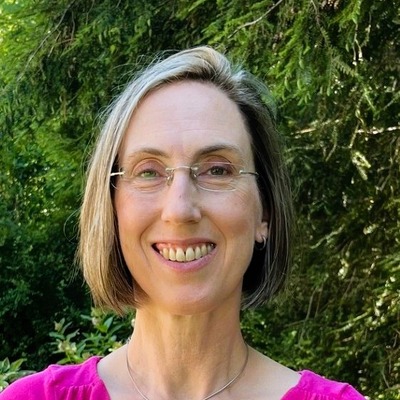
Tina Woolston
Sustainability Director, Sustainability Lecturer
Actions
Tina Woolston (she/her) has served as the Director of Tufts University’s Office of Sustainability since 2010, spearheading efforts that have earned national recognition for waste reduction and transportation demand management. She collaborates with faculty to integrate real-world sustainability challenges into the classroom and created flagship programs like the Eco-Ambassador, Eco-Rep, and Green Office Certification, which have inspired similar initiatives nationwide. Tina developed and oversees the Green Fund, supporting community-led sustainability projects, manages Tufts’ comprehensive greenhouse gas inventories, and has led campus-wide resilience workshops. She has developed and taught sustainability courses while providing consultations to students, faculty, and staff—both at Tufts and other institutions—on creating sustainable systems. Tina also established Tufts’ first sustainability council and has advanced plans for integrating sustainability into university operations. She holds both a B.S. and M.S. from Cornell University, along with a certificate in Community Environmental Education from Tufts.
Getting Creative: Using AI to Source High-Quality Student–Operations Sustainability Projects
Colleges and universities increasingly seek to partner students with campus operations staff on real-world sustainability projects—but identifying good project ideas remains a persistent challenge. Operations staff often have deep institutional knowledge and unanswered questions, yet limited time, prior experience working with students, or clarity on what makes a project feasible and valuable in an academic context.
This session explores a new approach: using a custom-designed AI chatbot to help operations staff surface, refine, and translate their everyday challenges into strong, student-ready sustainability projects. The chatbot is intentionally designed around operations workflows, plain language prompts, and clear project criteria, lowering barriers to participation while maintaining rigor and relevance.
Presenters will briefly demonstrate how the chatbot works, including how it guides staff to articulate problems, define scope, flag constraints, and assess student fit. We will unpack what makes a “good” operations-based student project—examining factors such as decision relevance, data access, staff capacity, student learning value, and potential for implementation.
The majority of the session will be interactive. Participants will also be invited to test chatbot prompts and collectively refine criteria for high-quality campus-as-classroom projects.
In small groups, participants will brainstorm and share how they currently source project ideas from operations staff, what has and hasn’t worked, and where breakdowns tend to occur.
Attendees will leave with practical strategies for engaging operations staff more effectively, a clearer framework for evaluating project ideas, and inspiration for how AI tools can support—not replace—relationship-based, cross-campus collaboration.
Developing a Student Sustainability Leadership Symposium for Your Region
The Student Sustainability Leadership Symposium (SSLS) is a one-day event focused on students sharing information, formally through programs and informally through round-table discussions.
Started as the Eco-Reps Symposium at Tufts University in 2014, the model has adapted and changed over time, allowing for access to more and different students beyond the traditional eco-representative, residentially-focused. We have witnessed the evolution of institutional programming and now are looking at intersectional change agents where students in our region have a broad range of interests and connections.
We will demonstrate how to build a simple coalition across a geographic region for student leadership development that is stewarded by sustainability professional staff. We will share the timing needed by the coordinating staff, budget, and other timelines to ensure a successful event.
There is a potential for several regions to time their symposiums together and share a keynote speaker via remote broadcast.
The program is designed to showcase student presentations that are highlighting student research and projects. It allows for outreach within both within your institution (researchers, activists and practitioners) your region and your region. It also highlights sustainability as a career path as we mentor the next generation of professionals. We also see a tie in with future studies as the graduate level even if not at your institution.
We will discuss how to finance this as well as the potential role AASHE can/might play in supporting a regional model for student summits.
Tina Woolston
Sustainability Director, Sustainability Lecturer
Actions
Please note that Sessionize is not responsible for the accuracy or validity of the data provided by speakers. If you suspect this profile to be fake or spam, please let us know.
Jump to top