
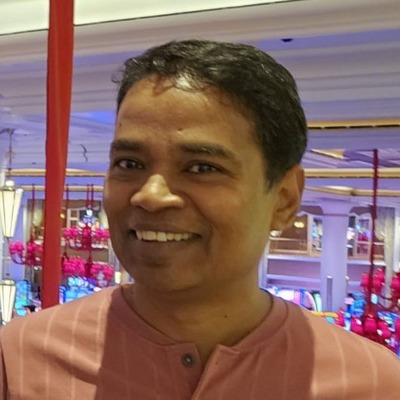
Dhirendra Kumar
Senior Software Architect
Actions
https://www.linkedin.com/in/linkdhirendra/
Dhirendra Kumar is a Sr. Software Architect specializing in Kubernetes, edge platforms, networking, security, and designing scalable, resilient infrastructure for distributed systems.
Area of Expertise
Topics
From Cattle to Fleets: Kubernetes Lifecycle Management for Thousands of Disconnected Edge Clusters
Kubernetes taught us to manage servers as cattle rather than pets. At the edge, the operational unit is changing again: platform teams may need to operate thousands of small Kubernetes clusters across remote locations with intermittent connectivity. How can we manage them as a fleet without turning every cluster into an individually managed island?
This session explores using Kubernetes reconciliation principles at fleet scale. We’ll examine how infrastructure, Kubernetes/platform services, configuration, security, and applications can evolve through independent lifecycles while maintaining desired state. Using K3s, GitOps, Argo CD, Cilium, SPIFFE/SPIRE, OCI artifacts, and Kubernetes controllers, we’ll explore progressive rollouts, health-gated upgrades, version skew, rollback, offline clusters, and safe reconciliation after reconnection.
eBPF at 35,000 Feet: Running Cilium on an Aircraft-Hosted Kubernetes Platform
Cloud-native technologies are increasingly moving beyond traditional data centers into highly constrained edge environments. Modern aircraft are becoming distributed computing platforms that host containerized applications supporting passenger services, content delivery, platform management, and connectivity functions. These environments introduce unique challenges including limited compute resources, intermittent connectivity, strict resiliency requirements, and restricted operational access.
This lightning talk shares our experience evaluating Cilium on an aircraft-hosted Kubernetes platform. We will discuss networking, security, service connectivity, observability with Hubble, and the operational challenges of running Kubernetes at the edge. Attendees will learn how eBPF-powered networking helps simplify platform operations, improve visibility, and provide a scalable foundation for next-generation edge deployments far beyond the traditional data center.
Disconnected but Not Down: Building Self-Healing Kubernetes Fleets for the Edge
Cloud-native platforms often assume reliable connectivity to centralized management services. At the edge, that assumption breaks. Aircraft, ships, factories, vehicles, and remote sites may lose cloud connectivity while their applications must continue operating.
This session explores how to build Kubernetes edge clusters where connectivity loss is an expected operating condition rather than an outage. Using K3s, Cilium, SPIFFE/SPIRE, GitOps, OCI artifacts, and Kubernetes controllers, we’ll explore a model of centralized intent and decentralized execution. We’ll demonstrate how an edge cluster can retain last-known-good state, recover workloads locally, maintain networking and identity, detect desired-state changes, and safely reconcile when connectivity returns. The key principle: the cloud should manage the edge without becoming a runtime dependency of the edge.
Cilium Gateway API at the Edge: Lessons from an Airline Platform
As Kubernetes expands beyond cloud data centers into edge environments, platform teams face challenges around application exposure, resource constraints, operational simplicity, and resiliency. While Gateway API is emerging as the standard for Kubernetes traffic management, most deployment experiences focus on cloud platforms rather than edge systems.
This lightning talk shares our hands-on evaluation of Cilium Gateway API on an airline edge computing platform. We discuss the journey from traditional ingress architectures to Gateway API, covering GatewayClass provisioning, Envoy integration, service exposure, observability, and troubleshooting. Attendees will learn how Cilium's eBPF-powered architecture simplifies networking operations, improves consistency across application teams, and supports a scalable cloud-native approach for edge deployments. We will also share key lessons learned and common adoption pitfalls.
Beyond Network Policies: Building Zero-Trust Kubernetes with Cilium
Many Kubernetes environments rely solely on NetworkPolicies to secure workloads, leaving significant gaps in identity, authentication, authorization, and runtime protection. As platforms scale, securing service-to-service communication requires more than IP-based filtering.
This lightning talk explores how Cilium can serve as the foundation for a practical Zero-Trust architecture by combining identity-aware networking, mutual TLS (mTLS), service-level authorization, and runtime enforcement. Using a real-world edge platform journey, we demonstrate how workloads can be isolated by default, authenticated through cryptographic identities, and authorized based on service identity rather than network location. Attendees will see how Cilium, Hubble, and Tetragon work together to provide visibility, policy enforcement, and runtime protection while simplifying security operations in modern Kubernetes environments.
Please note that Sessionize is not responsible for the accuracy or validity of the data provided by speakers. If you suspect this profile to be fake or spam, please let us know.
Jump to top