
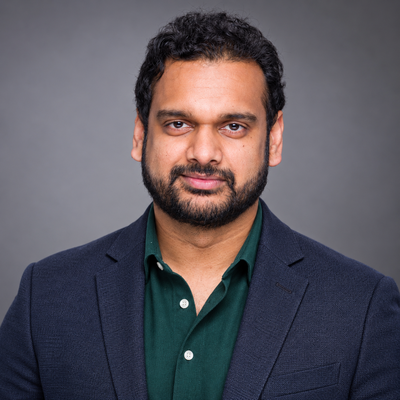
Utkarsh Shrivastava
Senior Engineering Manager
Actions
Utkarsh Shrivastava leads engineering for enterprise AI at Netflix, overseeing enterprise search, internal assistants, and the platforms that support them. His teams build and operate AI agents, with responsibility for integrations, evaluation, and governance. He focuses on scaling AI across the company: setting platform strategy, clarifying ownership, and bringing teams together around shared standards for quality and reliability.
Building a Shared AI Assistant: The Platform Challenges Beyond MCP
Two years ago, teams asked our platform team to connect their data to an AI assistant. Today they ship their own MCP servers in a week. That speed is a win, and it swaps one engineering problem for a harder one: how do you decide what gets through, what gets gated, and who owns the gates? This talk gives you a way to answer that — what stays team-owned, what becomes shared platform, and how to tell whether consolidating actually helped.
At Netflix, bringing these tools together creates real value. Functions like Finance and Talent can now connect information that previously lived in separate systems. A business user can ask a question in one place instead of taking it to three teams. But that same reach creates ambiguity. Multiple tools expose different versions of the same entity, or claim to answer the same question. As the catalog grows, the assistant has more ways to choose incorrectly. Sometimes a data-owning team discovers that another team has built on its data only when an evaluation fails.
How do you build a shared AI assistant that brings tools and data from across a company into one place? At Netflix, product teams increasingly build their own MCP integrations. Our challenge is making those capabilities work together so employees can get answers across teams through a single assistant.
This talk covers the decisions and mechanisms behind that shift: connector certification, an internal benchmark built from real employee queries that we use to evaluate routing between overlapping tools, and how we classify actions to separate what an agent can do on its own from what needs a person first. We'll examine where our initial domain boundaries broke down, what required agreement between teams, and why better tool descriptions alone couldn't resolve the conflicts.
We'll close on what we haven't solved: who owns the authoritative version of an entity, how to retire a connector other teams depend on, and when the benefits of a shared capability justify the coordination it requires.
Please note that Sessionize is not responsible for the accuracy or validity of the data provided by speakers. If you suspect this profile to be fake or spam, please let us know.
Jump to top