
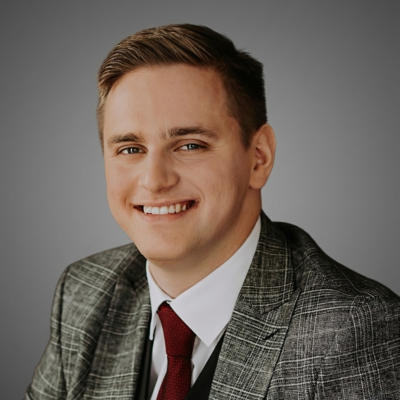
Venya Brodetskiy
Software Architect & AI Tech Lead | AI Agents, .NET and Cloud Architecture
Haifa, Israel
Actions
Venya Brodetskiy is a software architect and tech lead specializing in AI-powered applications, distributed systems, and cloud architecture.
His work has included an AI-powered legal-tech platform for large-scale document processing and analysis, serverless health-tech applications, AI-enabled education platforms, SaaS products, and open-source tooling for distributed systems.
He designs and builds production systems with .NET and Node.js on Azure and AWS, working with AI agents, RAG, MCP, Microsoft Agent Framework, and LangChain/LangGraph.
Venya shares lessons from real projects through code-driven talks and hands-on workshops.
His speaking experience includes Global AI Bootcamp, Agentic Architecture Day, GeekAcademy, and community events by Azure Israel and 404.Community.
Area of Expertise
Topics
From LLM to AI Agent: How Tool Calling Actually Works
An LLM can generate responses from the context it receives, but on its own it cannot query your application data, call a business API, update a ticket, or complete a task through a sequence of real-world actions. An AI agent is the system built around the model: instructions and context, state, available tools, and an execution loop that lets the model choose actions and observe their results.
In this practical, demo-driven session, we break down what changes when an LLM is placed inside an agent runtime and follow a tool call from beginning to end. We examine how tools are presented to the model through names, descriptions, and input schemas; how the model selects a tool and produces structured arguments; how the application validates, authorizes, and executes that request; and how the result is returned to the model for its next decision.
We also explore where tool calling can go wrong: selecting the wrong tool, producing invalid arguments, repeating an action, or triggering unsafe side effects. We discuss the controls that belong in the application layer, including permissions, validation, retries, timeouts, idempotency, human approval, and observability.
A live C# demo using Microsoft Agent Framework makes the complete agent loop visible in code and shows that the model requests actions—but the application remains responsible for executing and controlling them.
You will leave with a clear mental model of the difference between an LLM and an AI agent, how tool calling actually works, and how to design tools that agents can use safely and reliably.
Format: 45–60 minute technical lecture with a live C# demo and code walkthrough.
Target audience: Software developers, AI engineers, and software architects who use LLM APIs and want to understand how agent runtimes turn model output into real actions.
Level: Intermediate (Level 200). Basic familiarity with APIs and LLM concepts is helpful; prior experience with an agent framework is not required.
Demo implementation: Microsoft Agent Framework with C#/.NET. The underlying concepts are framework-independent and also apply to LangChain, LangGraph, and other tool-calling runtimes.
Earlier version: An earlier version of this session was presented as “Building AI Agents with Semantic Kernel” at Global AI Bootcamp 2025, Microsoft Reactor Tel Aviv, on March 17, 2025.
Technical requirements: Stable internet connection for the live model and tool-calling demo, plus a projector or large screen suitable for displaying code clearly.
From Semantic Kernel to Microsoft Agent Framework
Microsoft Agent Framework is positioned as the next generation of Semantic Kernel and AutoGen—but moving from an existing Semantic Kernel application raises practical questions. Which concepts carry over? What changes in the code? And when does adopting the new framework make sense?
In this practical, demo-driven session, we compare the core development models of Semantic Kernel and Microsoft Agent Framework, including agent creation, tool registration, conversation state, and migration patterns. Through a series of C# demos, we build a streaming agent with function tools, extract structured data from an unstructured meeting transcript, persist and resume conversations, work with an Azure AI Foundry managed agent, and add on-demand RAG backed by a vector store.
We then move beyond individual agents to graph-based workflows. A customer-support example combines deterministic preprocessing and policy rules with agent-based classification and response generation, conditional routing, human fallback, and workflow tracing.
You will leave with a practical understanding of Microsoft Agent Framework, the capabilities it adds beyond basic agent interactions, and the trade-offs involved in starting a new project or migrating from Semantic Kernel.
Format: 45–60 minute technical lecture with live C# demos and code walkthroughs. Adaptable to a 40-minute conference slot.
Target audience: .NET developers, AI engineers, and software architects using Semantic Kernel or evaluating Microsoft Agent Framework.
Level: Intermediate (Level 200), with deeper material in the workflow and migration sections. Familiarity with C# and basic AI agent concepts is helpful; prior Semantic Kernel experience is not required.
First public delivery: Agentic Architecture Day 2025, Microsoft Reactor Tel Aviv, December 16, 2025.
Technical requirements: Stable internet connection for Azure OpenAI and Foundry demos, plus a projector or large screen suitable for displaying code clearly.
From Builder to Ruler: Spec-Driven AI Engineering
AI coding agents can produce working code at remarkable speed, but speed without explicit intent, constraints, and verification can quickly turn into inconsistency and risk. As software development moves from deterministic code toward probabilistic agentic systems, the developer’s role changes from writing every implementation detail to defining what agents may build, how they should behave, and how their work will be verified.
In this practical session, we introduce Spec-Driven AI Engineering as a way to make that shift manageable. We examine how specifications become a shared source of truth for humans and coding agents, how Spec Kit turns intent into requirements, plans, and tasks, and how guardrails for resilience, observability, security, and testing keep agent-generated systems under control. We also connect these ideas to Microsoft Agent Framework and MCP, explaining how developers can build and govern their own agents and tools rather than only consume them.
You will leave with a clearer model for directing coding agents, structuring their context, and moving from fast experimentation toward reliable engineering.
Format: Technical lecture with slides and practical examples. Suitable for a 45–60 minute conference session, with optional Q&A.
Target audience: Software developers, AI engineers, architects, and technical leads working with coding agents or agentic systems.
Level: Intermediate (Level 200). Basic familiarity with software development and generative AI is helpful.
First public delivery: GeekAcademy 2026, April 13, 2026.
Technical requirements: A projector or large screen suitable for displaying slides and code clearly.
Building Agentic Systems with a Spec-Driven Approach
AI coding agents can generate code quickly, but without clear intent, constraints, and validation, the result can become inconsistent and difficult to maintain. Spec-Driven AI Engineering changes the workflow: instead of starting with code, developers turn business needs into structured specifications that guide both humans and agents.
In this advanced, hands-on workshop, participants apply that approach end to end. Using Spec Kit, they refine a customer-support scenario into requirements and an implementation plan, then build an agentic application in C# or Python with Microsoft Agent Framework. In the second lab, they create a local SupportOps MCP server and connect it to the application, adding customer data access and business actions such as ticket creation, escalation, and refund requests.
Participants leave with a repeatable workflow for moving from intent to implementation and a working example that combines specifications, agent orchestration, and MCP behind a clean host-server boundary.
Format: Advanced hands-on workshop with two guided labs, short lectures, independent exercises, and solution walkthroughs.
Target audience: Experienced software developers and AI or data practitioners. Not intended for beginners without a development background.
Level: Advanced (Level 300).
Preferred duration: Half-day workshop, approximately 5.5 hours including breaks.
First public delivery: GeekAcademy Workshop #2, Microsoft Reactor Tel Aviv, April 15, 2026.
Participant requirements: A laptop with VS Code or Visual Studio, Git, .NET 10 or Python 3.14, a GitHub account, GitHub Copilot, and stable internet access.
Organizer requirements: Reliable internet, model access for participants, and a projector or large screen suitable for displaying code clearly.
Any agent, any cloud: Standardized tracing with Foundry
AI agents are increasingly built with different frameworks and run across Azure, AWS, GCP, and private infrastructure. Yet the way an agent is authored and hosted—prompt-based, managed code, or self-hosted—changes who owns its runtime, deployment, state, and telemetry.
In this practical, demo-driven session, we compare four small agents: a prompt-only agent in Microsoft Foundry, a Microsoft Agent Framework agent hosted by Foundry, a self-hosted MAF agent, and a self-hosted LangChain/LangGraph agent. We examine how responsibilities shift between you and Foundry, and how OpenTelemetry standardizes telemetry from these different hosting models and brings it into a single observability experience through Azure Monitor and Microsoft Foundry.
You will leave with a clear mental model for choosing between prompt, hosted, and self-hosted agents—and for keeping their behavior observable in one place, wherever they run.
Format: Practical technical session with live demos and code walkthroughs.
Target audience: Developers, AI engineers, and software architects interested in agent hosting and observability.
Level: Intermediate (Level 200). Basic familiarity with AI agents and cloud concepts is helpful.
First public delivery: After Build TLV – Dev & AI Night, Tel Aviv, June 18, 2026.
Technical requirements: Stable internet connection for live cloud demos and a projector or large screen suitable for displaying code clearly.
After Build TLV — Dev & AI Night
Joint meetup by 404.Community and Azure Israel. Presented “Any agent, any cloud: Standardized tracing with Foundry”
GeekAcademy 2026 — Hands-On Workshop
Hands-on workshop hosted by GeekAcademy at Microsoft Reactor Tel Aviv. Co-led with Alon Fliess and presented “Building Agentic Systems with a Spec-Driven Approach.”
GeekAcademy 2026 — Online Webinar
Online webinar in the GeekAcademy 2026 program by Geektime and Microsoft. Presented “From Builder to Ruler: Spec-Driven AI Engineering.”
Agentic Architecture Day 2025
Azure Israel community event focused on agent frameworks and Spec-Driven Development. Presented “From Semantic Kernel to Microsoft Agent Framework.”
Global AI Bootcamp 2025 — Tel Aviv
Tel Aviv edition of Global AI Bootcamp 2025 at Microsoft Reactor. Presented “Building AI Agents with Semantic Kernel.”
Please note that Sessionize is not responsible for the accuracy or validity of the data provided by speakers. If you suspect this profile to be fake or spam, please let us know.
Jump to top