
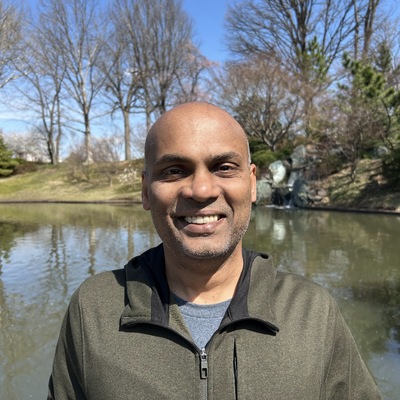
Vinod Vydier
Observability Specialist
St. Louis, Missouri, United States
Actions
Vinod Vydier is an Observability Architect at Splunk. He works in Cloud Native and container/Kubernetes environments and has been OpenTracing and OpenTelemetry contributor/approver since 2017. He works with some of the largest companies in Financial sector and helping them in their cloud journey and adopting Opentelemetry based Observability solutions in their environments. He is also the organizer for the local STL chapter of CNCF meetup and STL Go meetups.
Area of Expertise
Topics
Event-Driven Autoscaling for OpenTelemetry Pipelines
CPU-based autoscaling fails telemetry pipelines. Collectors sit at 40% CPU while queues overflow and latency spikes—yet HPA won't scale. Prometheus scrape intervals and KEDA polling add 60+ seconds of delay during traffic bursts.
This session shows how to use KEDA with OpenTelemetry metrics as scaling signals—queue depth, ingestion rate, and latency percentiles instead of CPU. We compare Prometheus-based approaches with patterns that connect scaling directly to telemetry in the OTel Collector pipeline.
You'll see reference architectures for scaling OTel Collectors: which signals work, how to set thresholds aligned to SLOs, and how to avoid false scale events and cardinality pitfalls. Attendees leave with a decision framework, working ScaledObject configurations, and production-tested patterns.
Bringing OpenTelemetry to Mainframes: Semantic Conventions for z/OS Workloads
Mainframes process trillions of transactions annually in banking, insurance, and government—yet remain invisible to modern observability tooling. With OpenTelemetry's graduation and dedicated mainframe working group, that's changing.
This talk demonstrates how we've mapped z/OS subsystems (CICS, IMS, Db2) to OpenTelemetry semantic conventions, preserving mainframe-specific context like SMF records, WLM service classes, and coupling facility metrics. We'll show live examples of distributed traces spanning from Kubernetes microservices through API gateways into COBOL transactions, and how structured logs integrate with cloud-native platforms.
Attendees will learn the technical challenges of instrumenting legacy systems, our approach to backward-compatible schema design, and how this work enables hybrid cloud architectures where mainframes remain first-class citizens.
Bringing OpenTelemetry to Mainframes: Semantic Conventions for z/OS Workloads
Mainframes process trillions of transactions annually in banking, insurance, and government, yet remain invisible to modern observability tooling. With OpenTelemetry's graduation and dedicated mainframe working group, that's changing.
This talk demonstrates how we've mapped z/OS subsystems (CICS, IMS, Db2) to OpenTelemetry semantic conventions, preserving mainframe-specific context like LPAR, virtualization and region.
We'll show live examples of distributed traces spanning from Kubernetes microservices through API gateways into COBOL transactions, and how structured logs integrate with cloud-native platforms.
Attendees will learn the technical challenges of instrumenting legacy systems, our approach to backward-compatible schema design, and how this work enables hybrid cloud architectures where mainframes remain first-class citizens.
Please note that Sessionize is not responsible for the accuracy or validity of the data provided by speakers. If you suspect this profile to be fake or spam, please let us know.
Jump to top