
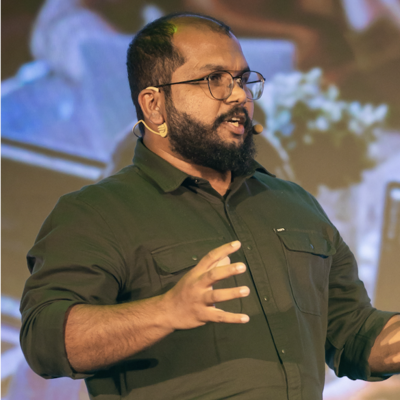
Yashod Perera
OpenChoreo Maintainer | Associate Tech Lead @ WSO2 | Visiting Lecturer | Tech Speacker
Colombo, Sri Lanka
Actions
I am one of the maintainers of OpenChoreo, an open-source, CNCF Sandbox internal developer platform for Kubernetes, and an Associate Technical Lead at WSO2, where I build platform engineering tooling at the intersection of AI and cloud native. My current work focuses on making developer platforms AI-native exposing platform capabilities to AI agents through the Model Context Protocol, designing abstractions that both humans and LLMs can safely consume, and bringing agent-driven workflows to Kubernetes.
A tech speaker and a visiting lecturer, I regularly share hands-on lessons from building and operating cloud native platforms with both industry and university audiences. I am passionate about the open-source community and about shaping how the next generation of developers, human and AI alike experience the cloud native ecosystem.
Area of Expertise
Topics
Confessions of a Portal Assistant: Hard Lessons from Shipping an LLM into a Developer Platform
Adding an AI assistant to a developer portal sounds simple: wire an LLM to your docs and APIs, add a chat box, ship it. We did exactly that for OpenChoreo, an open-source, CNCF Sandbox developer platform for Kubernetes. Then reality arrived. The assistant invented flags for real CLI commands. It answered confidently about clusters it couldn't see. It gave perfect answers to questions users never asked and stumbled on the one question every developer actually had: "why is my deployment failing?"
This talk is the unfiltered postmortem: what it actually takes to make an LLM assistant useful, truthful, and safe inside a platform, told by a maintainer who shipped one in the open. We'll walk through the lessons that survived contact with real users:
1. Context is the product. The model mattered far less than what we fed it. How we moved from "RAG over the docs" to grounding answers in live platform state — components, deployments, logs, and traces — and why stale or missing context was behind almost every bad answer.
2. Trust is earned in the failure cases. The eval harness we built from real user questions, how we measure hallucination on platform-specific knowledge, and why "I don't know, but here's how to check" became our highest-value response.
3. Guardrails before capabilities. What happened when the assistant graduated from answering questions to taking actions — scoping what it may touch, keeping a human on the destructive path, and making every action auditable.
Everything shown is Apache-licensed and reproducible. I'll leave with a practical playbook, context architecture, guardrail patterns, and agent middlewares for building an assistant into your own product without shipping a confident liar to your users.
Your Next Platform User Isn't Human: Building an AI-Native Developer Platform
In the era of AI, your developer portal has a new user who doesn't read your docs, doesn't click your buttons, and ships at 3 AM without asking. It's an AI agent that your platform was never designed for.
For a decade, platform engineering optimized for one kind of user: a human with a browser. Golden paths, service catalogs, self-service forms, all built around clickOps, whose assumption just broke. Coding agents now scaffold services, write manifests, and ask "where do I deploy this?" and most platforms have no answer, because their only interface is a UI. So agents scrape the portal or shell out to kubectl behind your platform's back. That's not developer experience; that's a governance hole with an API key.
This is a maintainer's war story of rebuilding an internal developer platform so AI agents are first-class users, using OpenChoreo, an open-source, CNCF Sandbox developer platform for Kubernetes. The patterns apply anywhere, Backstage included. We have made three desicions under the hood,
1. MCP is the new UI. The control plane and Observability plane are exposed through a Model Context Protocol server, so any agent can discover components, deploy workloads, and inspect platform state — same abstractions and guardrails as humans, never raw Kubernetes primitives.
2. Abstractions that survive an LLM. How component types and a programmable control plane stop an agent from generating 400 lines of YAML nobody reviews — and keep it on your golden paths instead of inventing its own.
3. An SRE agent on call. Correlating logs, metrics, and traces to propose incident root causes — where it genuinely shines, and where it confidently lies.
At the end, I will do a live demo of an agent taking a service from prompt to production, plus the scars — agents bypassing golden paths, auth models that assumed a human in the loop, observability gaps only a machine can find. Leave with a blueprint for making your platform agent-ready.
ContainerDays & AI Context Singapore Sessionize Event
Please note that Sessionize is not responsible for the accuracy or validity of the data provided by speakers. If you suspect this profile to be fake or spam, please let us know.
Jump to top