
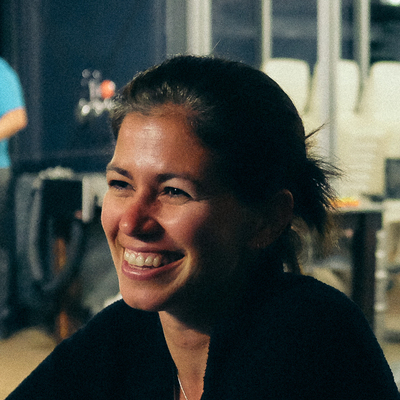
Elle Meredith
Engineer, Consultant, Coach and Founder at Blackmill Consulting
Byron Bay, Australia
Actions
Elle is a software engineer with many years of consulting experience, leading projects and teams. She is a certified organisational coach. Elle completed a post-grad certificate in Psychology for Business and Management at Curtin University, and is currently completing her master’s in Leadership and Management (Organisation Dynamics) with NIODA. Elle ran two 6-month apprenticeship engineering academies. At Blackmill, she advises executives and technology leaders on effective engineering practices that scale.
Area of Expertise
Topics
Team culture tools you can use tomorrow
Working in a toxic atmosphere is associated with elevated levels of stress, burnout, and mental health issues. Toxicity imposes costs that flow directly to the organisation’s bottom line and also affects employees physical well-being. Healthy team culture is what we should strive for. But how do we get there? In this talk, you will learn a framework to assess your team culture and walk away with suggestions you can try with your own team tomorrow.
Strategies for saying no
You have been working hard to meet a deadline and then you receive an email from your boss, asking you to take on a new project. You're at capacity with your time, resources, and focus, but you still feel obliged to say "yes". This scenario is common for most of us. We don't want to say "no" because we don't want to disappoint people or let them down. This is even a bigger problem when you start leading people. Saying no enables you to focus on what's important and prevent burnout. In this talk, you will take away tools and strategies to become more confident around saying no.
Story Telling with Git Rebase
In a successful software development project, a key challenge is to manage complexity because projects get very complex very quickly even within small teams. Version control is the tool for communicating intent in our codebase over the life time of the project. Rebasing allows us to revise our development history before sharing it with the team to tell the story of the product.
Learn to use Git commit messages to keep track of the intent of your code changes. How to make using feature branches more effective. Learn interactive rebasing, how to merge conflicts without losing precious code and how to auto-squash commits. Basically, stop fearing interactive rebasing.
Exploring Rails anti-patterns
Is your Rails app sluggish? Does its performance suffer? Even with the best intentions, Rails applications can become littered with anti-patterns that negatively affect developer velocity, code clarity, and maintenance. Following a few simple patterns and strategies, you can transform your Rails application code to become more robust and functional. One that will be easier to extend and maintain. This talk will explore anti-patterns in practice and suggest fixes to ensure your Rails project is a success.
Learn to delegate; like a boss
"It’s just quicker if I do it myself."
It’s the mantra of the dedicated leader, but it’s also the silent killer of organisational growth. When we hoard tasks under the guise of "maintaining quality" or "protecting" our team from tedious work, we aren't being heroes—we’re becoming the ultimate bottleneck. This session dismantles the common myths of the "Delegation Dilemma" and explores why true leadership isn't about the work you do, but the authority you entrust to others.
We will dive into the psychological barriers that make letting go so difficult and provide a practical framework for shifting your focus from process to outcomes. Attendees will learn how to transition from a "doer" to a "multiplier," creating a more resilient team and reclaiming the mental space required for high-level strategy.
You were promoted because you were the best at what you do. But now, as a leader, you have more responsibilities, more balls to juggle, and less time than ever to make it all work. If your strategy is simply to "work harder" or "be more efficient," you are heading straight for a burnout-induced bottleneck.
The truth is, being a highly effective leader requires a fundamental identity shift: moving from the person who does the work to the person who enables the work.
In this session, we tackle the "Delegation Dilemma". We’ll explore why leaders resist letting go—from the fear of diminished quality to the guilt of "offloading" tasks—and why these habits are actually holding your team back from professional growth. You will learn that delegation isn't a luxury for when you’re overwhelmed; it is a core leadership responsibility.
We will provide you with a clear framework to decide what to delegate, who to trust, and how to focus on outcomes rather than process. You’ll walk away not just with a new mindset, but with a practical Delegation Script to help you turn these concepts into reality starting tomorrow.
The Architecture of Agency
In high-pressure environments, the natural human instinct is to retreat into rigid hierarchies and "rule-following." But what happens when a leader resists the urge to control and instead focuses on building a "container"? Using the "Uppers, Middles, and Lowers" organisational simulation as a backdrop, this session explores the tension between rapid decision-making and participative leadership. We will examine how providing a clear purpose and a safe emotional space allows teams to navigate ambiguity, find creative freedom, and maintain psychological safety, even when the clock is ticking.
Leadership is often a paradox: we strive for flat hierarchies and employee agency, yet the weight of responsibility often pulls us toward the safety of "the rules." This session dissects a 40-minute organisational simulation of "CatsRUs," where the speaker served as CEO to a team of managers and workers tasked with a high-volume creative goal.
Through the lens of this "compressed reality," we will explore the microdynamics that shape corporate culture. We’ll discuss the "following orders" trap, how even CEOs can become victims of the structures they have the power to change, and the unintended consequences of bypassing middle management in pursuit of "flatness."
Key takeaways include:
- The Leader as a "Container": How to provide enough boundaries to prevent a sense of abandonment, while leaving enough space to avoid feeling controlled.
- Adaptive vs. Autocratic: Navigating the "grey space" of making rapid decisions while maintaining a "people over delivery" culture.
- The Middle Management Blind Spot: Why direct connection with the front line can inadvertently disempower your managers and how to define their mandate in ambiguous environments.
- The Amplification Effect: Understanding how a leader’s micro-decisions and "visits to the floor" send powerful cultural signals that ripple through the entire organisation.
Attendees will walk away with a fresh perspective on "leading in the grey" and practical reflections on how to carry the emotional load of a team without sacrificing their autonomy.
The Strategy Tightrope: Balancing the plan you want with the reality you have
In modern management, the word "strategy" has suffered a frustrating proliferation. It is frequently tossed around as a universal panacea—a magical buzzword intended to cure every organisational ailment from poor culture to declining sales. Yet, when strategy is treated as a rigid, top-down blueprint, it often becomes a hollow exercise in "thinking then acting" that fails the moment it hits the real world.
This session challenges the illusion of control inherent in traditional planning. We will explore why effective direction isn't "formulated" in a vacuum, but "crafted" through a constant, intimate dance between thought and action. By moving beyond the false dichotomy of rigid planning versus reactive drifting, we will discover how to find the "sweet spot" where deliberate intent meets organic adaptation.
Key Learning Objectives
By the end of this session, participants will be able to:
Identify the "Strategy Trap": Recognise when the term is being used as a superficial band-aid rather than a functional tool.
Balance Deliberate and Emergent Paths: Learn to distinguish between a "Plan" (intended behaviour) and a "Pattern" (realised behaviour) to see what is actually working.
Navigate "Primary Risk": Understand the psychological anxiety of making hard choices and how to prevent organisational "drifting."
Adopt a "Both-Sided" Approach: Master the art of maintaining stability while simultaneously detecting the subtle, "grass-roots" changes that signal a need for transition.
Speaker's Takeaway Quote
"Strategy is not a cure-all to be invoked; it is a craft to be practised. It requires the courage to commit to a focal point and the agility to let the best solutions emerge from the clay of daily experience."
Please note that Sessionize is not responsible for the accuracy or validity of the data provided by speakers. If you suspect this profile to be fake or spam, please let us know.
Jump to top