

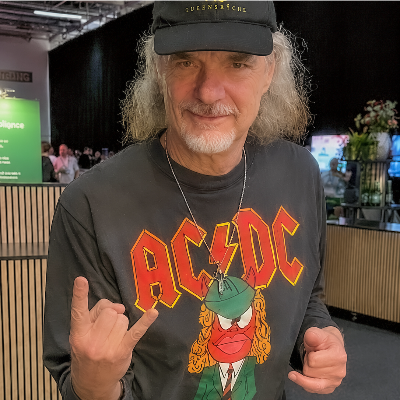
David McCarter
Microsoft MVP (Developer Technologies), Software Architect, Speaker, Trainer, Inventor, and Mentor.
Austin, Texas, United States
Actions
As David gradually winds down his career and looks toward retirement, now is the time to benefit from his experience, insight, and availability.
David McCarter is an exceptionally seasoned software engineer, a celebrated author, and a captivating speaker with a remarkable track record spanning more than two decades in the industry. Holding the distinguished title of Microsoft MVP (Most Valuable Professional), David also serves as a solutions architect, Code Quality Zar, consultant, proficient code reviewer, and the esteemed editor-in-chief of dotNetTips.com.
Renowned for his prolific literary contributions, David has graced programming magazines with his insightful articles and penned several illuminating books, including "Rock Your Code: Coding Standards for Microsoft .NET," "Rock Your Code: Code and App Performance for Microsoft .NET," and "Rock Your Career: Surviving the Technical Interview."
David commands a powerful presence on the speaking circuit, captivating audiences with his engaging and insightful talks on programming and technical interviewing—all delivered with his signature rock-and-roll flair.
He has left an indelible mark on user groups, educational institutions, and prominent conferences worldwide, such as BuildStuff, Øredev, NDC, Copenhagen Developers Festival, Code Camp, SQL Saturday, DevConnections, and VSLive, among others. His instructional legacy even includes a tenure at the University of California, San Diego.
Presently, he steers his own software consulting enterprise, McCarter Consulting, further solidifying his esteemed status within the field.
Notably, David is the Co-founder and Director of the San Diego .NET Developers Group—a role that earned him the prestigious INETA Community Excellence Award in recognition of his outstanding contributions to the .NET community. He also holds the distinction of being a U.S. patent holder, with his software printing system officially approved by the U.S. Patent Office in May 2008.
In totality, David stands as a multifaceted professional, an abundant reservoir of wisdom and proficiency across the spheres of software engineering, literary pursuits, and public speaking.
Microsoft MVP profile is located at: http://bit.ly/davidmvp
GitHub repo is located at: https://github.com/RealDotNetDave
NuGet packages are located at: https://www.nuget.org/profiles/davidmccarter
You can also connect with David on these social media platforms:
BlueSky: https://bsky.app/profile/dotnetdave.bsky.social
Facebook: https://www.facebook.com/DotNetArmy
LinkedIn: https://www.linkedin.com/in/davidmccarter/
Area of Expertise
Topics
Röck Yoür Cöde: Application Globalization Workshop
In our increasingly interconnected world, creating applications that work seamlessly across diverse languages and regions is more critical than ever. Many projects overlook globalization until it’s too late, resulting in costly and time-consuming retrofitting efforts. This workshop will equip you with the practical knowledge and tools needed to address globalization from the start, saving your team time, money, and frustration.
In this immersive, hands-on workshop, you'll dive deep into the fundamentals of globalization and internationalization. You’ll learn how to correctly handle numbers, dates, and time formats to ensure smooth localization for different regions. Beyond that, we’ll cover how to effectively manage user-facing text by preparing resource files, refactoring strings into these resources, and applying advanced string globalization techniques. These skills will set you on the path to creating applications that users across the globe will find intuitive and easy to use.
This workshop isn’t just theoretical—you will leave with tangible results. Bring your laptop and any relevant work projects to immediately implement what you’ve learned. By the end of the session, you’ll have a solid foundation to continue globalizing your projects back at your workplace.
You'll also discover how to streamline the process of string translation, making it faster, easier, and more cost-effective. Additionally, we will cover how to optimize your development workflow by configuring the .editorConfig file to identify and resolve globalization-related issues seamlessly.
By the conclusion of this workshop, you'll be prepared to build applications that cater to a global audience, improving accessibility, user experience, and market reach. The best part? This workshop is application-agnostic—whether you're working on a web app, desktop software, or mobile solution, the skills you acquire are universally applicable.
Pre-Workshop Instructions:
• Bring your laptop and any relevant work or personal projects that you want to globalize (mandatory).
• Ensure you have Visual Studio 2022 installed and updated to the latest version.
• Make sure your Azure account is set up and ready for use.
Join this hands-on workshop to master the art of building applications that thrive across languages and regions. Learn how to address globalization from the start, saving time and reducing costs. We’ll cover best practices for handling dates, times, numbers, and user-facing text, as well as advanced string globalization techniques. Bring your laptop and work on real projects, applying what you’ve learned to immediately enhance your applications. By the end, you’ll be equipped with practical tools and a solid foundation for globalizing your software, regardless of platform.
Röck Yoür Cäreer: 5 Steps to Dynamic Public Speaking
Your technical knowledge deserves a great performance.
Whether you’re presenting an architecture proposal, demonstrating software, or stepping onto a conference stage, your audience needs to understand why your message matters.
Join David McCarter for a backstage pass to public speaking, built on more than 30 years of presenting and teaching. Through personal stories, practical examples, and rock ’n’ roll flair, David introduces five steps for turning what you know into a presentation that serves your audience.
You’ll explore how to know your crowd, build a compelling set list, design useful visuals, rehearse effectively, and deliver with growing confidence. Along the way, you’ll discover ways to explain complex ideas, prepare technical demonstrations, and handle the moments when the performance doesn’t follow the script.
Stage fright gets its own soundcheck. David shares lessons from his nervous beginnings and practical preparation habits you can apply before your next presentation.
AI makes a guest appearance in the preparation process. Explore how it can help challenge an outline, identify jargon, and suggest rehearsal prompts while you retain responsibility for the message and its accuracy.
You’ll leave with a five-step approach you can apply to your next presentation and a concrete improvement to practice.
Your next stage might be a meeting room, a user group, or a conference. Make the message count.
What Attendees Will Learn
• Define an audience’s needs and explain why the presentation matters to them.
• Structure technical material around a clear message and useful examples.
• Create slides and demonstrations that support audience understanding.
• Apply rehearsal and preparation techniques to manage nerves and delivery.
• Use AI selectively during preparation while maintaining accuracy and an individual speaking voice.
Give your next presentation the rockstar treatment! Explore five practical steps to know your audience, build your set list, create clear visuals, rehearse, and deliver with confidence. David McCarter shares lessons from 30+ years of speaking, with an AI guest appearance in preparation. Apply the techniques to team demos, technical discussions, and conference talks.
Röck Yoür Cöde: Optimizing .NET Code for Speed and Efficiency
Everyday .NET code can perform more work and allocate more memory than its author expects. In frequently executed paths, those costs can affect application responsiveness, throughput, and resource usage.
In this demonstration-driven session, David McCarter explores practical ways to improve C# and .NET code through measured comparisons. You’ll examine alternative implementations of common operations, compare execution time and memory allocations, and discover why seemingly small coding choices can produce different results.
Examples cover collection processing, string operations, and avoidable allocations. For each optimization, we’ll examine the original implementation, the proposed change, the measured results, and the conditions that influence the outcome.
You’ll learn how to recognize unnecessary work, assess API choices, and decide whether a performance improvement justifies additional complexity. We’ll also discuss why results depend on factors such as input size and runtime version, and why an improvement in one method still needs validation in the application using it.
A focused AI example shows how to evaluate a suggested optimization: check that behavior is preserved, compare it with the original implementation, and let the measurements guide the decision.
Drawing on David’s published performance research and open-source work, this session connects practical coding techniques with evidence you can examine and apply.
Leave better equipped to spot performance opportunities, compare solutions, and make informed optimization decisions in your own .NET projects.
What Attendees Will Learn
• Identify unnecessary processing and allocations in common C#/.NET operations.
• Compare implementations using execution time, allocated bytes, and equivalent behavior.
• Evaluate how workload, runtime, and maintainability affect optimization decisions.
• Validate proposed improvements, including AI suggestions, through correctness checks and performance measurements.
Discover practical ways to improve .NET execution time and reduce unnecessary allocations. Through live code demonstrations and benchmark comparisons, David McCarter explains which changes help, why they work, and the tradeoffs involved—including how to validate an AI-suggested optimization.
Röck Yoür Cöde: Coding Standards That Improve .NET Quality and Performance
Good coding standards give .NET teams a shared way to write, review, and maintain software. Putting them into practice means understanding the problems each rule helps prevent and making important checks repeatable.
In this practical session, David McCarter demonstrates how selected C# and .NET coding standards improve everyday development. Through before-and-after examples, you’ll explore clearer naming and API design, common reliability problems, and coding choices that affect maintainability and performance.
You’ll see how EditorConfig, .NET analyzers, and build configuration help teams apply agreed standards consistently. We’ll also discuss how to introduce standards into an existing codebase, prioritize useful rules, and handle exceptions with a clear technical justification.
Performance examples will connect specific coding choices to measured execution time and memory allocations, helping you distinguish a readability improvement from an optimization.
The session also includes a focused look at using AI to apply and review your team’s standards. You’ll see how project instructions provide context and how to evaluate suggested changes through automated checks, tests, and human review.
Drawing on his published coding guidance and real-world engineering experience, David explains the reasoning behind the rules, the tradeoffs involved, and the tools that help teams follow them.
Leave with a practical approach to selecting useful standards, automating checks, and making better decisions in your next code review.
What Attendees Will Learn
• Explain how selected coding standards improve clarity, reliability, maintainability, or measured performance.
• Configure .editorconfig, analyzer rules, and build settings to provide consistent feedback.
• Prioritize standards for an existing codebase and evaluate justified exceptions.
• Review AI-assisted changes against team standards, intended behavior, and relevant measurements.
Put .NET coding standards into practice through before-and-after examples, automated analysis, and measured performance results. Learn how to apply useful rules, introduce them into existing projects, and use AI to assist with implementation and review while validating the resulting changes.
Röck Yoür Cöde: Everything That Every .NET Developer Needs to Know About Disposable Types
The show needs a strong finish—and your .NET resources need a proper exit.
A stream left open, a connection held too long, or an object disposed before its final encore can turn working code into a reliability problem. Correct cleanup starts with understanding who owns each resource and how long it needs to stay on stage.
In this practical session, David McCarter takes you backstage with .NET disposable types. Through live demonstrations and real-world lessons, you’ll explore the responsibilities of the garbage collector, what disposal actually accomplishes, and why resource ownership determines who should perform cleanup.
You’ll see how using and await using control resource lifetimes, how to implement IDisposable and IAsyncDisposable in your own types, and how shared resources and dependency injection change the decisions you need to make.
We’ll examine mistakes at both ends of the set list: resources that linger after their work is finished and resources disposed while something still needs them. Diagnostic examples will connect the code to observable behavior so you can investigate the cause.
AI joins for a guest appearance as we review generated cleanup code. We’ll check its ownership assumptions, disposal boundaries, and asynchronous behavior before accepting the implementation.
Leave with practical techniques for designing, reviewing, and troubleshooting resource lifetimes in your .NET applications.
Give every resource the stage time it needs—and a clean exit when its performance is over.
What Attendees Will Learn
• Explain the difference between garbage collection and explicit resource cleanup.
• Determine ownership and choose appropriate disposal boundaries.
• Use using and await using, and implement IDisposable and IAsyncDisposable appropriately.
• Recognize lifetime mistakes involving shared resources and dependency-injected services.
• Evaluate cleanup code, including AI-generated implementations, using targeted tests and diagnostic evidence.
Give your .NET resources a proper backstage exit! Learn when to use using and await using, how to implement IDisposable and IAsyncDisposable, and who owns cleanup for shared and dependency-injected resources. Through practical demos and an AI-assisted code review, spot lifetime mistakes before they wreck the show.
Röck Yoür Cäreer: Build a Software Career That Lasts
A software career is a long tour. Deciding what belongs on your set list—and what needs to come off it—can shape the experience.
What should you learn next? Where can you make a useful contribution? How do you build professional relationships while leaving room for life beyond the laptop?
Join David McCarter for an honest look backstage at a career spanning more than three decades in software engineering and 18 years of university teaching. Through personal stories, practical lessons, and rock ’n’ roll flair, David explores decisions that can help engineers navigate their next career chapter.
You’ll examine how to choose learning priorities, recognize your strengths, and demonstrate your contribution through work others can see. We’ll explore how mentoring, user groups, conferences, and sharing knowledge can help you build relationships and discover opportunities to contribute.
Every long tour also needs a sustainable pace. David shares lessons about competing commitments, professional boundaries, and making room for interests and relationships outside work.
AI gets a guest appearance as a learning assistant. Explore ways to use it to investigate unfamiliar topics and suggest practice activities, while checking its explanations and developing your own understanding.
Whether you’re finding your footing, taking on greater responsibility, or reconsidering your direction, bring one career decision you’re facing. Use the session to identify a realistic next step.
Build your next set list with intention.
What Attendees Will Learn
• Choose learning priorities that connect to their goals and practical opportunities.
• Identify ways to build professional relationships through mentoring, community participation, and contribution.
• Describe their strengths using concrete examples of their work.
• Recognize commitments or boundaries to reconsider for a more sustainable working life.
• Use AI selectively to support learning while independently checking understanding.
Here Is What Attendees Are Saying About This Session
•Justin E. - Thanks a ton for sharing your wisdom! I very much enjoyed hearing your stories and appreciate the advice.
Build a software career ready for the long tour! David McCarter shares lessons from 30+ years in engineering about choosing what to learn, finding your professional band, recognizing your strengths, and setting a sustainable pace. With practical stories and an AI learning-assistant guest appearance, identify a realistic next step for your career.
Röck Yoür Cöde: The .NET Performance Game Show
Welcome to the .NET performance showdown, where competing C# implementations battle for the headline spot—and you predict the winners!
Join David McCarter for a rock ’n’ roll game show that puts your coding instincts to the test. Each round presents a real-world scenario, competing implementations, and a challenge: identify the fastest execution, the fewest allocations, or the best choice for the stated workload.
Lock in your answer. Then watch the benchmark results hit the scoreboard.
We’ll start with a Soundcheck round before turning up the difficulty with collection processing, string operations, and hidden allocation costs. Expect some familiar code to deliver a headline performance—and some apparently clever implementations to stumble on stage.
Every reveal includes the explanation: what the code does, why the results differ, and when the winning approach deserves a place in your application’s set list. We’ll also examine correctness, readability, and whether the improvement justifies the complexity.
In the Mystery Riff round, an AI-suggested optimization takes the stage. You’ll examine the code and predict whether its performance lives up to the pitch.
Expect friendly competition, surprising results, rock ’n’ roll humor, and opportunities to win prizes. Compete for bragging rights or follow along—every round delivers a practical lesson.
Bring your C# instincts. The benchmarks will have the final word.
What Attendees Will Learn
• Recognize common processing and allocation costs in everyday C# code.
• Interpret benchmark comparisons within the stated workload and runtime.
• Evaluate tradeoffs among execution time, allocations, correctness, and readability.
• Assess proposed optimizations, including AI suggestions, using measured evidence.
Get ready for a .NET performance showdown! Compare competing C# implementations, lock in your picks, and watch the benchmark results hit the scoreboard. From the opening Soundcheck to the final Encore, discover what makes code faster, what creates unnecessary allocations, and whether an AI-suggested optimization earns its place in the set list. Expect practical lessons, friendly competition, and prizes.
Röck Yoür Cöde: The ROI of Deep Experience – Tapping into Untapped Engineering Power
Some of your team’s most valuable engineering knowledge may already be in the band. Are you giving it a place in the arrangement?
Lessons from production incidents, difficult migrations, and architectural decisions can help teams ask better questions before the next release. Turning that experience into shared capability takes deliberate effort.
In this story-driven session, David McCarter explores how organizations can recognize and apply deep engineering experience. Drawing on lessons from cloud transitions, production outages, and growing teams, he examines where experienced engineers can contribute to delivery, reliability, and long-term maintainability.
We’ll look at practical ways to bring that knowledge into design discussions, reviews, mentoring, and operational preparation. You’ll explore how to make room for those contributions, share the reasoning behind decisions, and help engineers at different career stages learn from one another.
Then we’ll put the value through a soundcheck. What evidence could show less rework, fewer recurring failures, or more effective knowledge transfer? What investment does the team need to make, and what other factors influence the results?
AI gets a guest appearance as we examine how experienced engineers can guide AI-assisted work by identifying missing context, questioning assumptions, and helping teammates validate proposals.
Leave with practical ways to recognize expertise, put it to work, and assess its contribution to your team.
Give experience a place in the arrangement—and help the whole band play better.
What Attendees Will Learn
• Recognize deep experience through demonstrated judgment, relevant expertise, adaptability, and knowledge sharing.
• Identify opportunities to involve experienced engineers in decisions with significant delivery or operational consequences.
• Structure mentoring and knowledge transfer around concrete team needs.
• Select evidence for evaluating benefits, costs, and limitations.
• Apply experienced judgment and shared technical context to AI-assisted work.
Put deep engineering experience in the spotlight! Explore how technical judgment, mentoring, and lessons from production can strengthen your team. David McCarter brings rock ’n’ roll flair to practical ways of applying expertise, sharing knowledge, and assessing its value—with an AI guest appearance. Help the whole band play better
Röck Yoür Cöde: Rebuilding the Human Side of Software Development
In today’s engineering world, we’re surrounded by powerful tools, AI-assisted workflows, and endless online learning. Yet somehow, the human element of software development—the community—is quietly vanishing.
In this session, David McCarter shares how the decline of in-person collaboration, slashed training budgets, and a metrics-obsessed corporate mindset are eroding code quality and developer morale. But this isn’t a nostalgic rant—it's a rallying cry to bring back what made this industry great: mentorship, connection, and pride in our work.
You’ll hear real stories, personal experiences, and practical ideas for reviving community engagement—whether you’re an engineer, team lead, or exec. Let’s stop coding in isolation and start creating software people truly love—together.
Target Audience:
Software Engineers (Mid-Level to Senior)
Team Leads & Engineering Managers
Developer Advocates & Community Organizers
Technical Decision-Makers
This session is based on my widely shared article: "The Day the Software Community Died: Let’s Stop Coding in Isolation and Start Creating Community—And Software—People Truly Love."
Includes real-world examples from over 30 years in software, Microsoft MVP experiences, and running developer user groups.
I am happy to incorporate Q&A or an optional discussion circle post-talk.
Röck Yoür Cäreer: Finding Your Geek Zen
Even rockstars need to step away from the amplifier.
Between delivery deadlines, production alerts, and the pressure to keep learning, a software career can become an endless performance. Finding your Geek Zen starts with examining the expectations shaping your working life—and making room for the person living it.
In this candid, story-driven session, David McCarter shares lessons from more than three decades in software engineering. With honest reflection and rock ’n’ roll flair, he explores the working conditions, relationships, and choices that influence a sustainable career.
We’ll examine patterns that deserve attention: repeated overtime, constant availability, competing priorities, and difficulty disconnecting. David shares practical ways to approach conversations about workload and boundaries, alongside changes that require support from leaders and organizations.
The discussion also explores work location and flexibility in context: how commuting, interruptions, autonomy, and connection affect different people differently.
Beyond the laptop, we’ll consider the place of friendships, creative interests, and time away from professional demands. Music, photography, or another interest can have a place in your life without becoming another productivity target.
AI joins the backstage discussion as we examine its effect on everyday work. Consider how to evaluate the effort it removes, the review it introduces, and the expectations that follow.
Leave with one working pattern to reconsider and a realistic next conversation or action.
Your career deserves room for an encore—and your life deserves room between performances.
What Attendees Will Learn
• Identify working patterns and expectations that contribute to sustained pressure.
• Distinguish changes they can make personally from changes requiring team or leadership support.
• Prepare a practical conversation about priorities, workload, or availability.
• Choose a realistic action involving boundaries, connection, or interests outside work.
Even rockstars need to step away from the amplifier. In this candid keynote, David McCarter shares lessons from 30+ years in engineering about workload, boundaries, supportive workplaces, and life beyond code. With rock ’n’ roll flair and a look at AI’s effect on everyday work, identify a realistic change for your own working life.
Röck Yoür Cäreer: Surviving the Technical Interview - Workshop
Have you ever walked out of an interview knowing you could have done better—if only you’d been more prepared?
Are you chasing a serious raise, a better role, or the confidence to take control of your career?
Then this workshop is for you.
During my career, I’ve interviewed hundreds of software engineers—from brand-new grads to seasoned veterans—and I’ve seen firsthand why strong engineers fail interviews they should have aced. In this workshop, I pull back the curtain on the technical interview process and show you what hiring teams actually look for, how candidates are evaluated, and where most people go wrong.
Whether you’re looking to move up within your current company or land a role somewhere new, preparation is no longer optional. This workshop gives you practical, battle-tested guidance on how to survive—and win—the technical interview.
You’ll learn:
• How technical interviews really work (and why they’re structured the way they are)
• What interviewers are listening for beyond “the right answer”
• How to work effectively with recruiters—and avoid common traps
• How to prepare strategically instead of cramming randomly
• How to use AI responsibly as a powerful tool in your job search
• How to stand out in a competitive market without gimmicks
Along the way, I’ll share crazy, frustrating, and occasionally unbelievable interview stories from engineers just like you—because sometimes the best lessons come from real-world scars.
You’ll also discover the single most important question you should ask during every interview—a question that will completely change the dynamic of the conversation and help you decide whether you actually want the job.
This isn’t a passive lecture. In this workshop, attendees will participate in mock technical interviews, gaining hands-on experience and immediate feedback to help build confidence before the real thing.
If you’re ready to stop guessing, stop stressing, and start walking into interviews prepared, confident, and in control—this workshop will help you rock your career.
Here’s What People Are Saying About This Content
• Bill W. – Good information! I had forgotten to study the technical questions, did that this morning and I felt I aced my technical interview just now =) Thanks Dave! GO now!!! Dave is why I have the best job I have ever had!!!
• Chris S. – I wanted to thank you for your DVD on Technical Interviews. I attended your presentation at Desert Code Camp and purchased the DVD. Your guidance on how to handle technical and even non-technical questions gave me great support and confidence going into a round of interviews I had. That confidence translated into performance as I was able to receive attractive offers from multiple companies, and I was able to make an important move that has been a life-altering, exciting change for me.
• Daniel I. – Great presentation because you made me realize that I’m not doing enough to better my career! You struck a chord when you said we should keep our resume up-to-date and on-hand at all times. Thanks for helping me realize something I should have been doing a long time ago. Your DVD is very helpful. The fact that you have hiring managers and recruiters giving interview tips is great. I’m glad I bought it!
• Dennis M. – Great presentation kept me awake and aware, things we often forget and ignore about preparations and you definitely covered that.
• Ken – Thanks for the great presentations – really enjoyed all your presentations at the code camp, learned a lot about interviewing and gained a lot of insight into how recruiting process works.
• Stacy P. – An invaluable presentation for less experienced developers and a great review for senior developers that should know better.
Please take the How Do You Find a Job survey before attending this session (you could win swag from dotNetTips.com): https://bit.ly/TechJobSurvey
Great engineers fail interviews every day—not because they lack skill, but because they aren’t prepared for how technical interviews really work. In this workshop, I break down what hiring teams actually look for, common mistakes candidates make, and how to prepare with confidence. Learn how to work with recruiters, use AI responsibly in your job search, and discover the single most important question you should ask in every interview. If you want a better job, a bigger raise, or protection against unexpected layoffs, this session will help you rock your career.
Röck Yoür Cäreer: How to Work with Recruiters to Actually Get Interviews
Before your next career audition, give your recruiter conversations a soundcheck.
A productive recruiter relationship starts with understanding the role, explaining your fit, and agreeing on what happens next. That takes more than sending a résumé and waiting for an interview invitation.
In this practical session, David McCarter shares lessons from his experience as a software engineer, interviewer, and hiring manager. With real-world examples and rock ’n’ roll flair, he explores how to identify useful recruiter relationships and make those conversations count.
You’ll learn how internal and agency recruiters fit into a hiring process, what to ask about an opportunity, and how to assess whether the role matches your skills and goals. We’ll also examine how to present relevant accomplishments so a recruiter can explain your fit to a hiring team.
Then we’ll tune your pitch. Through outreach and follow-up examples, you’ll see how to communicate clearly, clarify where you are being represented, and establish useful next steps.
David shares his approach to prioritizing trusted recruiter relationships and explains where referrals, LinkedIn research, and direct applications fit into the search.
AI gets a guest appearance in preparation: helping review an outreach draft or identify questions about a role, while you verify the details and keep your experience accurately represented.
Whether you’re actively looking or preparing for your next move, leave with a practical approach to evaluating opportunities and building professional relationships.
Your experience is the set list. Help the right people understand what you bring to the gig.
What Attendees Will Learn
• Distinguish recruiter roles and assess whether a relationship fits their search.
• Ask questions that clarify the opportunity, hiring process, and representation.
• Explain relevant technical accomplishments in clear, accurate outreach.
• Coordinate follow-up and choose next steps across recruiters, referrals, and direct applications.
Give your recruiter conversations a soundcheck! Learn to evaluate opportunities, explain your technical value, ask useful questions, and coordinate next steps. David McCarter brings rock ’n’ roll flair to practical outreach and follow-up examples, with an AI guest spot on preparing clear, accurate messages for your next career audition.
Röck Yoür Cöde: Stop Guessing—Benchmark Like a Pro
Before you declare your code a headliner, give it a proper soundcheck.
A benchmark can produce an impressive-looking chart while measuring the wrong work. Choosing a faster implementation starts with knowing whether the comparison deserves your trust.
In this demonstration-driven session, David McCarter takes .NET benchmarking from the opening riff to a repeatable performance comparison. Using BenchmarkDotNet, with examples from his Spargine benchmarking work, you’ll learn how to establish a baseline, choose representative inputs, and compare implementations that perform equivalent work.
Then we’ll check the equipment. You’ll see how unrelated setup, unused results, and unsuitable test data can distort a comparison—and how to repair the benchmark before accepting its verdict.
Once the measurements arrive, we’ll put the results through their own soundcheck. Explore execution time, variability, baseline ratios, and allocated bytes. Learn what those numbers tell you, what they leave unanswered, and why the runtime and workload belong alongside every performance claim.
AI gets a guest spot in the set list. We’ll use it to draft a benchmark, then review the generated code for assumptions and mistakes that could undermine the experiment.
Through live demonstrations and real-world examples, you’ll develop a repeatable approach to investigating performance questions and deciding when a result needs further testing in your application.
Bring your performance claims. We’ll give them a soundcheck.
What Attendees Will Learn
• Design fair comparisons using baselines, representative inputs, and equivalent operations.
• Configure and run benchmarks while recognizing common sources of misleading measurements.
• Interpret execution time, variability, baseline ratios, and allocation results within the tested environment.
• Review AI-generated benchmarks and identify when further application-level validation is needed.
Give your .NET performance claims a proper soundcheck! Learn to build trustworthy BenchmarkDotNet benchmarks, measure execution time and allocations, and spot misleading results. Through live demos, Spargine examples, and an AI guest appearance, turn performance guesses into evidence you can explain and use.
Röck Yoür Cöde: The 11 Commandments of Software Engineering
Code that compiles can still fail your users. Whether the first draft comes from a developer or an AI assistant, your team remains responsible for what reaches production.
Great bands rehearse, refine their arrangements, and run a soundcheck before taking the stage. Software teams need the same discipline.
In this energetic session, David McCarter explores 11 rock ’n’ roll commandments for building software that earns its place in production. Through real-world lessons and short C#/.NET examples, we’ll connect architecture, testing, refactoring, error handling, security, and performance to the decisions developers make every day.
AI joins the band throughout. We’ll explore how it can help suggest tests, explain unfamiliar code, and propose improvements—and how to evaluate those suggestions against requirements, maintainability, security, and measured performance. You’ll see why generated tests need review and why an “optimized” implementation still needs a benchmark.
You’ll leave with a practical engineering soundcheck: questions to ask, checks to automate, and evidence to examine before approving a change.
Expect useful examples, honest lessons, humor, and plenty of rock ’n’ roll.
No matter who—or what—writes the code, you’re responsible for what goes on stage.
What Attendees Will Learn
• Identify design and maintainability problems before approving a code change.
• Evaluate AI-generated code and tests against requirements, edge cases, and team standards.
• Use benchmarks and profiling to assess performance claims.
• Apply a repeatable review checklist covering correctness, security, maintainability, and performance.
Turn software engineering up to 11 with practical commandments for better code. Explore testing, design, security, and performance through real-world .NET examples, including where AI can help and how to evaluate its output. Leave with an engineering soundcheck you can apply to your next code review.
Röck Yoür Cöde: Engineering Judgment Takes Center Stage
AI is changing how we build software. It can help developers explore unfamiliar code, draft tests, and try alternative implementations. Deciding whether those changes solve the right problem and belong in production still requires engineering judgment.
What happens when a team’s ability to generate code outpaces its ability to understand and validate it?
In this energetic, story-driven keynote, David McCarter draws on decades of software-engineering experience to explore that challenge through 11 rock ’n’ roll commandments. Stories about design decisions, testing gaps, and performance assumptions reveal how everyday engineering choices shape the software our users depend on.
AI runs through the entire performance. We’ll explore where it can support good engineering, where convincing suggestions need closer examination, and how teams can evaluate results through review, testing, and measurement.
The lessons reach beyond individual developers. Engineering leaders will consider how their expectations, review practices, and investment in mentoring influence the quality of AI-assisted development. Developers will gain a clearer understanding of the judgment they need to exercise—and continue developing—as their tools evolve.
Expect honest lessons, humor, memorable rock ’n’ roll metaphors, and a practical challenge: choose one engineering habit your team will strengthen before its next release.
AI can turn the amplifier up to 11. Engineering judgment determines whether the result is music or noise.
You are responsible for what goes on stage.
What Attendees Will Learn
• Recognize where AI can support engineering work and where its suggestions require further investigation.
• Explain why generated code must be evaluated against requirements, maintainability, security, and performance.
• Identify team practices that strengthen review, mentoring, and accountability.
• Choose one concrete improvement to apply before the next release.
AI can help teams produce code faster. Engineering judgment determines whether that code belongs in production. Through real-world stories and 11 rock ’n’ roll commandments, David McCarter explores how developers and leaders can use AI while strengthening the design, validation, and accountability that reliable software demands.
SpiceWorld 2026 Sessionize Event
Codemotion Milan 2026 Sessionize Event
.NET Day Switzerland 2026 Sessionize Event
SQL Saturday - Austin 2026 Sessionize Event
Øredev 2025 Sessionize Event
SQL Saturday Baton Rouge 2025 Sessionize Event
Build Stuff 2023 Lithuania Sessionize Event
Copenhagen Developers Festival 2023 Sessionize Event
Granite State Code Camp 2022 Sessionize Event
philly.NET Code Camp 2022 Sessionize Event
NDC Porto 2020 Sessionize Event
Granite State Code Camp 2019 Sessionize Event
Developers Conference 2019 - Mauritius Sessionize Event
philly.NET Code Camp 2018.2 Sessionize Event
Seattle CodeCamp 2018 Sessionize Event
Please note that Sessionize is not responsible for the accuracy or validity of the data provided by speakers. If you suspect this profile to be fake or spam, please let us know.
Jump to top