
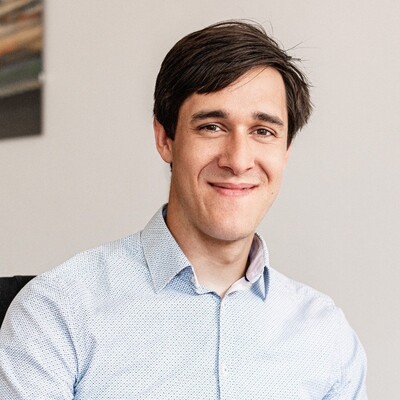
David Pech
Kubernetes, ArgoCD, AWS, OCI, Postgres fan
Ostrava, Czechia
Actions
Accomplished DevOps professional with 20 years of experience in software development and infrastructure management. Proficient in a wide array of technologies within the Kubernetes and CNCF ecosystem, with a focus on producing high-quality, sustainable software solutions. Known for a pragmatic and security-conscious approach to technology adoption. Highly effective in leading hands-on teams to deliver direct value to customers. Passionate about educating and enabling teams in the adoption and understanding of cloud technologies.
Area of Expertise
Topics
From Kubestronaut to Production Hero: Turning Study Paths into Real-World Wins
What if your certification study plan could solve tomorrow’s production issue? In this session, two CNCF Golden Kubestronauts — from Brazil and Czechia — share how their certification journeys weren’t just about passing exams, but rather about preparing for actual firefights in production. We’ll unpack real-world scenarios where skills gained while preparing for certifications like Istio, OpenTelemetry, and CKA turned into practical fixes for observability gaps, traffic chaos, and service resilience challenges.
We’ll also share candid advice on which learning paths really translated into job impact, how to structure your upskilling around active projects, and why some certs didn’t quite live up to their promise in day-to-day ops.
If you’re looking to grow your work impact, this session will help you connect your learning path with your production path — and turn every study sprint into a career boost.
Feel the Breeze: The High-Energy, Fan-Powered Guide to Sustainable Kubernetes
Standard HPA is so totally out now. It scales on CPU but lacks synergy. It doesn’t know if your nodes are sipping clean wind or chugging dirty coal. It’s time to stop "shifting left" and start shifting to the sun!
In this carbon-critical session, we’re ditching boring metrics for Project Kepler. Using eBPF magic—because if it’s not eBPF, is it even Cloud Native?—we’ll expose the raw power consumption of your pods in real-time.
To ground the hype, we’re bringing a physical Solar Panel, lights and a Fan-as-a-Service on stage. Watch the replicas scale to peak intensity the moment our "sun" hits the panel, while industrial fans translate that clean energy into a literal breeze for the front row.
Beyond the hype, come learn how individual pods contribute to your cluster's energy footprint and how to accurately measure it. We’ll showcase a real-time demo of carbon-aware scaling with a few gadgets.
YAML Is My DBA Now: Our Postgres Journey from DIY to Autopilot Self-Service
They told us, “Don’t run databases on Kubernetes.” We heard, “Challenge accepted.” This is the story of how we went from handcrafted Postgres chaos to a stable, CNCF-aligned DBaaS using CloudNativePG over the years — and lived to tell the tale.
We started with containers, then pinned nodes in Kubernetes (spoiler: not scalable). Zalando’s operator with Patroni got us partway, but the real leap came with CloudNativePG: rebuilt from scratch, capable of autopilot.
You’ll hear real incidents (yes, including “the one with the wrong PVC”), lessons learned, and how we’ve moved from tickets to self-service via GitOps. So what happens when YAML becomes your new DBA?
This is a story of maturity, simplicity, real benefits CNCF brings to your project. Not just from a single project, but from the whole ecosystem evolving over the years in networking, deployment, and much more.
Whether you're building a platform or escaping vendor lock-in, come laugh, learn, and reconsider running DBs in Kubernetes.
We Built an AI Incident Responder. Here's What We Got Wrong.
Everyone is building SRE agents. Most of them are barely junior sysadmins in a trench coat — useful for "how does X work?", useless when PostgreSQL replication is lagging at 3 AM across three datacenters at your specific company with your specific Puppet module.
The work is split into thirds, the first is vibe-coding some Python — the easy one. Second third was prompt engineering — we managed to improve from providing ~80% useful answers to 95%, and the last third is security: 12 defense-in-depth layers (so far while still running read-only with a few MCPs).
Now (95% likely) you can get valuable answer for:
- is this alert recurring? Who was the last responder and what did they do (or say on Slack)?
- what is the impact?
- are we affected by CVE-...
- and many more
We'll walk through what surprised us, what the agent still gets wrong, and why security is the hardest third nobody talks about. No vendor pitch, just a story from the trenches so you can get "more realistic" about this.
Serverless on Kubernetes: WASM, Knative, or Regular Autoscaling – What Actually Works?
This session provides an in-depth exploration of primary serverless paradigm for web apps — Function-as-a-Service (FaaS) and how achieve it in the Kubernetes world.
We will explore the main options for approaching these in the Kubernetes ecosystem and discuss the limitations and possible benefits of each approach. Is WASM viable today? Should we benefit from Knative feature limiting in-flight requests? Or can we go with a vanilla autoscaling? The session will present a few simulations regarding different use cases suitable for each workload highlighting differences and attributes that make the solution a good fit in terms of performance, stability, and budget.
We will uncover the current blockers with non-WASM technologies and evaluate whether WASM can address them effectively today – or if it remains a promise for the future.
Sink or Swim? Team Lead and "Junior" SREs Debate "Trial by Fire" Onboarding
In this panel, two team leads and two junior engineers unpack the messy truth behind enterprise onboarding in the CNCF ecosystem. From fixing a CrashLoopBackOff on day one to learning how (not) to delete an ArgoCD Application without a finalizer, they’ll share what worked, what broke, and how it shaped their confidence and skill.
Can you hire a "junior" SRE? How much Linux knowledge do you still need today? Together, they’ll explore why hiring juniors is essential for growing sustainable teams.
Team leads who advocate for "trial by fire" and junior SREs who survived will share their unfiltered experiences. They'll debate the fine line between a motivating challenge and overwhelming pressure of cognitive load. They will cover how to grant real responsibility while maintaining psychological safety and how this approach forges ownership faster than any training module. This isn't a theoretical talk; it's a practical guide to turning new hires into confident contributors in record time.
Deep Dive into Scaling Pods: Vanilla Kubernetes, Knative and KEDA
Many Kubernetes users assume autoscaling "just works," but few have hands-on experience tackling real-world challenges. In this workshop, we'll explore built-in and advanced scaling mechanisms, including:
- VerticalPodAutoscaler (VPA)
- HorizontalPodAutoscaler (HPA)
- Knative
- Kubernetes Event-driven Autoscaling (KEDA)
Through hands-on scenarios—constant load, "business hours" patterns, spiky traffic, and varied container types—we’ll set up, operate, and fine-tune these tools. You'll gain insights into their pros and cons, learn how to monitor them effectively, and evaluate their impact in different environments.
Will your PostgreSQL operator crack under chaos?
In the world of Kubernetes, running stateful workloads like PostgreSQL databases often raises concerns about stability and resilience. This session aims to address these concerns head-on through resilience and chaos testing. I'll delve into the robustness of PostgreSQL operators by subjecting them to extreme conditions: killing Pods, losing Persistent Volume Claims (PVCs), and more. Our goal is to observe how well these operators recover and the impact on downtime for client applications. This talk is about facts, evidence and 2 operators:
- CloudNative PG
- Patroni-based operator
Join me as I push PostgreSQL operators to their limits and uncover the truth about their reliability under chaos.
Journey Towards Kubernetes: From FTP based deployment to K8s GitOps in few “simple” steps
In last 3 years, we have done a major technical makeover of 4 e-commerce sites for one of the largest B2B food retailers in CZ and SK. We'll dive into the challenges we faced, including monolithic application constraints, lack of CI/CD pipelines, and limitations of on-premise infrastructure. Through our case study, attendees will gain insights into our strategies for overcoming these obstacles and achieving deployment on Kubernetes in the real CZ/SK IT life.
Introduction to initial setup
Challenges and limitations of monolithic architecture and manual deployment processes via FTP file upload on multiple application servers
Evolution towards a containerized environment and adoption of Docker Swarm
Transitioning from Docker Swarm to Kubernetes for enhanced scalability
Bringing in CI/CD pipelines
Harnessing Kubernetes features for scalability, reliability, and high availability
Lessons learned for migrating to Kubernetes in an on-premise setup
Discussing the real benefits of the approach
DBaaS in 2024: Which PostgreSQL operator for Kubernetes to select for your platform?
If you need to run PostgreSQL within Kubernetes environments, there are too many options. This session aims to assist in selecting the right operator by sharing the author's findings and production experiences. Key considerations include operator capabilities, security practices, extension support, connection pooling, and observability. It highlights the importance of self-service for developers, production readiness, performance predictability, operational maturity, and autoscaling. The most popular projects are evaluated:
DIY solutions as Baseline
Bitnami Helm Chart
Zalando Operator, Cybertec PG-operator
Postgres Operator from CrunchyData, Percona Operator
CloudNative PG
StackGres
The session will answer a lot - which operator can corrupt or lose my data? Which operator can really do seamless failover in a fully automated fashion? How easily can the developers provision their snapshot of the production backup with an operator? Will there be a clear best PG operator winner in 2024?
Please note that Sessionize is not responsible for the accuracy or validity of the data provided by speakers. If you suspect this profile to be fake or spam, please let us know.
Jump to top