

Giulia Scalaberni
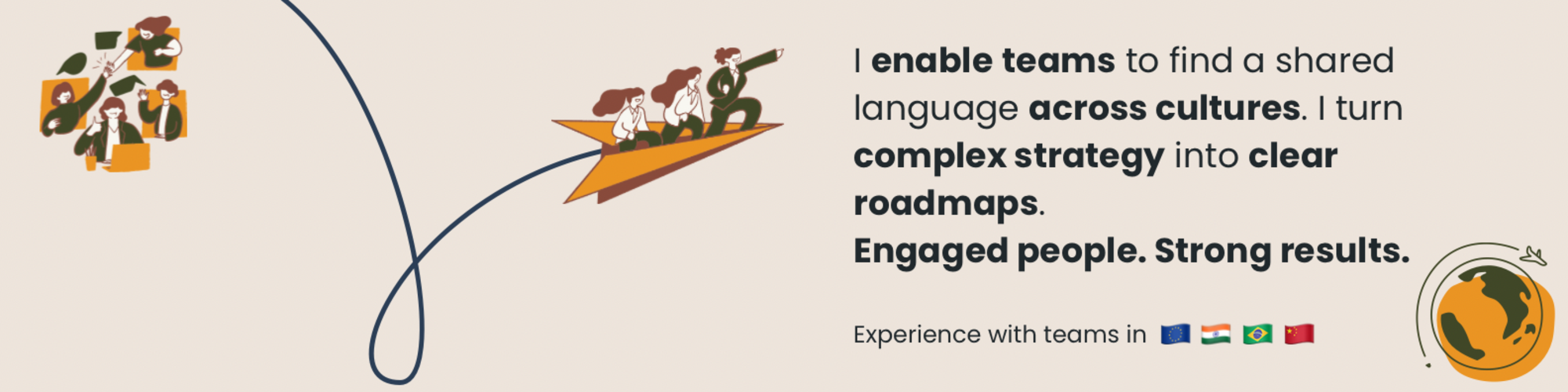
🌏 Leading India-Europe tech teams with Humanship • People & BI Product Manager • I protect happiness, productivity and team engagement
🌏 Leading India-Europe tech teams with Humanship • People & BI Product Manager • I protect happiness, productivity and team engagement
Florence, Italy
Actions
Giulia began her journey as a web dev, moved to data analyst and today she’s a product manager of a BI tool in an IT healthcare company, leading remote Scrum teams with members from 8 different cultures, starting from India. She’s relentlessly people‐centric, fascinated by how diverse cultures interact and always reading and exploring differences to make teamwork more “human”. When she’s not shaping product strategy or pondering team dynamics, you’ll find her at concerts imagining the tour management behind the scenes, or with a plane ticket already booked - Osaka and Lisbon are her places of the heart. She’s hopelessly obsessed with bubble tea, loves kangaroos and shares honest storytelling and practical insights that anyone can steal and use tomorrow.
Giulia ha iniziato il suo percorso come sviluppatrice web, evolvendo poi in data analyst e oggi è product manager di uno strumento di BI in un'azienda IT nel settore sanitario. Guida team Scrum remoti composti da membri di 8 culture diverse, India inclusa. È instancabilmente incentrata sulle persone, affascinata dal modo in cui culture diverse interagiscono. Sempre intenta a informarsi ed esplorare le differenze per rendere il lavoro di squadra più “umano” e attento ai bias. Quando non è impegnata a definire strategie di prodotto o a riflettere sulle dinamiche di team, la troverete ai concerti immaginando la gestione del tour dietro le quinte, o con un biglietto aereo già prenotato: Osaka e Lisbona sono le sue città del cuore. È irrimediabilmente ossessionata dal bubble tea, ama i canguri e condivide esperienze e intuizioni pratiche che chiunque può provare nel proprio team dal giorno dopo.
Area of Expertise
Topics
Decoding cultural “bugs”: lessons from my remote Europe–India team en it
Working in international teams, what seems like a “bug” is often a cultural default.
Using Erin Meyer’s Culture Map, I’ll explore key cultural dimensions - communication styles, feedback, leadership, decision-making and trust - and how they shape collaboration.
Drawing from my experience leading a fully remote, cross-cultural IT team spanning Europe and India, I’ll show practical ways to decode “strange” behaviours, adapt team practices and improve clarity and trust without asking anyone to change who they are.
- Presented at PyconIT 2026 (Bologna) https://www.youtube.com/watch?v=0ChfTMOcPjQ
- Presented at Hands-On Testing 2026 (México, remote)
Don’t Be That Guy: packaging team values like a MANIFEST.in en it
Especially in newly formed teams, “unspoken assumptions” create gray zones that block collaboration and cohesion.
The risk is even higher for cross-cultural groups (e.g. Europe–India), when composed by diverse backgrounds (developers, product specialists) and working fully remote.
Urban legends about such collaboration problems are real.
Inspired by MANIFEST.in and the Agile Manifesto, the team created a manifesto to make values and expectations explicitly shared. Using virtual whiteboards, voting and a pinch of AI, we aligned perspectives on what truly mattered day-to-day.
The manifesto became more than a guide: it is our north star. It clarified expectations, strengthened cohesion and identity, and helped prevent “that guy” behaviors. It also normalized error culture and generated positive side effects, like virtual coffee, cat photos and manicaretti in chat, making work lighter and more inclusive.
The talk will illustrate the team’s initial situation, the benefits gained through the manifesto, and how this approach can help remote, cross-cultural IT - and any - teams live their dream team.
Problems in teams often come from “unspoken assumptions”: implicit expectations, responsibilities and communication. Inspired by MANIFEST.in and Agile, this talk shows how a team manifesto boosted cohesion, identity, and prevented “that guy” behaviors in a new remote, cross-cultural team.
Useful, Broken, Beautiful: Ikigai, Kintsugi and sustainable work en it
Tech culture often celebrates speed, perfection and constant delivery. But humans don’t work like machines.
Drawing inspiration from Ikigai and Kintsugi, this talk explores how meaning, limits, and even “breakage” might become strengths at work.
Without technical deep dives, we’ll connect these concepts to how tech teams work: iterating, learning from mistakes and valuing sustainability over burnout. A reflective but practical talk for anyone who wants to work more peacefully - not just faster.
What if breakage wasn’t failure? Using Ikigai and Kintsugi, this talk explores how meaning, fragility and imperfection can improve teamwork and be normalized - especially in fast-moving, tech-driven environments.
Don’t Be That Guy: packaging team values like a MANIFEST.in en it
La causa dei problemi nei team spesso sta nei “non detti”. Questo talk mostra come un team manifesto, ispirato a MANIFEST.in e Agile, abbia rafforzato coesione, identità e prevenuto i comportamenti da “that guy” in un team appena
nato, remoto e cross-culturale.
Soprattutto in team appena nati, i “non detti” creano zone grigie che ostacolano collaborazione e coesione. Il rischio è ancora più alto quando i team sono cross-culturali (ad es. Europa–India),
composti da background diversi (sviluppatori, product specialist) e full-remote.
Non si tratta di leggende metropolitane, i problemi di collaborazione esistono davvero.
Ispirandosi al MANIFEST.in e al Manifesto Agile, il team ha creato il proprio manifesto per rendere espliciti valori e aspettative condivise. Attraverso whiteboard virtuali, votazioni e un pizzico di AI, sono stati allineati i diversi punti di vista su ciò che contava davvero nel lavoro quotidiano.
Il manifesto è diventato più di una guida: è la nostra stella polare. Ha chiarito le aspettative, rafforzato coesione e identità e aiutato a prevenire i comportamenti da “that guy”. Ha anche normalizzato la cultura dell’errore e generato effetti collaterali positivi, come caffè virtuali, foto di gatti e manicaretti in chat, rendendoil lavoro più leggero e inclusivo.
Il talk illustrerà la situazione iniziale del team, i benefici ottenuti con il manifesto e come questo approccio possa aiutare team IT remoti cross-culturali (e non) a
lavorare nel loro dream team.
La causa dei problemi nei team spesso è nei “non detti”. Questo talk mostra come un team manifesto, ispirato a MANIFEST.in e Agile, abbia rafforzato coesione, identità e prevenuto i comportamenti da “that guy” in un team appena nato, remoto e cross-culturale.
Useful, Broken, Beautiful: Ikigai, Kintsugi e il lavoro sostenibile en it
La cultura tech spesso celebra velocità, perfezione e risultati continui.
Ma gli esseri umani non lavorano come macchine.
Ispirandoci a Ikigai e Kintsugi, questo talk esplora come vocazione, limiti e persino le rotture possano diventare punti di forza sul lavoro.
Senza approfondimenti tecnici, collegheremo questi concetti a come si lavora nel tech: iterando, imparando dagli errori e valorizzando la sostenibilità rispetto al burnout. Una riflessione pratica per chiunque desideri lavorare in modo più sereno - non solo più veloce.
E se un errore non fosse la fine del mondo? Attraverso Ikigai e Kintsugi questo talk esplora come vocazione, fragilità e imperfezione possano migliorare il lavoro di squadra e diventare normali - specialmente in ambienti tech-driven a rapida evoluzione.
Decoding cultural “bugs”: cosa ho imparato dal mio remote team Europe–India team en it
In un team internazionale, i comportamenti “strani” celano spesso differenze culturali. Scopri come decodificarli per migliorare chiarezza, fiducia ed efficacia e creare armonia. Cosa ho imparato dal mio team remoto Europa-India.
Quando si lavora in team internazionali, ciò che sembra un “bug” è spesso un default culturale. Partendo dalla Mappa delle Culture di Erin Meyer, esplorerò le dimensioni culturali
chiave - stili di comunicazione, feedback, leadership, processi decisionali e fiducia - e come impattano sulla collaborazione.
Con esempi tratti dalla mia esperienza come leader di un team IT remoto e cross‐culturale tra Europa e India, vi racconterò come decodificare comportamenti “strani”, adattare il lavoro in team e migliorare chiarezza e fiducia senza chiedere
alle persone di cambiare.
- Presented at PyconIT 2026 (Bologna) https://www.youtube.com/watch?v=0ChfTMOcPjQ
- Presented at Hands-On Testing 2026 (México, remote)
Humanship - kind leadership that puts humanity as an asset en it
This session introduces “Humanship”: a leadership style that treats humanity not as a soft skill, but as a strategic asset.
It challenges the assumption that being human at work is a limitation and instead reframes qualities such as kindness, presence, empathy and accountability as active drivers of performance.
Humanship invites a shift in perspective: leadership is not just about what you do, but how you show up and how people feel. It focuses on the conditions leaders create: how decisions are made, how conversations unfold and how responsibility is shared. It’s the way to enable trust, clarity and true engagement to emerge naturally within teams.
A key part of this approach is culture awareness: understanding that what looks like resistance, silence or urgency is often shaped by different cultural norms rather than intent or ability. Drawing from experience leading international, fully remote teams across Europe and India, this session brings these dynamics into real-world context.
Humanship: l’empatIA è un asset en it
“Humanship”: un nuovo stile di leadership che vede l’empatia oltre le soft skill, come vero e proprio asset.
Essere umani tra gli esseri umani nell’era dell’AI è una scelta non più negoziabile perché gentilezza, presenza e comprensione mettono le ali alle performance.
Un cambio di prospettiva dal “bisogna fare!” al “come fa sentire?”. Le emozioni non più rinnegate e sminuite come limiti o difetti, ma esplorate, normalizzate e ascoltate.
Come leader dobbiamo familiarizzare soprattutto con la responsabilità della dimensione umana quando prendiamo decisioni, comunichiamo o distribuiamo responsabilità.
Leggere tra le righe emotive è la prossima soft skill da consolidare.
The 5.0 Leader: the one AI cannot replace en it
If AI can automate nearly 70% of managerial work, what should we look for in leaders?
Organizations need leaders who behave less like army commanders and more like basketball coaches. Competitive advantage now comes from the quality of thinking that a team can generate together.
The 5.0 leader no longer needs to pretend to be the smartest person in the room. Instead, their role is to be a facilitator for a space where people contribute on each other’s ideas.
Through real-world examples, we will explore why and how enabling collective intelligence, the new leadership advantage:
- Neuroscience evidences to improve team interactions
- Redefining authority through enablement
- Facilitating teams across cultures and personalities
As AI reshapes organizations, the leaders who create the greatest impact will be those who help people think better together.
Il Leader 5.0: quello che l’IA non può sostituire en it
Se l’IA può automatizzare quasi il 70% del lavoro manageriale, che qualità dovremmo cercare nei leader?
Le organizzazioni hanno bisogno di leader che si comportino meno come comandanti e più come coach di basket. Il vantaggio competitivo adesso diventa la qualità del pensiero collettivo che un team riesce a generare.
Il leader 5.0 non deve più pretendere di essere la persona più intelligente nella stanza. Il suo ruolo è di facilitatore, per uno spazio in cui le persone contribuiscano alle idee degli altri.
Attraverso esempi reali, esploreremo perché e come perseguire l’intelligenza collettiva, vero vantaggio della leadership:
- Evidenze neuroscientifiche per migliorare le interazioni nei team
- Ridefinire l’autorità attraverso l’abilitazione
- Facilitare team con culture e personalità individuali diverse
Mentre l’IA trasforma le organizzazioni, i leader che avranno il maggiore impatto saranno quelli che aiutano le persone a pensare meglio insieme.
DevFest Venezia 2026 Sessionize Event Upcoming
DevFest Modena 2026 Sessionize Event
Speaker @ HandsOn-Testing Conference 2026
Decoding cultural “bugs”: lessons from my remote Europe–India team
Pycon 2026 Bologna
Useful, Broken, Beautiful: Ikigai, Kintsugi and sustainable work
Pycon 2026 Bologna
Decoding cultural “bugs”: lessons from my remote Europe–India team
Women Techmakers Modena 2026 Sessionize Event
Please note that Sessionize is not responsible for the accuracy or validity of the data provided by speakers. If you suspect this profile to be fake or spam, please let us know.
Jump to top