
Chris Sellek
Writer of things
Raleigh, North Carolina, United States
Actions
Chris writes things.
Most of the time, he's writing code as a senior software engineer at his 9-5 working for SAS. Occasionally, usually late at night after his wife and three kids are asleep, it means writing fiction (often in the horror and fantasy space) as he prepares to launch his self-publishing author career.
Chris is passionate about helping people understand new or complex topics in ways that are engaging and entertaining, building software responsibly, and reminding engineers that curiosity and empathy are just as important as technical skill.
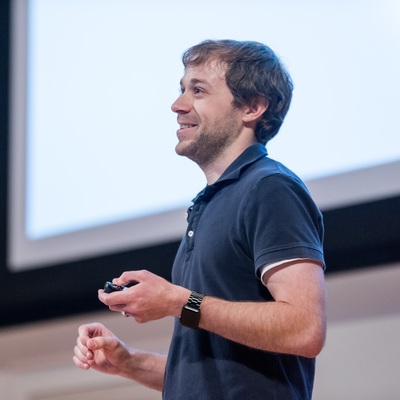
An extroverted engineer who genuinely enjoys speaking to a room full of people for 20+ minutes, Chris' presenting style has been described as "modern, with a TikTok flair" -- one of the greatest compliments he's ever received.
When he's not "writing things," you'll find him paying video games, reading fiction, or spending time with his favorite people (the aforementioned wife and three kids). he's also incredibly talented, funny, and a general pleasure to be around. And as an aside, he _insists_ that he did not write this bio.
Links
Area of Expertise
Topics
A Good Test Suite Who Can Find? Building Confidence Instead of Fear
Have you ever found yourself hesitating, your cursor over the “deploy” button, with sweat pouring down your face because you know who will be blamed if everything explodes? Of course you have, deploy anxiety is real. And it's a smell.
If your test suite is green and you're still hesitant to deploy, or if it's red and you don't trust the signal, then your test suite isn't doing its job. Instead of buying confidence, it's creating noise, stress, and worst of all, buying false confidence.
In this talk, we’ll break down what a solid test suite should look like (and what it shouldn't). We'll explore why many test suites fail to inspire confidence, how flaky tests actively make things worse, and how to shift from "We have tests!" to "We TRUST our tests!" (Spoiler alert: chasing coverage numbers is not the answer.)
Takeaways from the talk:
- How to evaluate whether your test suite is actually trustworthy
- Common pitfalls teams fall into when composing their test suites
- How to balance unit, integration, and E2E tests for maximal and most impactful coverage
- Practical strategies for reducing test flakiness and false negatives
- How to turn your test suite into a deploy-day decision-making tool vs a checkbox
The Avengers Initiative (Practical Ethics for Software Engineers)
Hi, my name is _redacted_, and I'm here to talk to you about the Avenger Initiative.
In a world run by computers, software engineers hold extraordinary power -- often without realizing it. What are we doing with our real-world superpowers?
This talk explores what ethical responsibility looks like in the day-to-day life of a typical software engineer. Using real-world data, firsthand stories from the speaker, and concrete true examples from the industry at large, we'll examine what happens when teams stay silent in the face of harmful decisions and how small actions by individuals can create meaningful change.
We'll cover topics like:
- Real-world statistics illustrating systemic inequality in the software industry
- How to speak up effectively and safely as an individual contributor or leader
- Mentoring and supporting the next generation of software engineers
- Using your skills and your social capital for good through volunteering and advocacy
Key Takeaways:
- A clearer understanding of how ethical issues show up in everyday engineering work
- True stories from the biggest companies in the industry showing the consequences of ethical silence
- Actionable ways engineers can create positive impact
Intro to Coding: Build Your First Superpower
Have you ever wanted to feel like a wizard? Not like a Harry Potter wizard (sadly, we're stuck in "reality"), but the kind who can type a few words on a screen and suddenly create something that didn't exist before. This is coding.
In this hands-on workshop, we'll get rid of the magic behind telling a computer what to do and you'll learn that you definitely are smart enough to do it. You don't need to be a math genius, a computer prodigy who thinks in 1s and 0s, or someone who already knows what code looks like.
We'll start from the very basics and work step-by-step through real examples. Along the way, you'll write your own code, see instant results, and build a small project that shows just how powerful and fun coding can be.
By the end, you'll understand that coding isn't magic, it isn't boring, and it's definitely not just for those old millennials. It's a tool that you can use to build video games, websites, apps, or even just automate annoying tasks on your own computer.
Takeaways:
- What coding actually IS and how computers follow instructions
- Why coding doesn't require genius or prior experience
- Hands-on experience writing and running your own code
- Clear next steps for continuing your coding journey
Training an ML Algorithm to Predict NFL Game Winners
If you're like me before I looked into machine learning, its definition is basically "magic." As a software engineer who needs to understand how and why things work, I decided to pull back the curtain by building something tangible: an algorithm that predicts NFL game outcomes (yes, I was hoping to make money off this; no, it didn't work).
In this talk, I'll walk through my journey from "Machine learning is literal wizardry" to building a working prediction model. We'll cover the core concepts behind machine learning without diving into heavy math or academic theory, using real examples from my NFL prediction project to keep everything grounded and practical.
This session is focused on understanding how machine learning works, why it works, and how everyday software engineers can start experimenting with machine learning themselves -- with no data science background required!
Key Takeaways:
- A practical understanding of how machine learning models are trained and evaluated
- How raw data turns into useful data, predictions, and confidence levels
- A repeatable approach to staring your own machine learning project using skills familiar to any software engineer
Utilizing and Testing LLMs
The entire way that humanity has built, tested, and shipped software has (seemingly) been flipped on its head with the introduction of large language models and Generative AI. These systems are powerful, increasingly ubiquitous and -- to be brutally honest -- unbelievably useful. Avoiding them in modern products is unrealistic at best.
In this talk, we’ll explore practical strategies for integrating LLMs into real applications in a way that is actually useful for users (no, your app absolutely does not need its own chat buddy) and how to test systems that don't behave like traditional deterministic software. We'll cover how LLMs are getting ready to change the very way that we interact with computers and techniques for building confidence in AI-powered features.
This session focuses on treating LLMs like what they are: systems that can exhibit (very) limited reasoning capabilities, respond in plain language to users, and help us get rid of the bane of any app user's existence: step-by-step wizards.
Key Takeaways:
- Practical use cases for how industry leaders are using LLMs in ways that will change the world
- How to implement non-deterministic systems without harming user experience
- Testing strategies that reduce the inherent risks of LLM-based features
Chris Sellek
Writer of things
Raleigh, North Carolina, United States
Links
Actions
Please note that Sessionize is not responsible for the accuracy or validity of the data provided by speakers. If you suspect this profile to be fake or spam, please let us know.
Jump to top