

Ivan Milanov
ERP engineering leader and Business Central specialist speaking about Scrum, Systems Thinking, Stoicism, and responsible AI.
Berlin, Germany
Actions
Ivan Milanov is an ERP engineering leader with 16 years of experience in Microsoft Dynamics NAV and Business Central, including six years in engineering leadership. He currently leads Business Central engineering in regulated healthcare, supporting business-critical systems used across warehouse, finance, and clinical operations.
His international career spans consulting, ERP product development, e-commerce, and regulated healthcare. His work combines engineering leadership with operational reality: improving ERP performance, stabilizing systems, strengthening engineering culture, and making sound decisions when technology and people are under pressure.
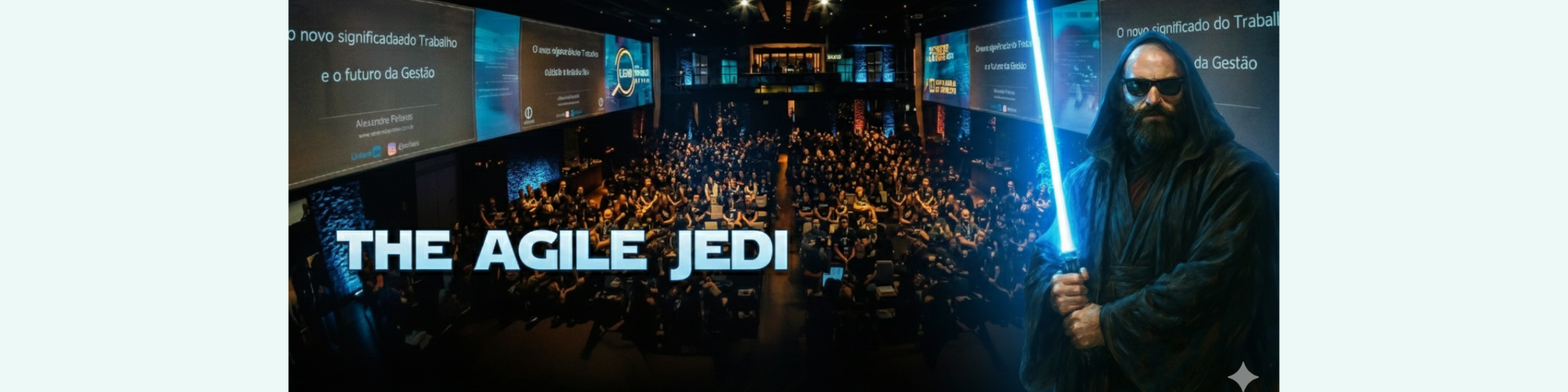
Ivan speaks about ERP reliability, engineering leadership, Scrum, Systems Thinking, Stoicism, and responsible AI. On stage, he speaks as “The Agile Jedi,” using practical stories and lessons from real production environments rather than abstract theory. His sessions have been selected for conferences across the United States and Europe, including DynamicsCon Las Vegas, KCDC in Kansas City, and the Dynamics 365 Summit in Lisbon.
Outside work, Ivan enjoys live music, basketball, road trips, experimenting with AI tools, and taking far too many notes.
Links
Area of Expertise
Topics
Scrum, Stoicism, and Systems Thinking: Finding Order in Complexity
How do we navigate complexity and find clarity in challenging projects? This session dives into the synergy between Scrum, Stoicism, and Systems Thinking to uncover a framework for overcoming obstacles and driving success in Business Central implementations. Explore how Stoic virtues like wisdom and discipline align with Scrum principles such as adaptability and focus. Learn how Systems Thinking helps manage interconnected processes and dependencies in ERP systems. By blending philosophy, agile practices, and technical expertise, this session offers actionable insights to bring order to even the most complex projects.
Talk format, conceptual/framework talk — not a coding demo. Best suited for Business Central/Dynamics/ERP implementation tracks, agile and engineering leadership audiences. Audience: tech leads, project leads, ERP practitioners. No co-speaker.
Get Your Gloves On: Lean into Agile with Ivan & Sarah
Agile and Lean Six Sigma are often treated as opponents in a boxing match. Round by round, sprint by sprint, phase by phase – at odds with each other in a fundamental way with one focused on speed, the other on process stability and precision.
In reality, both share a common goal: continuous improvement and delivering tangible business value. Agile dons its satin robe through adaptability and feedback loops, while Lean Six Sigma brings to the ring structured problem-solving, waste reduction, and data-driven decisions. Together, they form a powerful foundation for resilient, high-performing teams delivering the KO in business value.
Attendees will not just learn the fundamental tenets of Lean Six Sigma and Agile, but also walk away with an understanding of how both approaches can work together to create stronger teams, smarter processes, and better technical and business outcomes. As we look to the future, how teams can, should, and would ethically leverage AI in a discussion of real world use case retrospective what-ifs.
Get out your gloves, and ring the bell! Round one starts now!
Co-presented with Sarah Wimberley (sarahfwimberley@gmail.com). Talk format, not technical — no code or demos. Best suited for agile, process-improvement, and continuous-improvement/Lean Six Sigma tracks. Audience: agile practitioners, ops/process leads.
The Agile Jedi: Stoic Principles for Complex Engineering Problems
Software teams face constant pressure. Deadlines, unclear requirements, failing integrations, and fast-changing priorities create noise that can slow down even experienced engineers. This talk introduces a practical way to stay focused and make clear decisions by combining engineering practice, Scrum values, and Stoic principles. You will see how calm reasoning, clear responsibility, and controlled reactions help teams solve difficult problems without escalating stress. The session includes examples from real development work. Legacy code cleanups, performance firefighting, and cross-team communication serve as the basis for simple tools you can apply immediately. Attendees leave with a mindset and set of habits that improve daily engineering work and strengthen collaboration.
Talk format, no live coding or demos. Best suited for agile/Scrum, engineering practice, and developer-productivity tracks. Audience: software engineers, tech leads, Scrum practitioners. No co-speaker. First delivered at DynamicsCon 2026 in Las Vegas (video available).
Systems Thinking for Performance: How to Diagnose and Fix Slow Systems without Guessing
Modern systems fail in ways that are hard to trace. Slow queries, blocked sessions, memory pressure, unstable integrations, and reporting workloads often overlap. Many teams respond with guesswork, which leads to partial fixes and more confusion. This session shows a structured way to diagnose performance problems using Systems Thinking and proven engineering practices. You will see how to read the signals from SQL Server, how to track production bottlenecks, how to separate workloads that compete for resources, and how to connect symptoms across services. Real examples from ERP, APIs, and reporting systems illustrate common patterns and failure modes. Attendees walk away with a repeatable process to find root causes faster, improve stability, and reduce stress during incidents.
Technical talk (SQL Server, ERP/API performance diagnostics) — no live coding, but assumes backend/systems familiarity. Best suited for performance, DevOps, SRE, and backend engineering tracks. Audience: backend engineers, DBAs, SRE/performance practitioners. No co-speaker.
Shaping the Future of AI: Ethics in a World of Constant Change
Artificial Intelligence (AI) is at the center of nearly every conversation about innovation today from promise and opportunity, to the acceleration and organizational transformation. With every step forward on the path, we must also consider the paths not travelled as well as those above, beyond, and alongside us.
As the use of AI continues to evolve at an unprecedented pace in every facet of society, we have to balance the drive for innovation with the need to maintain trust, transparency, and accountability. Traditional ethical frameworks still apply, and by combining virtue ethics with contextual integrity, leaders can better navigate the complex challenges that arise when AI is integrated into business processes, decision-making, and customer experiences.
Through the discussion of real world case studies, we'll explore both the successes and failures of AI across industries. We’ll discuss how AI is reshaping the way we work, communicate, and make decisions, while identifying practical approaches for anyone, regardless of title, to design, govern, and influence AI.
The future of AI will not be determined by technology alone - it will be shaped by the intentional choices we make today. As a result of this discussion, participants will understand the opportunities, risks, and responsibilities associated with AI, as well as how they can play a meaningful role in creating a future where innovation and ethics advance together.
Co-presented with Sarah Wimberley (sarahfwimberley@gmail.com). Conceptual/discussion talk, not technical - no code or demos. Best suited for engineering leadership, AI/ML practitioners, and ethics- or trust-focused tracks. Standard talk-length session (~25-40 min, adaptable to event format).
From Firefighting to Mojo. Performance Lessons from On-Prem BC That Still Apply in the Cloud
Performance problems in Business Central rarely come from infrastructure alone. They usually emerge from design decisions, mixed workloads, and limited visibility into system behavior. This session shares real-world lessons from stabilizing a heavily loaded on-prem Business Central environment that struggled with recurring performance incidents over a long period.
Rather than focusing on deep SQL internals, the talk distills transferable performance patterns that remain relevant for Business Central SaaS. Topics include identifying early warning signals, separating reporting and operational workloads, designing batch processes responsibly, and improving observability before users feel the pain.
Each lesson is mapped from an on-prem symptom to its SaaS equivalent, helping cloud teams avoid repeating familiar mistakes under a different hosting model. The session also touches on the human side of performance work. How engineering decisions, prioritization, and ownership models influence whether teams stay stuck in reactive mode or move toward predictable delivery and stability.
This is a practical experience report aimed at users, partners, and ISVs who want fewer incidents and a calmer operating model.
What attendees will learn
Common root causes behind recurring Business Central performance issues
Which on-prem performance lessons still apply to SaaS environments
How to recognize reporting and batch workload risks early
How team decisions affect system stability and response times
Restart. Panic. Repeat.
Your team doesn't have an incident problem. It has a firefighting culture. Here's how to recognize the loop, rebuild trust, and stop recurring incidents from defining the organization.
Every engineering team has lived some version of this: something breaks, someone restarts it, everybody holds their breath, and two hours later the same thing breaks again. The incident isn't the problem. The loop is.
I spent two years inside a healthcare engineering environment where firefighting had become normal. A 70-person incident chat. Constant escalations. Developers who were technically excellent but operationally exhausted. Trust between engineering and the business slowly disappearing.
What finally changed things wasn't a single technical fix. It was realizing the organization itself had adapted to instability.
This talk walks through the concrete changes we made: how we rebuilt communication during incidents, how we stopped rewarding panic-driven behavior, how we redesigned escalation paths so problems reached the right people before becoming crises, and how post-mortems became less about blame and more about rebuilding trust across teams.
Along the way, we learned something uncomfortable: recurring incidents are often symptoms of deeper organizational patterns — alert fatigue, unclear ownership, escalation driven by anxiety instead of severity, and teams solving problems tactically while the surrounding system keeps recreating them.
You'll leave with practical ways to recognize whether your team is stuck in reactive mode, how to diagnose the patterns underneath recurring incidents, and what early recovery actually looks like before the metrics improve.
The first real sign for us wasn't fewer incidents. It was somebody saying: "Hey... this week actually felt calm."
Target audience: tech leads, new managers, experienced managers. Topics: incident management, managing and leading teams, monitoring & observability.
JavaCro'26 Sessionize Event
Agile Tour Sophia-Antipolis 2026 Sessionize Event
ASCENT 2026 Annual Education Conference Sessionize Event
WeAreDevelopers - Online - 2026 Sessionize Event
DynamicsCon 2026 Sessionize Event
{dev.talk} User group Sessionize Event
Dynamics 365 Summit 2025 Sessionize Event
Cloud Lunch and Learn Weekly Sessions 25 User group Sessionize Event
Ivan Milanov
ERP engineering leader and Business Central specialist speaking about Scrum, Systems Thinking, Stoicism, and responsible AI.
Berlin, Germany
Links
Actions
Please note that Sessionize is not responsible for the accuracy or validity of the data provided by speakers. If you suspect this profile to be fake or spam, please let us know.
Jump to top