
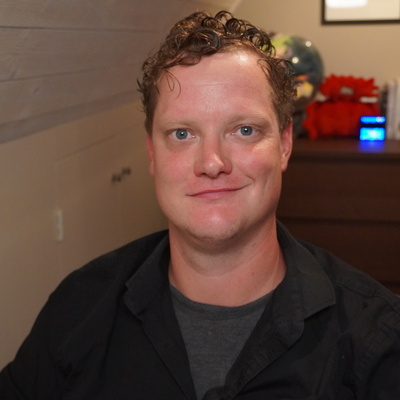
Joep Piscaer
Field CTO at Portainer.io
Oirschot, The Netherlands
Actions
Joep works at the overlap of socio-technical design, technical story-telling and platform engineering technologies. Driven by empathy to reduce burnout caused by platform obesity/complexity and tech industry hype. Organizer of devopsdays Amsterdam, FastFlowConf NL. Field CTO at Portainer.io
Area of Expertise
Topics
Platform Obesity, not Complexity, is killing our platforms
We like to say Kubernetes platforms fail because they’re “too complex”. But complexity isn’t the problem. Platforms fail because they’re obese.
They’re bloated with an excess of features, tools, abstractions, and opinions that far exceed an organization’s operational capacity and cognitive load—especially in enterprises, regulated environments, and talent-constrained teams.
The cloud-native ecosystem doesn’t help. It hands out sweets constantly: one more controller, one more abstraction, one more “best practice.” Each addition seems harmless in isolation. Saying yes is easy. Saying no is career-limiting: since no-one wants to admit their own reality doesn't match the industry narrative. The Pluralistic Ignorance is real, yo.
The ecosystem rewards addition, not subtraction. Often, “simplification” efforts often do the opposite—layering abstractions on top of abstractions until the platform is heavier, slower, and harder to operate and change than before.
Eventually, the platform collides with reality: finite talent, finite attention, finite time. Cognitive load exceeds capacity. Operational friction grows. Engineering quality cracks. Business outcomes stall. ROI quietly evaporates.
This isn’t a tooling failure. It’s a constraint failure.
So how do you fix an obese platform? The same way you fix obesity: by creating a calorie deficit, rigorous exercise and discipline. In the platform world, that means recognizing constraints and designing for and staying within those limits, across technology, processes, organizational culture, budget, engineering skills, team cognitive load and more.
Dare to play the hard 'less is more' subtraction game, not the easy game of addition: treat dealing with constraints, subtraction, prioritization and trade-offs as first-class engineering skills—not as signs of lack of ambition.
Platform Debt Isn’t Technical — It’s Organizational
Most Kubernetes platforms don’t fail because of bad YAML, bad tooling, or bad engineers.
They fail because of organizational debt.
When platforms start to hurt, we reach for comforting explanations: technical debt, architecture issues, complexity.
By the time the platform is labeled “too complex,” the real damage is already done—taking ungodly amounts of time, work and refactoring to fix. But in many real environments—especially enterprises the root cause isn't the technology stack. Instead, it root cause lies in organizational debt -- how decisions were made, avoided, and deferred, how no one was empowered to say “no.”
Organizational platform debt accumulates when no one can clearly define why the platform exists, what “done” looks like, or who is allowed to say “no.” Every request is reasonable in isolation. Every constraint is treated as temporary. Roadmaps only ever grow. Removing anything becomes politically dangerous. The platform becomes permanently “in progress.”
Kubernetes doesn’t cause this—but it amplifies it. Its flexibility allows unresolved organizational problems to be encoded as controllers, pipelines, policies, and abstractions that never leave. Over time, the platform becomes the place where indecision lives forever.
The result is familiar: upgrades as major projects, only a small handful of experts who understand the system, rising cognitive load, burned-out engineers, and ROI that quietly disappears.
This talk rejects the idea that failing platforms need better tooling. Instead, it argues that most platforms fail organizationally before they fail technically—and no amount of refactoring can fix a problem rooted in ownership, incentives, and constraints.
If your platform feels “too complex,” this talk is for you.
Come listen to me, I’m a fraud! A story on success, impostor syndrome and self-inflicted, perpetuall
Hey you! You’re exposed! We know you are a fraud! You’re don’t deserve any of the success you’ve achieved!
Do you recognize the fear of being exposed as a fraud? I do. Even as I prepare and present this session, I feel that you’ll expose me of not being worthy of talking to you.
With fifteen years in IT and a successful career as a world-class infrastructure engineer, a speaker at many industry conferences, a blogger, analyst and technical marketing freelancer for Silicon Valley Startups and a CTO of a 1200+ infra and software engineering company, I can definitely say I suffer from impostor syndrome, and by extension, perfectionism.
And it doesn’t go away with success. The opposite seems to be true, actually. I’ve learned to harness it, spending a lot of time way out of my comfort zone to figure out how to come to terms with it and use it for good. Maybe the fact that I experience the syndrome makes me more humble, which makes me more valuable as a leader.
I’m here to show the little things I did differently every day:
1. How being kind to yourself is key. Forgive, don’t judge. Accept who you are.
2. Learn about your internal convictions and expose these to the world authenticly and honestly.
3. How complimenting yourself and others goes a long way
4. Build a case for yourself by keep notes of people saying nice things about you
5. Self-doubt is a powerful tool as a leader, if used consciously
6. Focus on (professional) relationships, not on technical merit
7. Harness feedback, even it’s scary
With these small, incremental improvements, I now live in a self-inflicted, perpetually non-existing comfort zone. I’m constantly in the imposter zone, because I’m constantly doing new things, learning new skills, meeting new people. And I love it! It has brought me many smaller and larger victories, a career that’s led me to new and unexpected ventures and most importantly, a network of friends and relationships I otherwise would never have had.
If You Feel Behind, You’re Probably Paying Attention
Impostor syndrome is usually framed as a personal failing: a lack of confidence, a mindset problem, something you need to “work through.” But what if the problem isn't you?
You’re not inexperienced. You’re not lazy. You're not bad at your job. I realized something else was going on: no one’s real experience matches the cloud-native story we tell in public.
In the cloud-native world, operators and admins are surrounded by a constant narrative of effortless success: platforms that scale cleanly, teams that “just adopt Kubernetes,” architectures that assume infinite time, talent, and budget. Conference talks are polished. Case studies are sanitized. Failure is implied to be a 'you' problem.
Yet privately, most practitioners are struggling. Technology is complex. Platforms and systems are brittle. Toolchains are overwhelming. Upgrades are painful projects. On-call is exhausting. And almost no one’s lived experience matches what the industry claims is normal.
This talk argues that what we’re experiencing isn’t just impostor syndrome — it’s pluralistic ignorance amplified by burnout. Everyone is struggling to keep up, but no one admits it, because admitting it feels like failure. So we stay quiet. We internalize the gap. We blame ourselves. We work harder and harder, up to, and beyond our breaking point.
At this event, I want to say the quiet part out loud and break that silence together.
This talk is for operators who keep real systems running, who are tired of pretending and who want honesty instead of hype. We’ll examine how hype amplifies self-doubt, why feeling “behind” is often a sign of realism, and how collective honesty—not more expertise—is the missing ingredient in the cloud-native ecosystem.
If you’ve ever thought “everyone else seems to have this figured out” — this talk is for you.
KCD Porto x DevOps Days Portugal 2026 Sessionize Event Upcoming
Dutch Cloud Native Day 2026 Sessionize Event Upcoming
Cloud Native Days Austria 2026 Sessionize Event
NDC Oslo 2026 Sessionize Event
ContainerDays Hamburg 2026 Sessionize Event
DevOpsDays Birmingham (UK) 2023 Sessionize Event
NDC Porto 2022 Sessionize Event
NDC Oslo 2021 Sessionize Event
Cloud Engineering Summit hosted by Pulumi Sessionize Event
devopsdays Amsterdam 2019 Sessionize Event
Please note that Sessionize is not responsible for the accuracy or validity of the data provided by speakers. If you suspect this profile to be fake or spam, please let us know.
Jump to top