
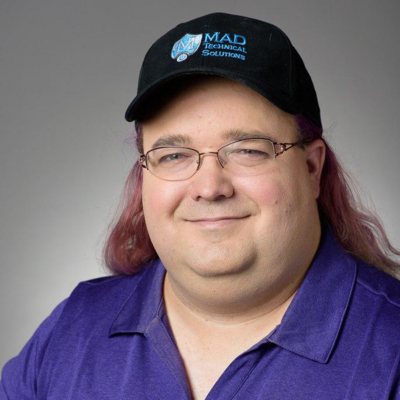
Katerina Ford
Business & Technology Leader | Helping Organizations Solve Real Problems Through Technology, Leadership, and Inclusive Collaboration
Las Vegas, Nevada, United States
Actions
Katerina Ford is the President and Founder of Diverse Technology, a Las Vegas-based technology consulting and managed services company focused on helping organizations solve real business problems through thoughtful technology decisions.
With a background spanning software development, IT infrastructure, cybersecurity, business consulting, and organizational leadership, Katerina brings a practical, business-first perspective to technology and the people who use it. Her experience includes military service, software consulting, business ownership, and working directly with organizations to improve how they operate.
Katerina believes the most effective solutions start with understanding people, processes, and business objectives—not simply introducing more technology. Her work emphasizes practical problem-solving, responsible innovation, automation, and building systems that support the people who depend on them.
Beyond technology, Katerina is passionate about inclusive leadership and creating environments where different perspectives are genuinely valued. She explores how communication practices, workplace culture, and intentional collaboration can help teams work more effectively, particularly in remote and hybrid environments.
As a speaker, Katerina brings together technical expertise, business experience, and a people-centered approach to topics including technology strategy, cybersecurity, artificial intelligence, business process improvement, inclusive collaboration, and leadership.
Katerina believes the most valuable conversations begin with understanding the audience and the challenges they face. While her speaking portfolio includes established topics in business, technology, leadership, and inclusive collaboration, she also welcomes opportunities to develop customized presentations, workshops, and discussions. Whether adapting an existing session or exploring a new subject within her areas of expertise, her focus remains the same: meaningful conversations, practical insights, and ideas people can actually use.
Area of Expertise
Topics
Inclusive Collaboration by Design: Make Room for Every Voice
The most valuable perspective in a meeting isn't always the loudest one. Yet many of the ways we structure meetings, communicate decisions, and collaborate unintentionally favor certain personalities, communication styles, and working arrangements over others.
Inclusive collaboration doesn't happen simply because everyone is invited. It requires intentionally designing how people participate, contribute, and make decisions.
In this practical, interactive session, Katerina Ford explores how everyday communication practices can create barriers to participation—and how small, deliberate changes can help teams work more effectively.
Drawing on experience in business consulting, technology, and organizational leadership, Katerina examines common challenges in remote, hybrid, and in-person collaboration, including meeting dynamics, asynchronous communication, decision-making, and ensuring that different perspectives have meaningful opportunities to contribute.
Participants will explore:
- How traditional meeting structures can unintentionally exclude valuable perspectives.
- Why equal opportunities to speak don't always translate into meaningful participation.
- Practical techniques for balancing synchronous and asynchronous communication.
- How facilitation roles and intentional communication agreements improve collaboration.
- Ways to make meetings and team processes more accessible, inclusive, and productive.
Through relatable scenarios and practical exercises, attendees will examine their own collaboration habits and identify changes they can put into practice immediately.
**The goal isn't to make everyone communicate the same way. It's to build environments where different ways of thinking, working, and contributing can become strengths.**
**Target Audience:** Business leaders, managers, HR professionals, learning and development practitioners, team leads, and anyone responsible for facilitating collaboration.
**Experience Level:** Introductory to intermediate. No specialized technical knowledge required.
**Preferred Duration:** 45–60 minutes, including audience interaction and Q&A. Adaptable to a 30-minute presentation or a 90-minute interactive workshop.
**Format:** Interactive presentation with real-world scenarios, group discussion, and practical exercises. Suitable for in-person, virtual, or hybrid events.
**Technical Requirements:** Projector or screen for presentation slides, microphone for larger audiences, and optional internet access for interactive activities.
**Participant Takeaways:** Practical meeting redesign techniques and a framework for establishing team communication agreements.
**Customization:** Content and exercises can be adapted for leadership development, organizational effectiveness, remote work, workplace inclusion, and business audiences.
Technology Problems Are Business Problems
When technology isn't working, the instinct is often to look for a technical solution. Buy new software. Upgrade the infrastructure. Replace a vendor. Hire another IT professional.
But what if the technology isn't actually the problem?
Organizations frequently struggle with challenges that appear technical on the surface but originate in unclear processes, disconnected teams, competing priorities, or a fundamental misunderstanding of what the business needs to accomplish.
Technology can solve remarkable problems, but it can also make existing problems more expensive, complicated, and difficult to untangle.
In this practical, business-focused session, Katerina Ford explores why successful technology decisions begin with understanding the organization—not the available tools.
Drawing on experience in software development, technology consulting, business operations, and organizational leadership, Katerina shares a framework for evaluating technology challenges through the lens of business outcomes.
Participants will explore:
- How to distinguish symptoms from the underlying business problems.
- Why technology projects fail even when the technology itself works as designed.
- How to translate business objectives into meaningful technical requirements.
- The hidden costs of introducing technology without examining existing processes.
- How to evaluate technology investments based on measurable business value.
- Why communication between business leaders and technical professionals is essential to successful outcomes.
Through relatable examples and practical decision-making exercises, attendees will learn to ask better questions before committing time, money, and resources to technology solutions.
**The goal isn't to use more technology. It's to make technology work for the business.**
**Target Audience:** Business owners, entrepreneurs, executives, managers, operations leaders, technology decision-makers, and professionals responsible for organizational improvement.
**Experience Level:** Introductory to intermediate. No technical background required.
**Preferred Duration:** 45–60 minutes, including audience interaction and Q&A. Adaptable to a 30-minute presentation or a 90-minute interactive workshop.
**Format:** Business-focused presentation incorporating real-world examples, guided discussion, and practical decision-making exercises.
**Technical Requirements:** Projector or screen for presentation slides and a microphone for larger audiences.
**Participant Takeaways:** A practical framework for evaluating technology decisions, identifying underlying business problems, and connecting technology investments to meaningful organizational outcomes.
**Customization:** Can be tailored for small business owners, executive leadership teams, entrepreneurs, nonprofit organizations, and technology professionals.
AI Should Solve a Business Problem—Not Become Another One
Artificial intelligence is changing what's possible for businesses of every size. From automating repetitive tasks to supporting decision-making and improving customer experiences, the opportunities are significant.
So are the opportunities to waste money, introduce unnecessary complexity, and create entirely new problems.
Too often, organizations approach AI adoption by asking, "Where can we use AI?" rather than the more important question: "What problem are we trying to solve?"
The difference matters.
Successful AI adoption requires more than selecting a promising tool. It requires understanding existing workflows, evaluating data quality, considering security and privacy, establishing appropriate human oversight, and defining what success actually looks like.
In this practical session, Katerina Ford explores how organizations can move beyond AI hype and make informed decisions about where artificial intelligence can deliver genuine business value.
Drawing on experience in technology consulting, software development, automation, cybersecurity, and business operations, Katerina examines both the opportunities and risks of introducing AI into everyday workflows.
Participants will explore:
- How to identify business problems that are genuinely suited to AI solutions.
- When traditional automation or process improvements may be more appropriate.
- The importance of data quality, security, privacy, and human oversight.
- How to evaluate AI tools without getting distracted by marketing claims.
- The operational and organizational challenges of integrating AI into existing processes.
- How to establish realistic expectations and measure the value of AI initiatives.
- Why responsible AI adoption is ultimately a business leadership responsibility.
Attendees will leave with a practical framework for evaluating AI opportunities, asking better questions of vendors, and approaching implementation with clear objectives and appropriate safeguards.
**AI should solve a business problem—not become another one.**
**Target Audience:** Business owners, executives, entrepreneurs, operations managers, technology leaders, and professionals evaluating AI adoption.
**Experience Level:** Introductory to intermediate. No programming or AI development experience required.
**Preferred Duration:** 45–60 minutes, including audience interaction and Q&A. Adaptable to a 30-minute overview or a 90-minute workshop.
**Format:** Practical presentation featuring business scenarios, AI use-case evaluation, guided discussion, and actionable decision-making frameworks.
**Technical Requirements:** Projector or screen for presentation slides, microphone for larger audiences, and optional internet access if demonstrations are included.
**Participant Takeaways:** A framework for identifying appropriate AI use cases, evaluating risks and costs, establishing human oversight, and measuring business value.
**Customization:** Can be adapted for small businesses, executive leadership, entrepreneurship events, technology conferences, or organizations beginning their AI adoption journey.
**Focus:** Business strategy and responsible implementation rather than technical model development or programming.
Automate the Process, Not the Problem
Automation promises to save time, reduce costs, eliminate repetitive work, and help organizations operate more efficiently.
But there's a catch: automating an inefficient process doesn't necessarily make it a good process. Sometimes it just makes the same mistakes happen faster.
Organizations frequently invest in automation before examining why a workflow exists, how information moves between people and systems, or whether the process itself still makes sense.
The result can be a complicated collection of integrations, workarounds, and automated tasks that preserve the very inefficiencies they were supposed to eliminate.
In this practical session, Katerina Ford explores how organizations can approach automation as an opportunity to improve how work gets done—not simply replace manual steps with software.
Drawing on experience in business consulting, software development, systems integration, and workflow automation, Katerina demonstrates how understanding and improving processes creates the foundation for successful automation.
Participants will explore:
- How to identify repetitive work, bottlenecks, and unnecessary complexity.
- Why understanding the current process is essential before automating it.
- How to distinguish between tasks that should be automated, redesigned, or eliminated.
- The importance of clear ownership, accountability, and exception handling.
- How disconnected systems and manual handoffs create hidden operational costs.
- When simple workflow improvements outperform expensive technology solutions.
- How to evaluate automation opportunities based on business impact rather than technical novelty.
Through relatable business scenarios, attendees will examine how information moves through an organization, where work gets stuck, and how thoughtful process redesign can improve consistency, visibility, and efficiency.
The session emphasizes that successful automation isn't about removing people from the equation. It's about reducing unnecessary friction so people can focus on the work that actually requires their expertise.
**Before asking how to automate a process, ask whether it's the right process in the first place.**
**Target Audience:** Business owners, operations managers, department leaders, entrepreneurs, process improvement professionals, and technology decision-makers.
**Experience Level:** Introductory to intermediate. No programming experience required.
**Preferred Duration:** 45–60 minutes, including audience participation and Q&A. Adaptable to a 30-minute presentation or a 90-minute interactive workshop.
**Format:** Practical presentation with business workflow examples, process mapping concepts, and audience exercises.
**Technical Requirements:** Projector or screen for presentation slides, microphone for larger audiences, and optional whiteboard or collaborative workspace for workshop formats.
**Participant Takeaways:** A practical approach to identifying automation opportunities, evaluating existing workflows, improving processes before implementation, and measuring operational results.
**Customization:** Suitable for business associations, operations teams, entrepreneurship groups, technology conferences, and organizations exploring workflow automation or digital transformation.
**Focus:** Business process improvement and operational effectiveness rather than training on a specific automation product.
Leadership Without Micromanagement: Building Trust in Remote Teams
When teams aren't working in the same physical space, how do leaders know that work is getting done?
For some organizations, the answer has been more meetings, more status reports, activity monitoring, screenshots, and increasingly detailed measurements of employee behavior.
But visibility isn't the same as productivity, and monitoring activity isn't the same as measuring results.
Remote and hybrid work challenge many traditional management assumptions, particularly the idea that physical presence and visible activity are reliable indicators of performance.
Effective leadership requires a different approach—one built around clear expectations, meaningful accountability, effective communication, and mutual trust.
In this thought-provoking and practical session, Katerina Ford explores how leaders can maintain accountability without creating cultures of surveillance and micromanagement.
Drawing on experience in business leadership, technology consulting, and distributed collaboration, Katerina examines the relationship between trust, autonomy, communication, and organizational effectiveness.
Participants will explore:
- Why measuring activity doesn't necessarily measure productivity or business value.
- The difference between accountability, visibility, and surveillance.
- How to establish clear expectations and meaningful performance outcomes.
- Why excessive monitoring can undermine trust, morale, and engagement.
- Practical communication strategies for remote and hybrid teams.
- How asynchronous collaboration can reduce unnecessary interruptions and meetings.
- Ways to identify genuine performance concerns without treating every employee as a potential problem.
- How leaders can balance autonomy with the information they need to make responsible decisions.
Attendees will examine common management challenges and explore practical alternatives that support both organizational accountability and employee autonomy.
The session isn't an argument against measuring performance. It's an argument for measuring what actually matters.
**Good leadership doesn't require watching every step. It requires making sure everyone understands where they're going, what success looks like, and how their work contributes.**
**Target Audience:** Business owners, executives, managers, HR professionals, team leaders, organizational development practitioners, and professionals managing remote or hybrid teams.
**Experience Level:** All levels. Particularly relevant to current and emerging managers.
**Preferred Duration:** 45–60 minutes, including audience discussion and Q&A. Adaptable to a 30-minute presentation or a 90-minute interactive leadership workshop.
**Format:** Interactive leadership presentation incorporating workplace scenarios, guided discussion, and practical management frameworks.
**Technical Requirements:** Projector or screen for presentation slides and a microphone for larger audiences.
**Participant Takeaways:** Practical approaches to outcome-based performance management, accountability, effective communication, employee autonomy, and trust-building in remote and hybrid environments.
**Customization:** Can be tailored for executive leadership, management development, HR conferences, distributed organizations, and teams transitioning to hybrid or remote working arrangements.
**Focus:** Management practices, organizational culture, and effective leadership rather than specific employee monitoring technologies.
From Technical Expert to Business Leader: Learning to Solve Different Problems
Being good at solving technical problems doesn't automatically prepare someone to lead a business.
Technical professionals are often rewarded for their ability to find answers, understand complex systems, and solve problems directly. But leadership introduces an entirely different set of challenges—many of which don't have clear solutions, established procedures, or objectively correct answers.
Suddenly, success depends less on what you can personally accomplish and more on your ability to make decisions, establish priorities, communicate effectively, build relationships, and help other people succeed.
And perhaps one of the hardest lessons is realizing that the best solution isn't always the most technically elegant one.
In this candid and practical session, Katerina Ford shares lessons from a professional journey spanning military service, software development, technical consulting, and business ownership.
As President and Founder of Diverse Technology, Katerina brings a perspective shaped by working across technical and business disciplines, navigating changing responsibilities, and learning to evaluate problems through both technical and organizational lenses.
Participants will explore:
- Why technical expertise and business leadership require different approaches to problem-solving.
- The challenges of transitioning from individual contributor to decision-maker.
- How to balance technical excellence with financial, operational, and organizational realities.
- Why communication and relationship-building become increasingly important as responsibilities grow.
- The difficulty of making decisions when there is no perfect answer.
- How to avoid becoming the bottleneck in a business built around your own expertise.
- Why understanding people and business objectives is as important as understanding technology.
- How professional experience, including setbacks and unexpected changes, can shape more thoughtful leadership.
Rather than presenting entrepreneurship as a simple success story, this session examines the ongoing process of developing as a leader, adapting to new responsibilities, and learning when to approach familiar challenges differently.
Attendees will leave with practical insights into professional growth, leadership development, and the transition from solving problems personally to building organizations capable of solving them together.
**Technical expertise can open the door to leadership. Learning to think beyond the technical solution is what helps you grow into it.**
**Target Audience:** Technical professionals, software developers, IT specialists, aspiring entrepreneurs, small business owners, emerging leaders, and professionals transitioning into management or business ownership.
**Experience Level:** All levels. Particularly relevant to experienced individual contributors considering leadership, consulting, or entrepreneurship.
**Preferred Duration:** 45–60 minutes, including audience discussion and Q&A. Adaptable to a 30-minute presentation or a 90-minute interactive workshop.
**Format:** Experience-driven presentation combining personal professional experiences, practical leadership lessons, business scenarios, and audience discussion.
**Technical Requirements:** Projector or screen for presentation slides and a microphone for larger audiences.
**Participant Takeaways:** A clearer understanding of the differences between technical problem-solving and business leadership, practical approaches to making decisions under uncertainty, and strategies for developing broader professional and leadership skills.
**Customization:** Suitable for technology conferences, software development communities, entrepreneurship events, professional associations, career development programs, and emerging leadership initiatives.
**Focus:** Professional growth, entrepreneurship, leadership development, and business decision-making rather than technical instruction.
Please note that Sessionize is not responsible for the accuracy or validity of the data provided by speakers. If you suspect this profile to be fake or spam, please let us know.
Jump to top