
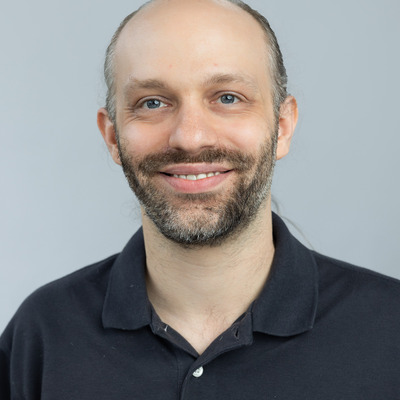
Kyle Jenkins
Trust Changes Everything
Columbus, Ohio, United States
Actions
Kyle Jenkins is driven to help you ease the pain of work, whether it’s technology bleeding resources or trouble working with a team of people. As a full stack developer, public speaker, and principal consultant with Improving, a global software development consulting and training company, he integrates into teams to provide quality software solutions and into the IT and Agile community to improve processes and teamwork. On the side, he is an avid video gamer, and loves correlating the challenges and learnings from video games to the world of work.
Links
Area of Expertise
Topics
Beyond Automation: How DevOps Principles Foster Trust and Collaboration
Trust is essential for high performing teams, but building it requires more than good intentions. In this session, we explore how DevOps principles and practices and the metrics behind them create visibility, accountability, and confidence across teams and stakeholders. Through real world stories tied to key performance indicators, we’ll uncover how these measures not only improve delivery but also strengthen trust from the individual level to the organizational culture. Finally, we’ll look at what it takes to build an environment where these practices thrive, where teams have clarity, autonomy, and the ability to act within their circle of control. By connecting metrics, trust, and culture, you’ll gain insights on enabling sustainable success without falling into blind optimism or rigid oversight.
From Blind Trust to Real Trust: Practical Steps for IT Teams
Trust is a vital factor in the success of any organization, affecting speed, cost, culture, and teamwork. Blindly trusting teams can lead to gullibility and waste. Even more challenging are the many counterfeits, behaviors we do in hopes to build trust, but bite the teams and the business in the long run. In this session we will review how many IT teams have begun to create a sense of forced or false trust, and work through simple proven strategies to flip it into real trust. Whether you are a leader or team member, you will walk away with actionable insights for building real trust in IT teams, improving culture, collaboration, and business performance. Let’s turn the phrase "Trust me, I'm an engineer" into a reality, not a punchline.
Docker Unleashed: Enhancing Local Environments with Ease
A high-quality local environment is critical for enabling developers for efficient feature delivery. Docker, when utilized correctly, can simplify the maintenance of the local environment and remove the "it works on my machine” symptom. Join me on an insightful journey as I share years of successes and hard-earned lessons from harnessing Docker for consistent, hassle-free environments. We will review what Docker is and when to use it, how it changes the development accountabilities between teams, the architecture behind an efficient local environment to enable smooth pipelines and production deployment and will unveil valuable tips and real-world examples to optimize Docker usage and boost your development productivity.
This session will review when to and when not to utilize docker, process changes from both developer and operations perspective and the value to each, and provide basic examples to help people get started quickly. Examples use Docker and NodeJS.
I have delivered this at OLFConference and Stir Trek, and was well received. I have also received feedback at later dates on how useful this intro is and how teams have successfully implemented my strategies from this talk.
What is Your Working Genius?
The working genius model is a productivity model developed by Patrick Lencioni with the goal of accomplishing a simple concept: bringing more joy and fulfillment at work! When you and your team understand where your geniuses are and how to (and when not to) use them, it can improve meetings, reduce burnout, and dramatically reduce turbulence in getting projects done. In this session we will review the 6 types of working geniuses and how they bring projects from ideation to implementation. We will discover the hidden cause of burnout and how to keep meetings, including our agile ceremonies, more focused and more productive as a whole, all with the goal of improving your life and team culture, both in and outside of work. (that's right… ALL projects!)
What is Your Working Genius? (Workshop)
The working genius model is a productivity model developed by Patrick Lencioni with the goal of accomplishing a simple concept: bringing more joy and fulfillment at work! When you and your team understand where your geniuses are and how to (and when not to) use them, it can improve meetings, reduce burnout, and dramatically reduce turbulence in getting projects done. In this workshop we will review the 6 types of working geniuses and how they bring projects from ideation to implementation. We will discover the hidden cause of burnout and how to keep meetings, including our agile ceremonies, more focused and more productive as a whole, all with the goal of improving your life and team culture, both in and outside of work. (that's right… ALL projects!)
This workshop will allow everyone to take the assessment at no cost. We will create teams and go over mock scenarios and go into depth on how this affects teamwork and dramatically reduce turbulent culture.
Unpacking Process Anti-Patterns: Lessons from Ideation to Delivery
In the fast-paced world of software engineering, processes often shape success or sow frustration. Over the years, recurring anti-patterns have emerged well-meaning practices that unintentionally create inefficiencies, stifle innovation, or harm team dynamics. These pitfalls, though rooted in good intentions, can derail projects and undermine trust when left unchecked.
Through real-world examples and two decades of industry experience, this presentation unpacks common process anti-patterns across the software lifecycle. With a focus on fostering understanding, not blame, we’ll examine how flawed workflows contribute to challenges and how reversing them can empower teams to build clarity, creativity, collaboration, and trust.
Going Open Source: Container Driven Development with Podman
A high-quality local development environment is critical for enabling developers to deliver features efficiently. Containers, when implemented effectively, simplify the maintenance of local environments and eliminate the dreaded "it works on my machine" problem. Join me for an insightful session as I share years of experience and hard-earned lessons from leveraging tools like Podman to create consistent, hassle-free development environments. We’ll explore what containers are and when to use them, how they reshape development accountabilities between teams, the architecture behind efficient local environments that support smooth pipelines and production deployment, and unveil valuable tips and real-world examples to optimize container-based workflows for maximum productivity.
Debugging the Body: A Personal Journey to Sustainable Health in Tech
For years, I believed I was doing the right things. I thought I ate a healthy, balanced diet, alternated between sitting and standing, and stayed active with both cardio and strength training. I worked in tech, gamed in my free time, and assumed my body would adapt to the pace and structure of modern work. Instead, I slowly developed chronic neck issues, nerve symptoms, recurring pain, mobility problems, and a growing awareness of long-term metabolic and cardiovascular risk. None of it came from a single injury or dramatic moment. It came from small, repeated patterns that felt normal, reasonable, and even responsible.
This talk is my personal story of learning to treat health as a system rather than a collection of isolated problems. Posture, movement, nutrition, sleep, work habits, and environment were all interconnected in ways I did not understand until things started breaking. Along the way, I used AI as a support tool to organize information, model care strategies, and prepare better conversations with doctors, always grounded in professional medical validation. This is not a story about extreme routines, expensive interventions, or biohacking. It is about redefining “healthy,” changing daily defaults, and applying systems thinking to build sustainable, long-term health inside a demanding career. Attendees will leave with a new way to think about their own health as a system they can design, not just a set of problems to react to.
Before the Endgame: Building Cheap on Purpose
Most products do not fail because the idea was wrong. They fail because the team ran out of time or money before learning whether it worked. Modern platforms and AI-assisted development now make it possible to reach an MVP faster and cheaper than ever before, but speed alone does not equal sustainability.
This session explores how startup-first and enterprise architectures differ through the lens of cost, speed, and consequences to the business. Designed for founders, solo builders, and early product teams, this talk provides a practical framework for choosing technology intentionally for MVP, understanding what you are trading away, and recognizing when those early choices have done their job. The goal is not to avoid enterprise architecture forever, but to earn it.
Kyle Jenkins
Trust Changes Everything
Columbus, Ohio, United States
Links
Actions
Please note that Sessionize is not responsible for the accuracy or validity of the data provided by speakers. If you suspect this profile to be fake or spam, please let us know.
Jump to top