
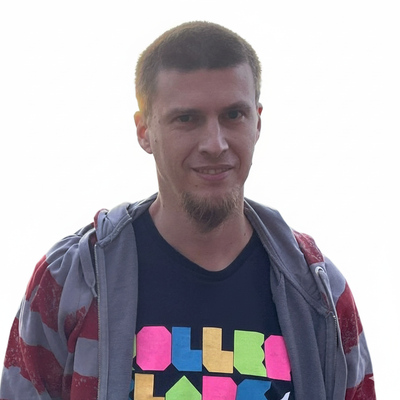
Michele Giacobazzi
CTO @ WellD
CTO @ WellD
Milan, Italy
Actions
Michele is CTO and founder at WellD, where he specializes in building scalable solutions for complex industrial challenges. With a focus on cloud-native architectures and data persistence, he has been instrumental in developing SPARklE, bridging the gap between renewable energy production and intelligent distribution. Passionate about Java, automation, and DevOps and a member of the Voxxed Days Ticino programme committee, he believes clean code is the first step toward a cleaner planet.
Michele è CTO e Founder di WellD, dove si occupa di costruire soluzioni scalabili per sfide industriali complesse. Esperto di architetture cloud-native e persistenza dei dati, ha seguito lo sviluppo di SPARklE, una piattaforma che punta a colmare il divario tra produzione di energia rinnovabile e distribuzione intelligente. Appassionato di Java, automazione e DevOps e membro del programme comitee di Voxxed Days Ticino, crede che il codice pulito sia il primo passo verso un pianeta più pulito.
Area of Expertise
Topics
Flex your Energy: Building a Cloud-Native Platform for Renewable Energy Communities en
Europe's electrical grids are facing a crisis hiding in plain sight: energy demand is growing fast, driven by EV adoption, heat pumps, and industrial electrification, while renewable sources inject power in ways the grid wasn't designed to absorb. The result is a system under pressure from both sides. Upgrading infrastructure to match would cost billions. The smarter alternative is software that makes existing infrastructure more flexible, and that's exactly what SPARklE does.
SPARklE is a cloud-native microservice platform (Java/Spring Boot for the core services, Python for forecasting and optimization algorithms) that manages Renewable Energy Communities (CERs) and participates in energy flexibility markets on behalf of Distribution System Operators. In this talk, we'll walk through the domain problem that shaped our architecture, then go deep on the engineering decisions that made it work in production.
We'll cover three areas in depth.
- multi-tenancy: why we rejected the naive WHERE-clause approach and implemented PostgreSQL Row-Level Security with session variable propagation through a connection pool — including the subtle problems we hit along the way.
- time-series data at scale: how TimescaleDB's hypertables and retention policies handled high-frequency IoT ingestion from smart meters and storage systems across multiple communities.
- GitOps in a multi-party project: how FluxCD on Kubernetes brought sanity to deployments when your system integrates modules and components owned by partners you don't control.
This is a talk about real trade-offs made by a small team building infrastructure that directly affects how renewable energy flows through the grid. Includes live demo.
Available in italian or english. Can adapt to different duration and focus on technical or domain side.
The Agents Built the Graphics. I Had to Build the Fun. en it
In 2026 Devoxx Belgium ran a competition: build a game set at the conference, starting from the venue floor plans and the models of three robots. The brief treated AI not as a shortcut but as something to experiment with — a craft to master.
So I started building, and won the competition. Every line of code was written by an agent. Every decision was mine.
This is the short version of what that process was actually like.
First rule: find the game before you build it. Twelve throwaway prototypes, gameplay proved in 2D, then 2.5D and 3D versions explored and refined in parallel before committing to one.
Then the gauntlet loop, which did the heavy lifting. A lead agent splits a goal into pieces; each piece gets a builder and a critic who never sees the builder’s reasoning — only a screenshot, judged against a concrete reference. Not “make it look professional”, but a real game as the benchmark. The biggest gap goes back to the builder. Repeat.
It worked remarkably well for graphics. It did not work for fun. Puzzles, pacing, and the bugs that only appear when a human actually plays — those came back to me every time.
You get the loop, the planning, what to do when the token quota runs out, and the move that saved me most often: when the agent couldn’t get the floor plan right, the fix wasn’t a better prompt: it was asking it to build me an interactive map editor.
Plus the best bugs, and a live demo.
Short presentation at Devoxx 2026.
https://www.youtube.com/watch?v=NT0wyPM58G8
Short session, 20 min preferred.
Il mio gioco l’hanno scritto gli agenti, ma le decisioni le ho prese io en it
Nel 2026 Devoxx Belgium ha lanciato una gara: costruire un gioco ambientato nella conferenza, partendo dalle piantine della location e dai modelli di tre robot.
E l'AI non era una scorciatoia, ma il mezzo con cui sperimentare e realizzare qualcosa in poco tempo.
Così ho iniziato a sviluppare il mio primo gioco, e ho vinto la competizione. Ogni riga di codice è stata scritta da un agente. Ogni decisione è stata presa da me.
Questa è la versione breve di com’è andata.
Prima regola: trova il gioco prima di costruirlo. Dodici prototipi usa e getta, il gameplay validato in 2D, poi portato in 2.5D e 3D per esplorare e rifinire in parallelo prima di scegliere la versione definitiva.
Poi il “gauntlet loop”, che ha fatto il lavoro pesante. Un agente principale divide l’obiettivo in task; ogni pezzo ha un builder e un critico che non vede mai il ragionamento del builder, solo il risultato giudicato rispetto a un riferimento concreto. Non “fallo sembrare professionale”, ma confrontalo con un gioco specifico. Il critico identifica i punti deboli e si torna al builder. Il ciclo continua finchè i critici non sono soddisfatti, o i token finiti.
Ha funzionato benissimo per la grafica. Non ha funzionato per il divertimento. Enigmi, ritmo, e i bug che saltano fuori solo quando a giocare è una persona, sono tornati sempre a me.
In questo talk mostro il loop, la pianificazione, come gestire un budget limitato di token, e la mossa che mi ha salvato più spesso: quando l’agente non riusciva a sistemare la piantina della conferenza, la soluzione non è stata un prompt migliore ma chiedergli di costruirmi un editor di mappe interattivo.
Con i bug migliori, e una demo dal vivo.
Gioco presentato a Devoxx Belgium 2026:
https://www.youtube.com/watch?v=NT0wyPM58G8
Questo è un talk breve, intorno ai 20 minuti.
Sustainability Month Green Software Italia - Meetup User group Sessionize Event Upcoming
Devfest Milano 2026 Sessionize Event
WeAreDevelopers - Online - 2026 Sessionize Event
Please note that Sessionize is not responsible for the accuracy or validity of the data provided by speakers. If you suspect this profile to be fake or spam, please let us know.
Jump to top