
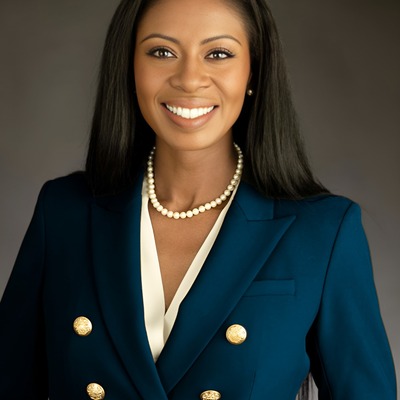
Michele Grant
Enterprise Transformation and M&A Integration Executive | Creator of Leading at Scale
Englewood Cliffs, New Jersey, United States
Actions
Michele Grant is a global M&A integration and enterprise transformation executive with 20+ years of enterprise transformation and 10+ years of M&A integration experience guiding complex transactions, private equity portfolio integrations, and enterprise modernization initiatives across media, technology, consumer goods, and financial services. At Cognizant, she serves as Value Realization Office Lead on a multi-billion-dollar post-acquisition managed services transition for a Fortune 500 fintech client. She has led post-merger integration for landmark transactions including the $30 billion ViacomCBS merger and NBCUniversal's $39 billion Sky acquisition, and established the Integration Management Office for a PE-backed consumer goods merger, coordinating 350+ cross-functional stakeholders to advance a $250M synergy case across operations, supply chain, and technology consolidation.
Michele is the creator of Leading at Scale, a video and article series on M&A integration and enterprise transformation published weekly across YouTube, Substack, Medium, and LinkedIn. Her talks cover integration, change management, risk management, governance, M&A due diligence, the first 100 days, value realization, and AI transformation. She delivered the May 2026 Cornell Tech Business Network Forum keynote on post-merger integration, has spoken at the Women Changemakers Forum and Cornell Johnson School of Management, and is a 2026 recipient of the St. John's University Alumnae Achiever Award.
She is the #1 Amazon bestselling author of The Power Dressers™: A Women's Guide to Professional Style and serves as President of the Cornell Johnson Women's Leadership and Advocacy Network, Chair of the Loughlin Society at St. John's University, and Chair of the Cornell EMC2 Fellows Program. Her credentials include a Cornell Johnson Executive MBA (May 2027), the Wharton M&A and Corporate Development credential, NACD Accelerate, and a B.S. in Computer Science from St. John's University. She is based in the New York metropolitan area and speaks in person and virtually.
Area of Expertise
Topics
Governance Is the Architecture of Trust: Building It Before You Need It
Governance is often treated as the thing that slows a bold idea down. The enterprises that scale with integrity, hold together through leadership transitions, and earn the confidence of investors, employees, and customers treat it as something else entirely: the architecture of trust. When it works, it is invisible. When it breaks, everything else breaks with it.
This session draws on a first-hand lesson from a large-scale transformation where only the governance everyone could tolerate on their calendars was put in place, and the structure people needed to lean on when the hard moments arrived was the structure that had been set aside. It lays out what separates transformation governance from steady-state operations, the three elements to build in from day one (a decision rhythm the organization can see, risk reviews that run whether or not anyone feels they have time, and accountability that people come to rely on rather than resent), and how a leadership team earns trust by building the architecture before it is needed.
Key takeaways: diagnose whether your governance is built for transformation or for steady state; identify the minimum architecture to stand up in the first 30 days of any program; use accountability as the mechanism that carries a team through the moments that test it.
Formats: 15 to 20 minute TEDx-style talk, 45 minute keynote, or panel. Level: all levels, executive audience preferred. Audience: executives, board members, transformation and integration leaders. Drawn from the Governance segment of Leading at Scale. Available in person and virtually.
Adoption Is the Outcome: Leading Change Across a Large-Scale Transformation
A system that is live and unused is an expensive implementation. Across a multi-billion-dollar managed services transition moving thousands of people, processes, and platforms between organizations, adoption was the measure that mattered, and the change capability that produced it was built deliberately rather than assumed. This session shares that capability as a working model leaders can apply to their own transformations: visible and committed sponsorship at the top, a voice for the people most affected in how the change is designed, and a change impact assessment that names who is changing what behavior, by when, and with what support. It also covers the move that separates transformations that stick from those that stall, which is bringing the most credible skeptics in early and converting them into advocates.
Attendees leave with a practical structure for measuring adoption, not completion, and for leading the human side of a transformation from day one.
Key takeaways: distinguish adoption metrics from completion metrics and build a measurement rhythm around adoption; apply a three-signal readiness read (sponsorship, voice, impact assessment) to any transformation; identify and enlist influential resistors as change advocates.
Formats: 45 to 60 minute talk or case study, 20 minute keynote version, or panel contribution. Level: intermediate to advanced. Audience: executives, transformation and integration leaders, HR and change leaders. Drawn from the Change Management segment of Leading at Scale. Available in person (New York metro, or with travel) and virtually.
The Human Work Standard: What People Own When AI Agents Can Execute
AI agents now complete tasks faster and in greater volume than people can. That change alters what an enterprise requires from its people. Judgment, relationship building and strategic synthesis become the skills an enterprise needs most. The enterprises that create value from AI redesign their work around those skills, with accountability and talent strategy updated to match.
This session gives leaders three questions to assess the extent of an AI transformation. The first is whether leadership can state which work people now own. The second is whether decision rights have been redesigned across agent-executed, agent-supported and human-owned decisions. The third is whether talent strategy reflects that change. The session ends with an action any leader can take now: publishing a human work standard that lists the work the organization assigns to people, regardless of what AI can do.
Key takeaways: distinguish AI that creates advantage from AI that creates novelty; apply the three questions to any AI transformation; draft a human work standard for your organization.
Formats: 20 minute keynote, 45 to 60 minute talk, fireside chat, or panel. Level: intermediate to advanced. Audience: C-suite and senior technology, transformation, and talent leaders. Drawn from the AI Transformation segment of Leading at Scale. Available in person and virtually.
Integration Is the Work: What Separates Deals That Deliver from Deals That Disappoint
Integration is where deals are won or lost. You can have the most sophisticated financial model, the most compelling strategic rationale, and the most celebrated deal team, and still leave value on the table if integration is treated as an afterthought. Systems, culture, operations, and talent all have to move in concert while the business keeps running. Integration is not a workstream. It is the work.
Drawing on integration leadership across the $30 billion ViacomCBS merger, NBCUniversal's $39 billion Sky acquisition, and a PE-backed consumer goods merger with a $250M synergy case, this session lays out what to read first when walking into an integration, what separates good integration from great, and the single move that changes an integration's trajectory in the first 100 days. It covers how due diligence carries into integration without a restart, how the first 100 days build the operating capability the multi-year program runs on, and how value realization is governed through year three.
Key takeaways: the three things to read first in any integration; the difference between an integration that closes and one that delivers; a first-100-days structure that becomes the integration management office and value realization office for the life of the program.
Delivered as the keynote fireside chat, Post-Merger Integration: Realizing Enterprise Value, for the Cornell Technology and Business Network Forum (May 2026). Formats: 45 to 60 minute keynote or case study, 20 minute version, fireside chat, or panel. Level: advanced. Audience: corporate development, PE operating partners, integration leaders, boards, and executive teams. Drawn from the Integration, Due Diligence, First 100 Days, and Value Realization segments of Leading at Scale. Available in person and virtually.
The Agent Works. Does Anyone Trust It?
Go-live proves that a system exists. It does not prove that the teams doing the work will rely on it, or that it will deliver the value in the business case. With more than 20 years in enterprise transformation and more than 10 years leading M&A integration, Michele Grant shows how a leadership team decides when to trust an AI agent in daily operations. The talk follows one example, an agent that drafts the weekly synergy report for a $15 billion acquisition, through three questions. What value does the agent create? Who is accountable for it? What evidence permits it greater autonomy? Attendees leave with a value case built on three metrics, accountability mapped to the Three Lines Model, a one-page Human Work Standard, and a four-stage autonomy scorecard. The views expressed are her own.
Michele Grant
Enterprise Transformation and M&A Integration Executive | Creator of Leading at Scale
Englewood Cliffs, New Jersey, United States
Actions
Please note that Sessionize is not responsible for the accuracy or validity of the data provided by speakers. If you suspect this profile to be fake or spam, please let us know.
Jump to top