
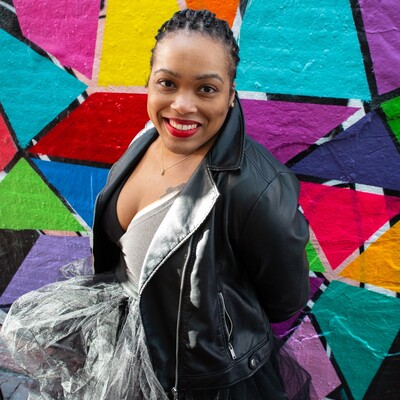
Modjossorica Elysee
FOUNDER & COFOUNDER OF GREAT THINGS
Boston, Massachusetts, United States
Actions
Rica Elysée is the founder of BeautyLynk (beautylynk.com), an on-demand beauty service that brings the salon into women's homes and is bookable in more than 180 US markets. She started out as a community organizer and marketer who built an influential beauty and makeup community for women of color in Boston. While helping care for a disabled family member, she saw how much a good hair appointment lifted that family member's confidence - and how hard it was to find an accessible salon and to book and keep appointments. Most women in her beauty group described the same problems: late or canceled appointments and long waits for beauty services. So she used what she knew about the beauty industry, marketing and community building to go after the "beauty bookings" problem.
Rica is also the creator of Care in the Chair™, a training program that prepares licensed beauty professionals - stylists, barbers, nail technicians and estheticians - to recognize signs of distress in the chair and respond in ways that keep both the client and the professional safe. She writes The Beauty Brief, a Substack publication covering the beauty industry.
She has a longstanding passion for helping women entrepreneurs through her work with #AttheTable (atthetable.io) and #FemaleFoundersDay.
Rica speaks in two lanes: trauma-aware client care and the beauty chair as a health-adjacent touchpoint, and building technology-enabled service businesses as a Black woman founder in tech.
Links
Area of Expertise
Topics
Breaking the Glass Ceiling: A Female Founder's Blueprint for Shattering Expectations in Tech
"Breaking the Glass Ceiling: A Female Founder's Blueprint for Shattering Expectations in Tech" is an empowering and insightful presentation by Rica Elysée, a pioneering entrepreneur and the creative force behind BeautyLynk & SlayMasters. In this captivating talk, Rica shares her firsthand experiences navigating the complexities of the tech industry as a woman, underscoring the significant hurdles and remarkable victories she has encountered along the way. From confronting entrenched biases to building a service business from the ground up, Rica reveals the resilience, innovation, and community support that have been key to her journey. Participants will walk away with practical advice for tackling challenges and fostering inclusivity within their ventures and the wider tech landscape. This session is more than a story of individual success; it's a powerful call to action for structural transformation, envisioning a tech sector where diversity is not merely accepted but recognized as a vital driver of progress and creativity.
Navigating Tokenism: Thriving as the Only Female Founder of Color in Tech
My talk, "Navigating Tokenism: Thriving as the Only Female Founder of Color in Tech," addresses several current challenges and trends in the tech industry, particularly those related to diversity, equity, and inclusion. These topics are not only timely but also essential for the evolving landscape of the tech sector.
Addressing Current Challenges:
Diversity and Inclusion:
The tech industry has long faced criticism for its lack of diversity, particularly in leadership roles. My talk tackles this issue head-on by sharing insights from the perspective of a female founder of color.
I discuss strategies to improve diversity and foster inclusive environments in tech companies, which is a growing concern and focus for many organizations.
Tokenism Versus Genuine Representation:
There's a growing awareness of tokenism – the practice of making only a perfunctory or symbolic effort to be inclusive. My session delves into how to move beyond tokenism to achieve authentic representation and inclusion in tech workplaces.
Mental and Emotional Resilience:
The tech industry is known for its fast-paced and high-stress environment. My experiences and advice on building resilience are particularly relevant for professionals navigating this industry's unique pressures.
Reflecting Trends in the Industry:
Empowerment Through Mentorship and Networking:
There's a trend towards more structured mentorship and networking opportunities in tech, aimed at supporting underrepresented groups. My talk emphasizes the importance of these networks and offers practical advice on leveraging them.
Ethical Leadership and Advocacy:
As ethical leadership becomes a more prominent trend in the tech industry, my talk highlights the importance of using one's position to advocate for positive changes, aligning with the trend towards more socially responsible business practices.
Innovative Problem-Solving:
With the rapid evolution of technology, innovative problem-solving is more critical than ever. My session showcases how diverse experiences and perspectives, like those of women and minorities in tech, are invaluable for driving innovation.
In summary, my talk directly addresses key issues and reflects current trends in the tech industry, providing actionable insights and strategies for individuals and organizations striving to create a more inclusive, innovative, and resilient tech landscape.
Care in the Chair™: Trauma-Aware Client Care for Licensed Beauty Professionals
The chair is one of the few places where a person is touched, seen and talked to for an hour at a time, by someone they trust and come back to on a schedule. That makes stylists, barbers, nail technicians and estheticians some of the first people to notice when something is wrong in a client's life - and among the least likely to have ever been trained for that moment.
Care in the Chair™ is Rica Elysée's practical training for licensed beauty professionals on trauma-aware client care. This session covers what the program is built on: how to recognize signs of distress in the chair, what to say and what not to say, how to respond without diagnosing or interrogating, when and how to point a client toward real help, and how to hold a professional boundary so the person behind the chair does not absorb the harm. It also covers scope of practice, and what to do when a client discloses something serious mid-appointment.
The case for treating the chair as a genuine health-adjacent touchpoint is not theoretical. A cluster-randomized trial published in the New England Journal of Medicine found that Black men with uncontrolled hypertension saw a 21.6 mm Hg greater reduction in systolic blood pressure when barbers promoted health in the shop and specialty-trained pharmacists managed medication on site. Beauty professionals already hold the kind of trust the health system spends years trying to build.
This is a practical session, not a theoretical one. Every part of it is built to be used on the next client.
Who it is for: licensed stylists, barbers, nail technicians and estheticians; salon, shop and spa owners; beauty school educators and cosmetology program directors; and public health, mental health and domestic violence practitioners who want to understand the beauty workforce as a trusted referral channel.
What attendees leave with: a working definition of trauma-aware care in a service setting, language they can use in the chair the next day, a clear line between support and clinical care, and a boundary practice that protects the professional as well as the client.
Available as a 45-60 minute conference session, a keynote, or a longer hands-on training. Can be delivered in person or remotely, subject to agreement. A 50-seat Care in the Chair™ training is scheduled for 16 November 2026.
Target audience: licensed beauty professionals, salon and shop owners, beauty educators, and public health, mental health and domestic violence practitioners. No clinical background required.
Content note: this session references client distress, mental health and domestic violence in general terms. It is a professional-skills session, not a clinical or therapeutic one, and does not train attendees to provide clinical care.
The Beauty Brief: What Is Actually Changing in the Beauty Industry
The Beauty Brief is Rica Elysée's Substack publication covering the beauty industry. This session is the live version of it: a working brief on what is genuinely shifting in beauty, where customers and spending are moving, how service delivery is changing, what is happening to the independent licensed professional, and which of the year's loudest trends deserve an operator's attention and which are noise.
Rica writes and speaks from inside the industry rather than about it. She is the founder of BeautyLynk, an on-demand beauty service bookable in more than 180 US markets, and she built a beauty and makeup community for women of color in Boston before that. The brief is grounded in what owners and licensed professionals are actually seeing week to week, not in press releases.
The session covers the shift from salon-first to client-first service models and what it does to scheduling, pricing and retention; how independent professionals are building a book of business outside a shop, and what that costs them; where technology genuinely helps a service business and where it adds overhead without adding bookings; what the widening overlap between beauty, wellness and health means for how the industry is regulated, trained and paid; and the gaps between what beauty education covers and what professionals actually need on the floor.
Who it is for: salon, shop and spa owners; independent licensed professionals; beauty brand, retail and marketplace teams; beauty school educators and program directors; and anyone building products or services for the beauty workforce.
What attendees leave with: a clear read on where the industry is heading, a short list of the changes most likely to hit their business in the next year, and a practical way to tell a durable shift from a passing trend.
Available as a keynote, a 30-45 minute conference session, or a moderated industry panel. Can be delivered in person or remotely, subject to agreement. Content can be tailored to a specific segment - salon and shop ownership, independent professionals, or brand and retail.
Target audience: beauty industry operators, independent licensed professionals, beauty educators, and brand, retail and marketplace teams. No technical background required.
Related writing: The Beauty Brief, Rica's Substack publication on the beauty industry.
Mirror, Try-On, Convert: AI/AR That Earns Trust in Beauty Retail
Virtual try-on and AI recommendation tools are everywhere in beauty retail — and most of them still feel like gimmicks to the client holding the shade stick. Drawing on her work building SLAY Mirror (AR retail tech) and operating BeautyLynk® across on-demand beauty services, Rica Elysée cuts through the hype: which AI/AR patterns actually reduce returns and decision fatigue, which ones amplify shade bias or overpromise, and how to design for consent, lighting reality, and cultural accuracy — not just demo wow. This session is for retailers, brand teams, and beauty founders who want try-on that feels like service, not surveillance. Attendees leave with a practical filter for evaluating vendors, a trust checklist for in-store and e-comm experiences, and a founder lens on where human stylists still win. Based in Boston with a global lens spanning Boston, Tulsa, and Dakar, Rica frames beauty tech as care infrastructure — not just conversion software.
Takeaways:
1. Distinguish demo-ready AI/AR from retail-ready AI/AR using a trust-and-accuracy checklist.
2. Map where try-on reduces returns vs. where it increases regret, shade mismatch, or privacy friction.
3. Decide when to keep a licensed human in the loop — and how to brief that role so tech amplifies care.
Supply Is the Product: Scaling On-Demand Beauty Without Burning Pros
Marketplace decks love demand. Beauty businesses live or die on supply: licensed stylists, barbers, nail technicians, and estheticians who show up, do excellent work, and stay. Rica Elysée, Founder & CEO of BeautyLynk® — an on-demand beauty platform bookable in more than 180 U.S. markets — shares the unglamorous ops that make two-sided beauty service markets reliable. Topics include recruiting and retaining licensed talent without race-to-the-bottom rates, designing scheduling for real life (travel time, kit prep, aftercare), pricing for retention on both sides of the chair, and treating safety and trust as product features. This is not a “build a marketplace” pep talk. It is a founder field guide for operators who want scale without burning the professionals who make the brand real. Attendees leave with a supply-health scorecard and a no-show reduction playbook grounded in beauty culture — from Boston to Tulsa to Dakar — not generic gig-economy copy.
Takeaways:
1. Audit marketplace health with a supply-first scorecard (quality, reliability, earnings sustainability, trust).
2. Identify which “efficiency” features create no-shows or churn for licensed beauty pros — and what to ship instead.
3. Apply a retention-first pricing and scheduling model that protects both client experience and pro livelihood.
Chair Protocols Workshop: Building Trauma-Aware Service Standards for Your Team
Care in the Chair™ started as training for licensed beauty professionals. This workshop is the next layer: owners, educators, and lead stylists design team protocols so trauma-aware care is not one person’s personality — it is the house standard. Facilitated by Rica Elysée, creator of Care in the Chair™ and Founder & CEO of BeautyLynk®, participants draft language for intake, touch consent, topic boundaries, distress response (without diagnosing), de-escalation, and when/how to refer to real help — all inside professional scope of practice. Using short scenarios and peer review, teams leave with a one-page Chair Protocol template and a 30-day rollout plan (huddle script, role-play cadence, escalation map). Content note: professional-skills and client-experience design only — not clinical, diagnostic, or therapy training. Ideal for salons, barbershops, nail studios, spas, beauty schools, and marketplace trust teams who want care that scales with culture and dignity.
Takeaways:
1. Draft a one-page Chair Protocol covering consent, language, boundaries, and escalation within beauty scope of practice.
2. Practice two client scenarios with peer feedback so the protocol survives a busy Saturday.
3. Leave with a 30-day team rollout plan (huddle script + role-play cadence) owners can implement without a clinical degree.
Building in Public Without Being the Exhibit: Black Women Founders in Beauty Tech
Beauty tech loves a “first” headline. Black women founders still need capital, customers, and engineering partners who stay after the keynote. This panel — featuring Rica Elysée (Founder & CEO, BeautyLynk®; co-founder, #AtTheTable) alongside peer founders and operators — goes past inspiration into operating reality: how to narrate your company without performing trauma; how to evaluate investors and partners who want the photo more than the term sheet; how community tables (#AtTheTable and peers) create deal flow that cold outreach does not; and how to keep product velocity when you are also the face of the category. Moderated for honesty, not hardship Olympics. Designed for conference stages that want substance on Black women in tech, women entrepreneurship, and beauty innovation — and for audiences who will take the lessons into hiring, investing, and buying decisions the same week.
Takeaways:
1. Spot “exhibit energy” in partnerships, press, and stages — and redirect toward commercial outcomes.
2. Use community-powered networks (not just personal brand) as a repeatable go-to-market and fundraising channel.
3. Leave with language for founder storytelling that is authentic without oversharing, and sharp without cynicism.
From Chair to Brief: Turning Beauty Operators into Industry Storytellers
The beauty industry’s best intelligence still lives in the chair, the kit bag, and the group chat — not only in trend reports. Rica Elysée, writer of The Beauty Brief (Substack) and Founder & CEO of BeautyLynk®, shows operators and founders how to turn what they already see — client behavior, cultural shifts, tech misfires, care gaps — into clear industry storytelling that books stages and podcasts. This is not “personal brand 101.” It is a craft session on framing operator insight as public analysis: choosing a lane, building a recurring brief, translating service-business reality for tech and media rooms, and protecting clients and pros when stories go public. Attendees leave with a one-page story architecture (observation → insight → implication → ask) and a 90-day visibility ladder from Substack/LinkedIn to trade stages to larger cultural podcasts. Built for people who already do the work — and are ready to be heard without inventing a persona.
Takeaways:
1. Convert operator observations into a publishable brief structure media and conference bookers can use.
2. Build a 90-day visibility ladder (owned channel → trade stage → cultural podcast) without pay-to-play.
3. Set ethical boundaries for client/pro stories so visibility never costs someone else’s dignity.
Retail After the Filter: Designing Beauty Experiences Clients Don’t Regret
Filters trained a generation to expect an edited face — then the mirror, the try-on, or the appointment shows something else. Rica Elysée connects three worlds she builds in: on-demand services (BeautyLynk®), AR retail (SLAY Mirror), and trauma-aware care (Care in the Chair™) to ask a sharper retail question: how do we design experiences clients don’t regret an hour later? The session covers expectation-setting language at booking and in-store, shade and texture honesty in AI/AR flows, aftercare as retention (not an upsell script), and how cultural context — including diasporic beauty practices across Boston, Tulsa, and Dakar — changes what “good outcome” means. Aimed at brand, retail, and service leaders tired of vanity metrics. Attendees leave with a regret-reduction journey map from discovery → try → purchase/service → aftercare, and a short list of metrics that predict loyalty better than likes.
Takeaways:
1. Map the client journey for regret hotspots (discovery, try-on, service, aftercare) and assign an owner to each.
2. Rewrite three high-friction moments (booking copy, try-on disclaimer, post-service follow-up) for honesty and retention.
3. Choose loyalty metrics that track trust and repeat booking — not only engagement or demo completion.
Modjossorica Elysee
FOUNDER & COFOUNDER OF GREAT THINGS
Boston, Massachusetts, United States
Links
Actions
Please note that Sessionize is not responsible for the accuracy or validity of the data provided by speakers. If you suspect this profile to be fake or spam, please let us know.
Jump to top