
Session
The Org Chart Won't Save You: Operating Models for Teams Where AI Does Real Work
Agile assumed humans do all the work. Every ceremony runs at the pace of people coordinating with people. Sprints, standups, retros, code review. AI agents broke that assumption.
AI maturity demands a structural rethink of engineering organisations. A rethink of who does what, who decides what, how fast those decisions travel. I started writing about this when I noticed the teams adopting AI agents most aggressively were also where coordination collapsed fastest. Ceremonies built for human-speed iteration buckled under machine-speed execution. The org chart stayed the same. The work inside it changed completely.
This talk presents the operating model that came out of that observation. It covers how product management changes when agents surface architectural trade-offs before sprint planning starts. The PM moves upstream toward intent. How team topology shifts from pipeline stages to autonomous cells carrying full context. How you codify security, cost, and capacity constraints so agents move fast while humans stay clear of the bottleneck seat.
The model builds on what I call the ISEE principles (Intent, Structure, Execution, Evidence), drawn from 30 years of engineering work and recent years advising engineering leaders on AI-driven development, from coding assistants to agentic platform engineering. You'll see what broke when organisations got the human-AI boundaries wrong, what they changed, and the specific patterns that held up across teams of five and teams of fifty.
You'll leave with a concrete way to evaluate your own org structure against a simple reality: AI reshapes who decides what, and when they decide it.
Takeaways:
1. A decision-rights map for human-AI teams — a repeatable method to identify which decisions belong to humans, which to agents, and which need both, so you can redesign roles and reporting lines with intent, not
instinct.
2. How the PM, engineering, and platform roles actually shift — the PM doesn't disappear, the PM moves upstream. Engineers shift from execution to orchestration. Platform absorbs what three separate roles used to own.
You'll see where these transitions worked and where they created new friction.
3. The ISEE principles as an org-design diagnostic — Intent, Structure, Execution, Evidence as four questions to assess whether your organisation is set up for AI-native delivery or just bolting agents onto an Agile-era
org chart.
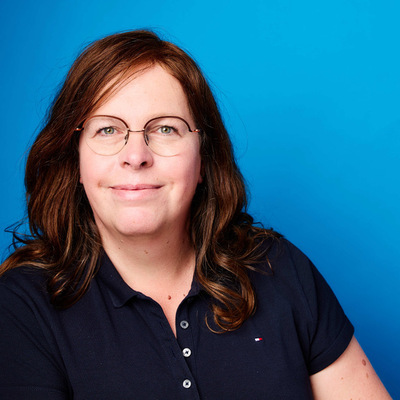
Suzanne Daniels
Chief Developer Advisor at Microsoft
Amsterdam, The Netherlands
Links
Please note that Sessionize is not responsible for the accuracy or validity of the data provided by speakers. If you suspect this profile to be fake or spam, please let us know.
Jump to top