
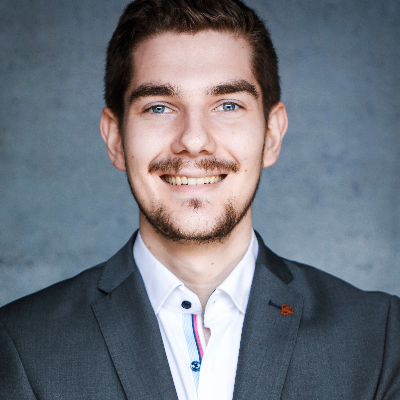
Alexander Dierkes
AI Strategy & Implementation Lead @ Dataciders
AI Strategy & Implementation Lead @ Dataciders
Ahlen, Germany
Actions
I’m an AI and Microsoft Fabric enthusiast with a strong focus on turning advanced AI capabilities into practical, production ready solutions. Over the past years, I’ve been building and delivering end to end AI solutions on the Microsoft stack, helping teams move from experimentation to scalable and secure implementations using Microsoft Fabric and AI Foundry.
My work centers on applied AI scenarios such as Copilot experiences, intelligent agents, and domain specific models, tightly integrated with modern data platforms. I am particularly passionate about making AI architectures understandable and accessible, enabling developers and architects to confidently build, operate, and scale AI powered solutions in real world environments.
Ich bin KI und Microsoft Fabric Enthusiast mit einem starken Fokus darauf, fortschrittliche KI Funktionen in praxisnahe und produktionsreife Lösungen zu überführen. In den letzten Jahren habe ich zahlreiche End to End KI Lösungen auf dem Microsoft Stack umgesetzt und Teams dabei unterstützt, von ersten Experimenten zu skalierbaren und sicheren Implementierungen mit Microsoft Fabric und AI Foundry zu gelangen.
Mein Schwerpunkt liegt auf angewandten KI Szenarien wie Copilot Experiences, intelligenten Agenten und domänenspezifischen Modellen, eng verzahnt mit modernen Datenplattformen. Besonders wichtig ist mir, KI Architekturen verständlich und zugänglich zu machen, sodass Entwicklerinnen und Entwickler sowie Architektinnen und Architekten KI gestützte Lösungen sicher aufbauen, betreiben und skalieren können.
Area of Expertise
Topics
Foundry Local: Accelerated AI Development Without the Cloud Latency en de
Developing AI solutions often feels like a constant waiting game for cloud resources to provision or APIs to respond. Microsoft Foundry Local changes this dynamic by bringing the power of the Foundry framework directly to your workstation. However, many developers struggle with the initial setup, environment consistency, and the eventual transition back to the cloud.
In this session, we will break down the architecture of Foundry Local and demonstrate how it enables a seamless "Inner Loop" development experience. We will focus on the technical requirements, local orchestration of AI services, and how to maintain parity between your local machine and your production environment in Azure.
Through a live demonstration, you will see how to build, test, and debug an AI workload entirely offline, followed by a streamlined deployment strategy to Microsoft Fabric.
Key Takeaways
• Master the setup: Learn how to configure Foundry Local for maximum performance and compatibility.
• Optimize the Inner Loop: Understand how local execution reduces iteration cycles and costs during the experimentation phase.
• Parity & Consistency: Discover best practices for environment variables and configurations that ensure "it works on my machine" translates to "it works in production."
• Hybrid Workflows: Learn when to stay local and when to leverage the cloud for specific Foundry components.
Target audience:
Developers and AI Engineers who want to speed up their development cycle and reduce cloud costs during the prototyping phase.
Session duration:
45 minutes
Foundry Local: KI-Entwicklung beschleunigen ohne Cloud-Latenz en de
Die Entwicklung von KI-Lösungen fühlt sich oft wie ein ständiges Warten auf Cloud-Ressourcen oder API-Antworten an. Microsoft Foundry Local ändert diese Dynamik, indem es die Leistung des Foundry-Frameworks direkt auf die Workstation bringt. Viele Entwickler stehen jedoch vor Herausforderungen bei der Ersteinrichtung, der Konsistenz der Umgebungen und dem späteren Übergang zurück in die Cloud.
In dieser Session analysieren wir die Architektur von Foundry Local und zeigen, wie es eine nahtlose "Inner Loop"-Entwicklungserfahrung ermöglicht. Wir konzentrieren uns auf technische Anforderungen, die lokale Orchestrierung von KI-Diensten und die Sicherstellung der Parität zwischen dem lokalen Rechner und der Produktionsumgebung in Azure.
Anhand einer Live-Demonstration erleben Sie, wie ein KI-Workload vollständig offline erstellt, getestet und debuggt wird, gefolgt von einer effizienten Deployment-Strategie für Microsoft Fabric.
Key Takeaways
• Setup-Meisterung: Lernen Sie, wie Sie Foundry Local für maximale Performance und Kompatibilität konfigurieren.
• Optimierung des Inner Loop: Verstehen Sie, wie lokale Ausführung Iterationszyklen verkürzt und Kosten in der Experimentierphase senkt.
• Parität & Konsistenz: Entdecken Sie Best Practices für Umgebungsvariablen und Konfigurationen, damit "funktioniert bei mir lokal" auch "funktioniert in Produktion" bedeutet.
• Hybride Workflows: Erfahren Sie, wann Sie lokal bleiben und wann Sie Cloud-spezifische Foundry-Komponenten nutzen sollten.
Target audience:
Entwickler und KI-Ingenieure, die ihren Entwicklungszyklus beschleunigen und Cloud-Kosten während der Prototyping-Phase reduzieren möchten.
Session duration:
45 Minuten
Microsoft Foundry Basics: From Experimentation to Production en de
Microsoft Foundry provides a powerful foundation for building and operating AI solutions on the Microsoft platform. However, many teams struggle to understand where Foundry fits, how it relates to Fabric and Azure, and how to move from first experiments to production ready AI workloads.
In this session, we will introduce the core concepts of Microsoft Foundry and explain how it supports the full AI lifecycle, from data preparation and model selection to deployment and operations. We will focus on practical guidance, common architectural patterns, and best practices that help teams build scalable, secure, and maintainable AI solutions.
Through real world examples and a hands on walkthrough, you will gain a clear understanding of how to use MS Foundry effectively and how to avoid common pitfalls when operationalizing AI.
Key Takeaways
• Understand the core building blocks and concepts of Microsoft Foundry
• Learn how Microsoft Foundry fits into the Microsoft Fabric and Azure ecosystem
• Discover best practices for moving AI solutions from POC to production
• Get practical guidance on architecture, governance, and operational readiness
Target audience:
Beginners and intermediates interested in applied AI on the Microsoft platform
Session duration:
45 minutes
Microsoft Foundry Grundlagen: Von der Idee zur produktiven KI Lösung en de
Microsoft Foundry bietet eine zentrale Plattform zum Entwickeln und Betreiben von KI Lösungen auf dem Microsoft Stack. In der Praxis fehlt jedoch oft ein klares Verständnis dafür, wo Foundry eingeordnet ist, wie es mit Microsoft Fabric zusammenspielt und wie aus ersten Experimenten stabile produktive Lösungen entstehen.
In dieser Session vermittle ich die grundlegenden Konzepte von Microsoft Foundry und zeige, wie die Plattform den gesamten KI Lebenszyklus unterstützt, von der Datenbasis über Modellentscheidungen bis hin zu Deployment und Betrieb. Der Fokus liegt auf praxisnahen Best Practices, bewährten Architekturmustern und typischen Stolpersteinen aus realen Projekten.
Anhand konkreter Beispiele und einer strukturierten Demo erhältst du ein solides Fundament, um Foundry sicher, skalierbar und zielgerichtet einzusetzen.
Key Takeaways
• Verständnis der zentralen Konzepte und Bausteine von Microsoft Foundry
• Einordnung von MS Foundry im Zusammenspiel mit Microsoft Fabric und Azure
• Best Practices für den Übergang von POC zu produktiver KI
• Praktische Empfehlungen zu Architektur, Governance und Betrieb
Zielgruppe:
Einsteigerinnen und Einsteiger sowie Fortgeschrittene mit ersten MS Foundry Erfahrungen
Sessiondauer:
45 Minuten
From Zero to Hero: Advanced RAG Patterns for Enterprise Workloads in Microsoft Foundry en de
A simple RAG (Retrieval-Augmented Generation) prototype is easy to build, but often fails in production due to complex documents, latency issues, or imprecise user queries. To make RAG systems truly "enterprise-ready", we must move beyond the standard approach. In this session, we dive deep into advanced RAG architectures within Microsoft Foundry that ensure performance, reliability, and scalability.
Key Takeaways
• Introduction to Multi-Query Generation, Re-Ranking, and HyDE to significantly improve search results
• Leveraging Graph RAG for enhanced semantic context and multi-hop reasoning
• The leap to Agentic RAG: Autonomous AI agents that dynamically decide when and how to retrieve information
Target audience:
Data Engineers, AI Engineers and Architects
Session duration:
45 minutes
Products:
Microsoft Foundry, Azure AI Search
From Zero to Hero: Advanced RAG-Patterns für Enterprise-Workloads in Microsoft Foundry en de
Ein einfacher RAG-Prototyp (Retrieval-Augmented Generation) ist schnell gebaut, scheitert aber in der Produktion oft an komplexen Dokumenten, Latenzproblemen oder unpräzisen Nutzerfragen. Um RAG-Systeme "Enterprise-ready" zu machen, müssen wir über den Standard-Ansatz hinausgehen. In dieser Session tauchen wir tief in fortgeschrittene RAG-Architekturen innerhalb von Microsoft Foundry ein, die Performance, Zuverlässigkeit und Skalierbarkeit sicherstellen.
Key Takeaways
• Vorstellung von Multi-Query Generation, Re-Ranking und HyDE zur signifikanten Verbesserung der Suchergebnisse
• Einsatz von Graph RAG für ein verbessertes semantisches Verständnis und Multi-Hop-Reasoning
• Der Sprung zu Agentic RAG: Autonome KI-Agenten, die dynamisch entscheiden, wann und wie sie Informationen abrufen
Zielgruppe:
Data Engineers, AI Engineers und Architekten
Sessiondauer:
45 Minuten
Produkte:
Microsoft Foundry, Azure AI Search
Platform Meets Pro Code: Extending Microsoft Foundry en de
Microsoft Foundry provides a managed and opinionated platform for building AI solutions quickly. At the same time, real world use cases often require deeper customization, advanced integrations, and full control over architecture and code.
In this session, we explore how Microsoft Foundry bridges the gap between platform level abstractions and pro code development. We will look at where the platform accelerates delivery and where developers can extend it with custom components, services, and workflows.
Through practical examples, you will learn how to combine the speed of Microsoft Foundry with the flexibility of pro code to build scalable, production ready AI solutions that meet enterprise requirements.
Key Takeaways
• Understand the abstraction layers of Microsoft Foundry
• Learn when to rely on platform capabilities and when to use pro code
• Discover patterns for extending Microsoft Foundry with custom logic and services
• Design flexible and future proof AI architectures
Target audience
Developers and architects with basic to intermediate experience in AI or modern data platforms who want to understand how to combine Microsoft Foundry with pro code approaches.
Session duration
45–60 minutes
Platform trifft Pro Code: Microsoft Foundry gezielt erweitern en de
Microsoft Foundry bietet eine stark abstrahierte Plattform, um KI Lösungen schnell umzusetzen. In der Praxis erfordern viele Szenarien jedoch individuelle Logik, tiefere Integrationen und volle Kontrolle über Architektur und Code.
In dieser Session zeige ich, wie Microsoft Foundry die Brücke zwischen Plattform Abstraktion und Pro Code schlägt. Wir betrachten, an welchen Stellen die Plattform Geschwindigkeit bringt und wo gezielte Erweiterungen mit eigenem Code sinnvoll oder notwendig sind.
Anhand praxisnaher Beispiele lernst du, wie sich die Stärken von Microsoft Foundry mit der Flexibilität von Pro Code kombinieren lassen, um skalierbare und produktionsreife KI Lösungen für den Unternehmenseinsatz zu bauen.
Key Takeaways
• Verständnis der Abstraktionsebenen von Microsoft Foundry
• Entscheidungshilfen für Plattform Nutzung versus Pro Code
• Architektur Muster zur Erweiterung von Microsoft Foundry
• Aufbau flexibler und zukunftssicherer KI Architekturen
Zielgruppe
Entwicklerinnen und Entwickler sowie Architektinnen und Architekten mit grundlegenden bis fortgeschrittenen Kenntnissen in KI oder modernen Datenplattformen, die verstehen möchten, wie sich Microsoft Foundry mit Pro Code Ansätzen kombinieren lässt.
Sessiondauer
45–60 Minuten
Privacy Meets Power: Hybrid AI Architectures with Foundry Local and Azure AI Foundry en de
Companies face a fundamental trade-off. They want to leverage the reasoning capabilities of modern cloud models, but are often restricted from processing sensitive data outside their own infrastructure due to compliance, privacy, or IP concerns.
Traditional approaches fail to resolve this. Local models often lack the quality needed for complex reasoning, while purely cloud-based solutions are not viable in many real-world scenarios.
In this session, I will present a hybrid architecture that addresses this challenge. A local agent processes and reduces sensitive raw data directly on-device using Foundry Local, transforming it into a non-sensitive, structured representation. Only this abstracted information is passed to Azure AI Foundry in the cloud, where the actual reasoning takes place.
Key Takeaways
• How to securely split processing between local and cloud-based reasoning
• How to integrate local models as specialized tools within a cloud agent
• End-to-end demo of a hybrid AI workflow with strict separation of sensitive and non-sensitive data
Target audience:
Developers, AI Engineers, and Architects
Session duration:
45 minutes
Products:
Foundry Local, Azure AI Foundry, Microsoft Agent Framework
Privacy Meets Power: Hybride KI-Architekturen mit Foundry Local und Azure AI Foundry en de
Unternehmen stehen vor einem Zielkonflikt: Sie wollen die Reasoning-Stärke moderner Cloud-Modelle nutzen, dürfen aber sensible Daten aus Compliance- oder Datenschutzgründen nicht extern verarbeiten.
Klassische Ansätze scheitern daran. Lokale Modelle liefern oft nicht die nötige Qualität, reine Cloud-Lösungen sind in vielen Szenarien nicht zulässig.
In dieser Session zeige ich eine hybride Architektur, die diesen Konflikt auflöst. Ein lokaler Agent verarbeitet sensible Rohdaten direkt auf dem Gerät mit Foundry Local und abstrahiert sie in eine nicht-sensitive, strukturierte Repräsentation. Nur diese abstrahierten Informationen werden an Azure AI Foundry übergeben, wo die eigentliche Reasoning-Logik ausgeführt wird.
Key Takeaways
• Sichere Aufteilung von Datenverarbeitung zwischen lokalem und Cloud-basiertem Reasoning
• Integration lokaler Modelle als spezialisierte Tools innerhalb eines Cloud-Agenten
• End-to-End-Demo eines hybriden KI-Workflows
Zielgruppe:
Entwickler, AI Engineers und Architekten
Sessiondauer:
45 Minuten
Produkte:
Foundry Local, Azure AI Foundry, Microsoft Agent Framework
Beyond the Chatbot: Multi-Agent Systems in Production with the Microsoft Agent Framework en de
While many organizations are experimenting with AI agents, very few successfully scale them into production. Developers often have to choose between visual low-code tools that have a defined ceiling, and complex pro-code frameworks. Furthermore, monolithic agents frequently fail or hallucinate when handling complex enterprise tasks. In this session, we explore the shift towards specialized multi-agent architectures using the new Microsoft Agent Framework. We will demonstrate how a hybrid approach combines the best of both worlds.
Key Takeaways
• When to rely on low-code and when pro-code (Agent Framework) is strictly required
• Best practices for orchestrating multiple agents for complex enterprise workflows
• Governance, security, and tracing of agents in Azure AI Foundry
Target audience:
AI Engineers, Architects and Developers
Session duration:
45–60 minutes
Products:
Microsoft Agent Framework, Azure AI Foundry, Copilot Studio
Beyond the Chatbot: Multi-Agenten-Systeme in Produktion mit dem Microsoft Agent Framework en de
Fast alle Unternehmen experimentieren mit KI-Agenten, aber die wenigsten bekommen sie skaliert in die Produktion. Entwickler stehen oft vor der Wahl zwischen visuellen Low-Code-Tools, die schnell an ihre architektonischen Grenzen stoßen und komplexen Pro-Code-Frameworks. Zudem scheitern monolithische Einzel-Agenten häufig bei komplexen Enterprise-Aufgaben. In dieser Session beleuchten wir den Wechsel zu spezialisierten Multi-Agenten-Architekturen mithilfe des neuen Microsoft Agent Frameworks. Wir zeigen, wie eine hybride Herangehensweise das Beste aus beiden Welten vereint.
Key Takeaways
• Wann Low-Code ausreicht und wann Pro-Code (Agent Framework) zwingend erforderlich ist
• Best Practices für die Orchestrierung mehrerer Agenten für komplexe Unternehmensabläufe
• Governance, Security und Tracing von Agenten in Azure AI Foundry
Zielgruppe:
AI Engineers, Architekten und Entwickler
Sessiondauer:
45–60 Minuten
Produkte:
Microsoft Agent Framework, Azure AI Foundry, Copilot Studio
When Prompts Are Not Enough: Engineering Reliable AI Systems for Legal Knowledge en de
Building an AI solution often starts with prompt engineering. When the results are disappointing, many teams simply keep adjusting prompts and hoping for better outcomes. In real enterprise scenarios, especially when working with legal and regulatory content, this approach quickly reaches its limits.
Using real-world lessons learned from building AI solutions on large collections of legal documents, this session explores a structured approach to improving answer quality. We will look at common failure modes, why prompt engineering alone is often insufficient, and how techniques such as retrieval augmentation, metadata enrichment, re-ranking, query expansion, and agent-based workflows can dramatically improve business outcomes.
Rather than focusing on a single technology, the session presents a practical framework for diagnosing quality issues and choosing the right architectural response.
Key Takeaways
• Learn how to systematically analyze poor AI responses
• Understand when prompt engineering is no longer the right solution
• Discover architectural patterns that improve answer quality
• Learn practical lessons from real-world legal knowledge systems
Target audience:
Developers, AI Engineers, Architects and Technical Decision Makers interested in improving AI solution quality beyond prompt engineering
Session duration:
45 minutes
Wenn Prompt Engineering nicht mehr hilft: Von besseren Prompts zu besseren Systemen en de
Generative KI Projekte starten häufig mit Prompt Engineering. Liefert das Modell nicht die gewünschten Ergebnisse, wird der Prompt angepasst, erweitert oder komplett neu geschrieben. In vielen Projekten führt dieser Ansatz jedoch nur zu begrenzten Verbesserungen.
Gerade bei fachlich anspruchsvollen Anwendungsfällen, beispielsweise bei der Verarbeitung von Gesetzes- und Regelwerken, stößt Prompt Engineering schnell an seine Grenzen. Die eigentliche Ursache schlechter Ergebnisse liegt oft nicht im Prompt selbst, sondern in der Architektur des Gesamtsystems.
Anhand eines Praxisbeispiels aus dem Umgang mit umfangreichen Rechtstexten zeigt diese Session, wie sich die Qualität von KI-Lösungen systematisch analysieren und verbessern lässt. Wir betrachten typische Fehlerbilder, diskutieren die Grenzen von Prompt Engineering und stellen technische Ansätze wie Retrieval Augmented Generation (RAG), Query Expansion, Re-Ranking, Metadatenanreicherung und agentische Workflows vor.
Die Session vermittelt einen praxisnahen Entscheidungsrahmen, um Qualitätsprobleme zu identifizieren und die passenden technischen Maßnahmen auszuwählen.
Key Takeaways
• Verstehen, warum Prompt Engineering häufig nicht ausreicht
• Typische Ursachen für schlechte KI-Ergebnisse systematisch analysieren
• Geeignete technische Maßnahmen zur Qualitätsverbesserung auswählen
• Praxisnahe Einblicke aus einem realen Projekt mit rechtlichen Fachinhalten
Zielgruppe:
Entwickler, KI Engineers, Architekten und technische Entscheider, die die Qualität von KI-Lösungen über klassisches Prompt Engineering hinaus verbessern möchten.
Dauer:
45 Minuten
Please note that Sessionize is not responsible for the accuracy or validity of the data provided by speakers. If you suspect this profile to be fake or spam, please let us know.
Jump to top