
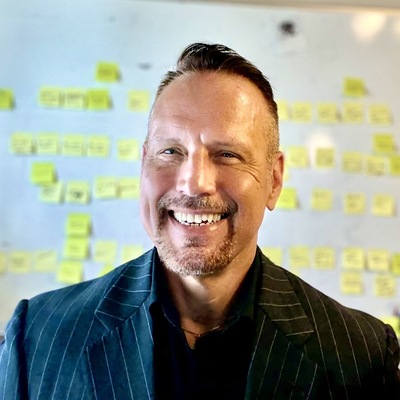
John Halberstadt
Strategic Product, AI & Technology Leader | Author | Enterprise Transformation Advisor
Reno, Nevada, United States
Actions
John Halberstadt is a strategic technology, product, and enterprise transformation executive focused on helping organizations improve how they govern, fund, deliver, and scale complex technology initiatives.
His work sits at the intersection of PMI-aligned delivery leadership, PMO modernization, portfolio governance, enterprise risk management, product operating models, and technology transformation. He helps organizations move from fragmented project execution to integrated operating systems that connect strategy, investment, governance, delivery, and measurable business value.
As Head of Consulting Operations at En Dash, John advises organizations on enterprise transformation, governance design, AI-enabled operating models, product and platform strategy, and modern delivery practices. His consulting work focuses on helping leaders establish practical governance structures, improve portfolio visibility, strengthen decision-making, and align execution with organizational strategy.
John previously served as Chief Information and Technology Officer for a Property and Casualty insurer, where he led core platform modernization, cloud transformation, enterprise delivery evolution, and technology governance. His leadership experience includes modernizing delivery practices, improving cross-functional execution, managing risk across complex change initiatives, and connecting technology investments to business outcomes.
His background also includes senior leadership in product, user experience, and customer experience for AI and NLP platforms at Next IT, delivering enterprise conversational AI solutions across financial services, healthcare, and travel. Consulting and advisory roles with LitheSpeed and independent engagements have supported large-scale enterprise transformation initiatives, including enterprise agility, PMO evolution, portfolio management, governance alignment, and product-centric operating models.
John is a published author on consulting, artificial intelligence, and governance. His work emphasizes practical frameworks for responsible AI adoption, modern consulting, enterprise decision-making, and operating effectively in complex, technology-driven environments.
Regular speaking topics include PMO modernization, enterprise transformation, portfolio governance, risk management, product operating models, AI governance, enterprise agility, and the connection between strategy, execution, and value delivery.
Key Topics
* PMO Modernization and Enterprise Delivery Leadership
* PMI-Aligned Project, Program, and Portfolio Management
* Enterprise Transformation and Operating Model Design
* Governance, Risk Management, and Decision Rights
* Portfolio Governance and Value Delivery
* Product Operating Models and Product Leadership
* AI Governance and Responsible AI Adoption
* Enterprise Agility and Hybrid Delivery Models
* Technology, Cloud, and Platform Modernization
* Strategy Execution and Organizational Change
Experience Highlights
* Head of Consulting Operations, En Dash
* Vice President, Consulting, LitheSpeed
* Chief Information and Technology Officer, Capital Insurance Group
* SVP Customer Experience, AI and NLP, Next IT
* Enterprise Technology Leadership, FIS and First American
Author
Published author on consulting, artificial intelligence, and governance, with books focused on practical frameworks for modern consulting, responsible AI adoption, governance, and enterprise operating effectiveness.
Author page: https://www.amazon.com/stores/author/B0GC3R4G83/allbooks
Area of Expertise
Topics
Stop Building the Wrong Things: How to Assess Product Viability for Internal Initiatives
Too many internal products move forward without clear evidence they should exist.
Teams respond to stakeholder requests, collect requirements, and start building - only to discover late that adoption is low, value is unclear, or the problem was never well understood.
This session focuses on how to assess product viability before and during delivery so effort is spent on the right things.
It outlines how product ownership creates clarity from competing inputs, how roles contribute to validating real needs, and how to move from ideas to evidence-based decisions.
Key areas covered include:
- Defining viability using adoption, process impact, and cost—not activity or output
- Structuring intake to handle multiple stakeholders without losing focus
- Validating assumptions early through prototypes, pilots, and technical exploration
- Establishing clear criteria to continue, pivot, or stop work
- Recognizing signals that an initiative is not viable and acting on them
The session is grounded in internal product scenarios, including examples where teams made the decision to stop work based on weak viability signals.
The focus is on practical guidance for making better decisions, reducing wasted effort, and ensuring internal products deliver real value.
AI Governance for Project Managers: Managing Risk in an AI-Enabled World
Project managers have always been responsible for managing risk. That responsibility has not changed, but the nature of risk has.
AI is now embedded across how work gets done: in the tools PMs use, in how teams deliver, and increasingly in the products being built.
Each introduces new and often poorly understood risks that can impact quality, security, compliance, and outcomes.
This session provides a practical, PM-focused view of AI governance, not as a technical discipline, but as an extension of project risk management.
The session focuses on three critical areas every project manager must understand:
- AI used by the PM: where productivity tools can introduce accuracy, confidentiality, and decision risks
- AI used by the team: where AI-assisted delivery (e.g., development, automation) introduces quality, security, and IP risks
- AI embedded in the product: where traditional approaches to testing, validation, and accountability no longer apply
Participants will leave with a clear mental model for identifying where AI is influencing their projects, what risks it introduces, and how to manage those risks within existing project governance practices.
Target audience: Project managers, program managers, PMO leaders, and delivery leaders working in environments where AI is emerging or already in use
Session format: Interactive lecture with facilitated discussion
Preferred duration: 60 minutes (including Q&A)
Level: Intermediate (no technical AI background required)
Technical requirements: Standard presentation setup (screen/projector)
Agile, Product, and Software Craft in AI-Enabled Delivery
Agile teams are being asked to improve speed, quality, and collaboration while adapting to new ways of working shaped by AI-assisted development. At the same time, many teams still deal with a familiar problem: planning, technical context, and execution often drift apart.
This session explores how agile leadership, product thinking, and software craft can work together more effectively in that environment. The focus is on stronger feedback loops across roles, clearer work definition, better collaboration between those guiding the work and those building it, and practical ways to support continuous improvement without losing delivery discipline.
Through the combined perspectives of an agile coach and a software engineer, this talk examines how teams can connect intent to implementation more clearly, use planning artifacts such as acceptance criteria in more actionable ways, and improve the quality of delivery through better shared context. The session also connects these ideas to kaizen and continuous improvement, with an emphasis on practical application in modern software teams.
Attendees will leave with a clearer view of how to strengthen collaboration across agile, product, and engineering roles in AI-enabled delivery environments, and how better feedback loops can support both team effectiveness and higher-quality outcomes.
Target audience: agile coaches, scrum masters, product managers, product owners, engineering managers, software engineers, delivery leads, and cross-functional technology leaders.
Preferred session duration: 60 minutes.
Format: joint presentation from an agile coach and a software engineer.
Focus: practical, cross-functional session for teams working at the intersection of delivery leadership, product thinking, and software development.
Level: intermediate. Accessible to mixed audiences across agile, product, and engineering.
Minimum Viable Change: Scaling Small Wins into Organizational Momentum
Most large-scale change efforts fail not because of poor intent, but because they are too big, too disruptive, and too disconnected from how work actually happens. This session introduces Minimum Viable Change as a practical alternative, focusing on small, deliberate interventions that create immediate signal, reduce risk, and compound over time.
Rather than relying on top-down transformation, the approach centers on identifying the smallest meaningful change, validating it quickly, and expanding it organically across connected teams such as product, engineering, and shared services. The result is progress that is visible, adaptable, and sustainable.
This session focuses on how to:
Define and apply Minimum Viable Change in real delivery environments
Design small interventions that produce fast, actionable feedback
Make work visible to reinforce effective behaviors and surface learning
Expand proven practices across adjacent teams without heavy coordination overhead
Avoid over-scaling and preserve momentum as adoption grows
Grounded in modern, AI-enabled and hybrid delivery contexts, this session emphasizes practical execution over theory, enabling teams to build lasting change through consistent, incremental progress.
Target audience: Delivery leaders, product managers, engineering managers, program managers, and transformation practitioners
Session format: Practical talk with real-world examples
Preferred duration: 45 to 60 minutes, interactive Q&A throughout
Technical requirements: HDMI and standard projector/large monitor, no special setup required for in-person events otherwise.
Doing Good, Doing Better, Doing Well: A Practical Approach to Modern Consulting
This 60-minute session introduces a pragmatic, experience-based approach to consulting that prioritizes real outcomes over activity, capability over dependency, and partnership over performative expertise. Drawing from Caitlin and John's book, Values-Based Consulting - A Field Guide to Doing Good, Doing Better and Doing well, the session challenges traditional consulting models and presents principles and practices that lead to measurable impact.
The focus is not on frameworks or theory for their own sake, but on what works in real environments where context matters, resistance is real, and results are expected. Attendees will walk through how to shift from deliverables to outcomes, how to build trust and credibility early, and how to ensure that clients are stronger after the engagement than before.
Format: 60-minute webinar (45 minutes content, 15 minutes Q&A)
Delivery: Virtual (Zoom, Teams, or similar platform)
Audience: Consultants, consulting leaders, transformation leads, and client-side sponsors of consulting engagements
Level: Intermediate. Assumes basic familiarity with consulting or advisory work
Please note that Sessionize is not responsible for the accuracy or validity of the data provided by speakers. If you suspect this profile to be fake or spam, please let us know.
Jump to top