
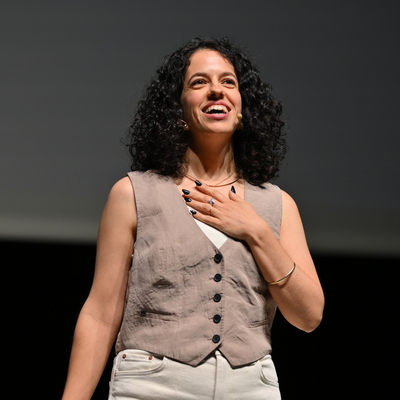
Michal Kessel Shitrit
Michal Kessel Shitrit - Head of English UX Writing at Draft
Tel Aviv, Israel
Actions
As Head of English UX Writing at Draft, Michal spends her days juggling Figma files and crafting content for a diverse set of products. She has worked across fintech, e-commerce, and enterprise platforms, helping brands ship clear, intuitive user experiences. With a strong
background in localisation, she has helped teams adapt content for global audiences, ensuring products resonate across different languages and markets.
Links
Area of Expertise
Topics
Context for AI and how to structure it [Talk]
When we give gen-AI a task, we’re told to give it context. Context is king! Context will make Claude work for you. Context will solve all the world’s problems. But the context we’re giving it is actually making things worse.
This often happens because the context fed into the machine is bad. Too much, too broad, or formatted in the wrong way - it creates confusion and leads to unexpected, inconsistent, or generic output.
In a context design method I’ve developed, I found that putting together context in a structured, well-designed way is the first and most important step to getting value from AI. Structured context gives models the right information to work with and reduces the noise that leads to generic results.
Through stories and before-and-after examples from my own work, I will show why AI so often misses the nuances that experienced professionals resolve in seconds. I will introduce Context Design as an emerging practice that shifts us from writing one-off prompts to building an intelligent information infrastructure grounded in the professional knowledge people already hold.
Participants will learn how to build and maintain reusable context design packages with a strong ROI, that support more consistent, high-quality work across teams.
First done at the UXI conference in 2026, this session received excellent feedback. It was then done again in a shortened capacity at The 3rd Loop AI event in Tel Aviv, again receiving great reviews. Session video available (in Hebrew with English subtitle): https://youtu.be/mKx6hXgo8e4
Some of the feedback received:
"Excellent! I was fascinated"
"Clear, practical, and fun"
"Excellent topic! And very valuable today with increasing AI use"
"Loved how practical it is"
Context for AI and how to structure it [Workshop]
When we give gen-AI a task, we’re told to give it context. Context is king! Context will make Claude work for you. Context will solve all the world’s problems. But the context we’re giving it is actually making things worse.
This often happens because the context fed into the machine is bad. Too much, too broad, or formatted in the wrong way - it creates confusion and leads to unexpected, inconsistent, or generic output.
In a context design method I’ve developed, I found that putting together context in a structured, well-designed way is the first and most important step to getting value from AI. Structured context gives models the right information to work with and reduces the noise that leads to generic results.
Through stories and before-and-after examples from my own work and hands-on excercises, I will show why AI so often misses the nuances that experienced professionals resolve in seconds. I will introduce Context Design as an emerging practice that shifts us from writing one-off prompts to building an intelligent information infrastructure grounded in the professional knowledge people already hold.
Participants will learn how to build and maintain reusable context design packages with a strong ROI, that support more consistent, high-quality work across teams.
First done as a talk at the UXI conference in 2026, this session received excellent feedback. It was then done again in a shortened capacity at The 3rd Loop AI event in Tel Aviv, again receiving great reviews. Talk video available (in Hebrew with English subtitle): https://youtu.be/mKx6hXgo8e4
Some of the feedback received:
"Excellent! I was fascinated"
"Clear, practical, and fun"
"Excellent topic! And very valuable today with increasing AI use"
"Loved how practical it is"
Don’t trust the bot: A human framework for evaluating AI copy [Talk]
AI can now generate entire interfaces’ worth of text in seconds. But how do we know if the words are actually good? This talk is for designers, product managers, and anyone else who already uses AI to write UX content and needs a clearer way to judge what it produces. It offers a simple, practical framework for evaluating AI-generated UX content based on five key principles: clarity, next-step guidance, reassurance, user language, and value communication.
Through real product examples, Michal will show how to spot unclear or confusing copy, refine tone and intent, and build teams’ confidence in integrating AI tools without losing the human touch. She will then show how to decide which parts of the experience deserve extra human attention, and how to use lightweight or more in-depth testing methods to check if the words actually work. Attendees will leave with a realistic way to combine AI speed with human judgment in their UX content generation workflows.
First done at the Webexpo conference in Prague in 2026, this session received excellent feedback with a score of 4.75 out of 5. A recording can be found here: https://webexpo.net/prague2026/sessions/dont-trust-the-bot-a-human-framework-for-wvaluating-ai-copy/
Some of the feedback received:
"one of the best talks so far wow"
"👏👏👏 So gooood! So much knowledge and practical tips! Really loved it."
"I liked the reminder that we do have our own brains and jugdement to decide whether something is good or bad. sometimes you might forget haha"
"Practical with great examples!"
"very informative. It's good to have to re-learn things."
Measuring Words: How to Test and Validate UX content [Workshop]
Everyone on the team has an opinion about the content. It's either “too long," "not friendly
enough," or " users won't understand." These debates can last for hours, but they are usually
based on gut feelings rather than facts. While we rigorously test code and design layouts, text is
often left to subjective decision-making.
This workshop bridges that gap. It provides designers, PMs, and writers with a toolbox of testing
methodologies, from quick guerrilla tests to robust A/B testing. By the end of the session, your
team will move from arguing about what "sounds better" to analyzing what actually works for
your users.
Key takeaways:
• A clear understanding of which copy elements actually impact user behavior.
• A toolkit of 5 distinct testing methods (Quantitative and Qualitative).
• How to settle internal copy debates using data.
• A practical template for creating a Microcopy Test Plan.
First done as a workshop at the Future Product Days conference in 2026, this session received excellent feedback such as:
"Super useful"
"The introduction section is brilliantly designed"
"Great and informative"
Beautiful words, ugly tech
Ever since AI came into our lives, we’ve been swamped with its language: prompting, agility, faster, faster, more efficient, output, input, faster, faster, faster!
But what are we losing in the process?
This inspirational talk means to inspire people to look back at the things that give meaning to our work, and remind them that beautiful words are not words that look nice. They are words that invoke emotion, generate action, and hit us in out heart and guts - not brains.
Through quotes from canonical works of literature, from Harry Potter to Dostoevsky, we will see how the beautiful and the deep can be translated into the digital space, in product and marketing content that keeps that magic alive.
This is a brand new talk which may be featured at your event for the first time.
Future Product Days 2026
Ast part of this event, I've taught two sessions of the workshop "Measuring Words: How to Test and Validate UX content".
Webexpo
My talk was: "Don’t trust the bot: A human framework for evaluating AI copy". Recording here: https://webexpo.net/prague2026/sessions/dont-trust-the-bot-a-human-framework-for-wvaluating-ai-copy/
As part of the conference, I have also taught a full-day masterclass on Content Design for Complex Systems
UXI 2026
Presented "Context for AI and how to structure it", receiving excellent feedback.
Future Product Days, 2025
In my 2025 talk, I have shared a compelling use case and methodology to minimize cognitive load in fintech and beyond
UX Writing Community Meetup
In my talk I have shared a compelling use case and methodology to minimize cognitive load in fintech and beyond
Michal Kessel Shitrit
Michal Kessel Shitrit - Head of English UX Writing at Draft
Tel Aviv, Israel
Links
Actions
Please note that Sessionize is not responsible for the accuracy or validity of the data provided by speakers. If you suspect this profile to be fake or spam, please let us know.
Jump to top