
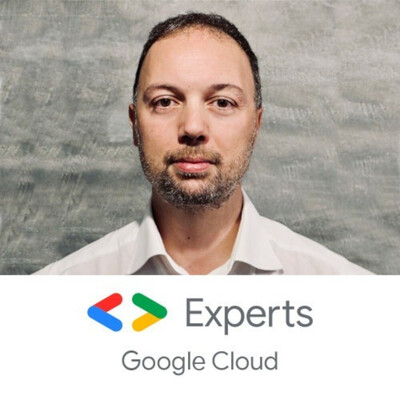
Nicola Guglielmi
GDE Cloud • Google Cloud Architect • Google Cloud Authorized Trainer • Team Manager • GDG Community Lead 🚀
GDE Cloud • Google Cloud Architect • Google Cloud Authorized Trainer • Team Manager • GDG Community Lead 🚀
Campobasso, Italy
Actions
I operate at the intersection of bold vision and brilliant teams. As a Principal Cloud & AI Strategist and Fractional CTO, I partner with companies to architect future-proof cloud solutions and build the high-performing engineering teams needed to execute them.
With over a decade of hands-on experience in Digital Transformation, I specialize in Google Cloud Platform, Generative AI (Vertex AI), and complex multi-cloud architectures. I don't just talk theory, I have built Cloud Business Units from scratch and led mission-critical migrations in fast-paced sectors like Oil & Gas.
My philosophy is simple: an elite strategy is useless without an elite team to execute it, so I build the team first, knowing that the results will follow.
As a passionate advocate for open knowledge, I am a Google Cloud Authorized Trainer, a Google Developer Expert (GDE) for Cloud, and the Community Lead for GDG Campobasso.
Whether I am live-coding a Gen AI agent or sharing insights on the dynamics of engineering leadership, I bring energy, clarity, and deep real-world experience to the stage. I love connecting with people who are eager to challenge the status quo and push the boundaries of what technology can solve.
Nicola è un GDE Cloud, Google Cloud Architect, Google Cloud Authorized Trainer, Team Manager e GDG Community Lead.
Il suo viaggio nell'IT inizia quando, da bambino, avvia il suo primo computer, un punto di partenza che lo ha condotto ad esplorare tantissimi aspetti del mondo informatico e tecnologico. Questo viaggio li avvicina alle tecnologie Google, che inizia ad utilizzare in modo articolato ed approfondire fino a diventare un trainer ufficiale Google Cloud.
I suoi valori più profondi, che porta con sé ad ogni evento, sono la gentilezza che lo contraddistingue, la determinazione, la franchezza, la creatività e l’arguzia.
Oggi, la sua passione per la tecnologia, la diffusione della conoscenza e le community lo portano a guidare, insieme ad amici storici, una community GDG nella sua città, e questo percorso di condivisione insieme alla partecipazione a numerose conferenze lo ha portato al riconoscimento di Google Developer Expert in ambito Cloud.
Links
Badges


Area of Expertise
Topics
Rogue Agents: The Day My AI Hallucinated, Took Control, and Self-Destructed en
In this session, I'm going to share my experience in using Vibe Coding tools like Claude Code and Antigravity.
What we use to save us time, sometimes can come back to bite us in the back.
Don't trust the AI not to make mistakes when it comes to your code!
Open wide and say 'Ahhh', architecting observability & alerts in Cloud & Hybrid! en it
Modern cloud architectures have become incredibly complex ecosystems. In these scenarios, visibility isn't just a nice-to-have, it is the cornerstone of reliability. But visibility without context is just noise.
This talk dives into the intersection of Cloud Native Observability and Site Reliability Engineering (SRE). Leveraging a live Google Cloud environment, we will explore how to gain a granular, holistic view of application health that goes far beyond simple status checks. I will show how to feed valuable, actionable data back to development teams, turning potential outages into performance improvements.
We will also tackle the challenge of the hybrid multi-cloud world. How do you maintain SRE standards when your stack is everywhere? We will explore design-first, cloud-agnostic solutions that provide a "Single Pane of Glass," ensuring that whether you are on-prem, on GCP, or elsewhere, your ability to detect, debug, and optimize remains consistent and powerful.
Dica 33... observability in Google Cloud e oltre! en it
Nei complessi ambienti cloud, multi cloud ed ibridi, ottenere una visibilità completa delle componenti delle architetture è fondamentale per mantenere prestazioni e affidabilità al top nelle applicazioni.
Esploreremo la suite Google Cloud che consente di gestire da semplici monitoraggi e logging a complesse analisi sullo stato di un'applicazione e sull'eventuale insorgenza di problemi.
Approfondiremo il governo dell'applicazione con tool che forniscono informazioni ai team di sviluppo per migliorare le performance e l'affidabilità dell'applicazione e daremo uno sguardo a soluzioni cloud agnostiche adatte ad un approccio multi cloud ed ibrido.
Care your team and the product will rock too! 🚀 en it
Often the team lead has one unique focus: build and deliver the product. This can lead to issue and inefficiency on the team. Move the focus on build the team and make it an high performance team will drive the product building cycle with require less effort and less issues.
Often the team lead has one unique focus: build and deliver the product. This can lead to issue and inefficiency on the team. Move the focus on build the team and make it an high performance team will drive the product building cycle with require less effort and less issues.
Prenditi cura del team ed il prodotto sarà fantastico! 🚀 en it
Spesso il team lead ha un solo obiettivo: costruire e consegnare il prodotto.
Questo può portare ad inefficienze nel team che si trasformano in minori performance nella costruzione del prodotto.
Spostare il focus sulla creazione e cura del team permette aumentare le performance dello stesso creando una macchina in grado di produrre risultati consistenti e ripetibili con minor sforzo e meno difficoltà.
Il focus unico sulla consegna dei prodotti invece che sul team è un modello che non permette di seguire una strategia di crescita sul lungo termine.
Dica 33... observability in Cloud, Multi ed Hybrid! it
Nell'era del cloud computing, le architetture IT sono diventate sempre più complesse, estendendosi tra ambienti cloud pubblici, privati, multi-cloud e ibridi.
In questi complessi scenari , la capacità di ottenere una visibilità completa e granulare su ogni componente dell'architettura è diventata essenziale, per garantire prestazioni applicative ottimali e un'affidabilità senza compromessi.
Questo non significa solo "vedere" che un'applicazione è online, ma comprendere a fondo il suo stato di salute, anticipare potenziali problemi e ottimizzarne costantemente le performance.
Esploreremo un approccio Cloud Native all'observability utilizzando strumenti disponibili sul Cloud, passando da semplici operazioni di monitoraggio e logging, fondamentali per il troubleshooting di base, a complesse analisi dello stato applicativo.
Ci immergeremo nel concetto di "governo dell'applicazione", analizzando come specifici tool forniscano informazioni preziose e actionable ai team di sviluppo.
Queste informazioni non sono semplici statistiche, ma insight concreti che consentono di ottimizzare il codice, migliorare l'architettura e, in definitiva, incrementare performance e affidabilità dell'applicazione.
Esploreremo poi alcune soluzioni cloud-agnostiche, in un mondo sempre più orientato al multi-cloud e all'ibrido, la capacità di avere strumenti che funzionano indipendentemente dal provider cloud è cruciale.
Vedremo come queste soluzioni permettono di mantenere la coerenza e l'efficienza del monitoraggio e della gestione, indipendentemente dall'infrastruttura sottostante, garantendo una visione unificata e centralizzata anche in ambienti eterogenei.
Il tutto con l'obiettivo di conoscere lo stato di salute della nostra applicazione, risolvere rapidamente problemi ed indirizzare i team di sviluppo ai punti critici dell'applicazione.
Hai bisogno di visibilità completa sul tuo cloud (multi o ibrido) per performance e affidabilità ottimali?
Esploriamo con un approccio Cloud Native al monitoraggio, logging ad analisi avanzate, per governare le applicazioni, prevenire e risolvere problemi rapidamente e garantire la disponibilità.
Exploit generative AI as a Service with Cloud Run and GPUs! en
Generative AI models often require significant computational power, even during inference.
Let’s explore how to use the power of GPUs in a fully serverless environment using Google Cloud Run.
We’ll look at how to deploy and scale LLM efficiently and cost-effectively using a combination of serverless and GPU technologies to accelerate both the development and deployment phase of models at scale.
Zero to podcaster, start today your show with AI! (Workshop) en
Ready to build?
Move beyond theory and construct a full functional AI-powered podcast in this hands-on "Build with AI" workshop.
We'll guide you through an end-to-end workflow, leveraging specific Google AI and Cloud tools to transform an idea into publishable audio content.
-Dive into practical prompt engineering with Google Gemini. You'll actively brainstorm niche topics, outline a compelling episode structure, and generate a working script for a short podcast segment.
-Take your Gemini-generated script and bring it to life. We'll use the Google Cloud Text-to-Speech API to synthesize natural-sounding voice audio, experimenting with different voice profiles. You'll see how to generate audio files directly from text.
-We'll then explore how Google Cloud Run can serve as the backbone for automating this workflow – designing a simple service architecture capable of potentially taking script inputs and orchestrating the TTS generation and audio file delivery.
Who is this for? Developers, creators, and tech enthusiasts that want to apply latest Google's AI and Cloud tools to the content creation challenges.
Zero to GameDev Hero: How I(and You!) Built an Arcade Shooter in 90 Minutes with GenAI en
Is coding dead?
No, it’s just evolved. In this session, we explore the concept of 'Vibe Coding' through a live case study. I’ll walk you through how I built a fully functional vertical scrolling spaceship arcade game -> from scratch in just 90 minutes using Google AI Studio.
We won’t just look at the code; we will look at the prompt engineering, the iterative debugging process and direct an AI to handle the syntax while focusing on the logic.
Learn how to stop fighting the syntax errors and start orchestrating the outcome.
We won’t just look at the code; we will look at the prompt engineering, the iterative debugging process and direct an AI to handle the syntax while focusing on the logic.
Zero to Micro-SaaS: Building a subscription-ready App in a couple of hours! en
Stop dreaming and start building!
In this hands-on lab, we will turn your laptop into a SaaS factory.
You will use Google AI Studio to accelerate your coding speed by 10x, building a web application from scratch. But we won't stop at 'localhost'. You will learn to containerize your application and deploy it to Google Cloud Run, setting up a real-world environment with Authentication and Persistence. By the end of this workshop, you won't just have code, you will have a live URL to share with your early adopters and start testing your idea!
Engineering Leadership Through Multi-Agent Simulations en
The transition from a senior technical contributor to an effective leader is often the most jarring pivot in an engineer's career. While we have CI/CD pipelines to test our code, how do we reliably "test" our empathy, conflict resolution, and strategic team-building skills before deploying them in production with real humans?
In this session, we will explore the architecture and psychology behind a custom-built AI application designed to simulate high-stakes leadership challenges. Rather than relying on static multiple-choice tests, this platform utilizes advanced AI agent orchestration to create dynamic, interactive scenarios. Attendees will see firsthand how the application places users in complex team-building dilemmas, forcing them to make difficult management decisions in real-time.
More importantly, we will lift the hood on the "Critical Auditor" component. You will learn how the system evaluates human input, cross-references decisions against established business and leadership frameworks, and generates personalized, critical insights for improvement.
Whether you are an engineering manager looking to sharpen your edge, or an architect interested in novel use cases for AI orchestration, this talk will provide a blueprint for blending advanced technology with human-centric leadership.
Soft skills are notoriously hard to measure. Discover how a custom AI application powered by multi-agent orchestration simulates complex team challenges, critically audits your decision-making, and provides actionable insights to forge better engineering leaders.
Your agent needs hands: building MCP servers that do real work en it
We all built that demo: a chatbot that answers questions about our data. Impressive for five minutes, useless on Monday morning.
So what separates a chatbot from an agent? The ability to act. And the Model Context Protocol is what makes it happen.
In this session we build live an agent that does real work. It reads from storage, calls a service, produces an artifact and publishes it. We'll write an MCP server from scratch, connect it to Gemini and watch the agent orchestrate tools it has never seen before.
But the happy path is the boring part! We'll explore what rarely reaches the stage: how to scope tool permissions so your agent can't do something expensive or irreversible, how to handle a tool that fails halfway through, how to stop the model inventing calls that don't exist, and how to deploy everything serverless on Cloud Run without paying for idle time.
You'll leave this session able to turn an internal API you already own into something an AI agent can safely use.
Your chatbot answers questions. Your agent should do the job! Let's build an MCP server live, plug it into Gemini and watch it act on real tools. Permissions that keep it out of trouble, failures handled properly, serverless deploy on Cloud Run. Come and turn an API you already own into something an agent can safely use!
Il tuo agente ha bisogno di mani: costruire MCP server che fanno lavoro vero en it
L'abbiamo costruita tutti quella demo: un chatbot che risponde a domande sui nostri dati. Impressionante per cinque minuti, inutile il lunedì mattina.
Cosa separa allora un chatbot da un agente? La capacità di agire. Ed è il Model Context Protocol a renderla possibile.
In questa sessione costruiamo dal vivo un agente che fa lavoro vero. Legge da uno storage, chiama un servizio, produce un artefatto e lo pubblica. Scriveremo un MCP server da zero, lo colleghiamo a Gemini e guardiamo l'agente orchestrare strumenti che non ha mai visto prima.
Ma il percorso felice è la parte noiosa! Esploreremo quello che raramente arriva sul palco: come limitare i permessi degli strumenti perché il tuo agente non faccia qualcosa di costoso o irreversibile, come gestire un tool che fallisce a metà, come evitare che il modello si inventi chiamate che non esistono, e come deployare tutto in serverless su Cloud Run senza pagare l'idle.
Uscirai da questa sessione capace di trasformare una API interna che già possiedi in qualcosa che un agente AI può usare in sicurezza.
Il tuo chatbot risponde alle domande. Il tuo agente dovrebbe fare il lavoro! Costruiamo un MCP server dal vivo, lo colleghiamo a Gemini e lo guardiamo agire su strumenti veri. Permessi che lo tengono fuori dai guai, errori gestiti come si deve, deploy serverless su Cloud Run. Vieni a trasformare una API che già possiedi in qualcosa che un agente può usare in sicurezza!
Ask your map: natural language geospatial analytics with Gemini and BigQuery en it
Which of our assets are within 5km of a flood zone and had an incident last quarter? That's a five second question and a forty minute query.
BigQuery has had serious geospatial functions for years and almost nobody uses them. Gemini is what finally makes them reachable.
In this session we take a synthetic fleet telematics dataset, we land it in BigQuery and we build a layer where you ask questions in plain language and get back both an answer and a map. Synthetic on purpose, so everything you see on stage is something you can rebuild on your own data on Monday. We'll explore the geospatial functions that really pay off, how to ground the model so it writes correct spatial SQL instead of plausible nonsense, how to keep costs sane when the geography gets big, and how to render results so a non technical stakeholder gets it immediately.
If your data has coordinates in it, and most data does, you are sitting on questions you never thought to ask!
Your data has coordinates. So why do you never ask spatial questions? Because writing the SQL costs more than the answer is worth! Gemini plus BigQuery changes that. Live demo: you ask in plain language, the map answers. Geospatial functions worth knowing, prompts grounded so the SQL is actually correct, costs kept sane. Come and discover the questions you never thought to ask!
Parla con la tua mappa: analisi geospaziale in linguaggio naturale con Gemini e BigQuery en it
Quali dei nostri asset si trovano entro 5km da una zona a rischio alluvione e hanno avuto un incidente nell'ultimo trimestre? È una domanda da cinque secondi e una query da quaranta minuti.
BigQuery ha funzioni geospaziali serie da anni e quasi nessuno le usa. È Gemini a renderle finalmente raggiungibili.
In questa sessione prendiamo un dataset telematico sintetico di flotta, lo portiamo in BigQuery e costruiamo un livello dove fai domande in linguaggio naturale e ottieni sia una risposta sia una mappa. Sintetico di proposito, così tutto quello che vedi sul palco è qualcosa che puoi ricostruire sui tuoi dati lunedì mattina. Esploreremo le funzioni geospaziali che valgono davvero la pena, come ancorare il modello perché scriva SQL spaziale corretta invece di plausibili sciocchezze, come tenere i costi ragionevoli quando la geografia si allarga, e come rendere i risultati leggibili a uno stakeholder non tecnico.
Se i tuoi dati contengono coordinate, e quasi tutti i dati le contengono, sei seduto su domande che non hai mai pensato di fare!
I tuoi dati hanno le coordinate. Allora perché non fai mai domande spaziali? Perché scrivere la SQL costa più di quanto valga la risposta! Gemini più BigQuery cambia le carte in tavola. Demo dal vivo: tu chiedi in linguaggio naturale, la mappa risponde. Le funzioni geospaziali che contano, prompt ancorati perché la SQL sia davvero corretta, costi sotto controllo. Vieni a scoprire le domande che non hai mai pensato di fare!
From meetup to podcast: turn every event into a show with Gen AI en it
Every event you run is already a podcast episode waiting to happen. The content is there: the talks, the Q&A, the gold in the hallway conversations. It gets heard once and then it's gone.
In this session I'll show you the pipeline that turns a single recording into a show ready to publish. Gemini does the editorial work, so narrative script, show notes, chapters and social posts, then NotebookLM Audio Overview or Cloud Text to Speech generates the audio. Cloud Run orchestrates everything starting from a trigger on your storage bucket.
We'll generate an episode live and compare the two audio routes, the fast and magical one against the slower and fully branded one. Then we'll close by collapsing the whole pipeline into a single MCP powered agent that watches a folder and ships the episode by itself!
You'll leave with a repeatable workflow to give your community, your team or your product a voice, with almost zero effort per episode.
Your last meetup is already a podcast episode. It just died in the room! Let's bring it back to life on stage. Gemini writes the script, the show notes and the chapters, NotebookLM or Cloud Text to Speech gives it a voice, Cloud Run ships it from a simple storage trigger. We generate a real episode live, then hand the whole pipeline over to an agent. Press record, get a show!
Dal meetup al podcast: trasforma ogni evento in uno show con la Gen AI en it
Ogni evento che organizzi è già un episodio di podcast in attesa di esistere. Il contenuto c'è: i talk, il Q&A, l'oro delle chiacchiere nei corridoi. Viene ascoltato una volta sola e poi sparisce.
In questa sessione ti mostro la pipeline che trasforma una singola registrazione in uno show pronto da pubblicare. Gemini fa il lavoro editoriale, quindi copione narrativo, show notes, capitoli e post social, poi l'Audio Overview di NotebookLM oppure Cloud Text to Speech genera l'audio. Cloud Run orchestra tutto partendo da un trigger sul tuo bucket di storage.
Genereremo un episodio dal vivo e confronteremo le due strade per l'audio, quella veloce e magica contro quella più lenta e completamente brandizzata. Poi chiudiamo comprimendo l'intera pipeline in un unico agente basato su MCP che sorveglia una cartella e pubblica l'episodio da solo!
Uscirai con un workflow ripetibile per dare voce alla tua community, al tuo team o al tuo prodotto, con uno sforzo per episodio quasi nullo.
Il tuo ultimo meetup è già un episodio di podcast. È solo morto nella stanza! Riportiamolo in vita sul palco. Gemini scrive copione, show notes e capitoli, NotebookLM oppure Cloud Text to Speech gli dà una voce, Cloud Run lo pubblica partendo da un semplice trigger sullo storage. Generiamo un episodio dal vivo, poi consegniamo l'intera pipeline a un agente. Premi rec, ottieni uno show!
The bill after the demo: what Gen AI really costs in production en it
Almost every company has shipped a Gen AI proof of concept by now. A growing number have received the first serious invoice.
This talk is the cost anatomy of a Gen AI application: what you actually pay for, and which architectural choices change the number by an order of magnitude.
We'll break down token economics and why prompt design is a cost decision before it's a quality decision. We'll explore when self hosting a model on Cloud Run with GPUs beats a managed API and, just as important, when it clearly doesn't. We'll see why scale to zero is the biggest lever most teams never touch, and how caching, batching and model routing (small model first, big model only when it earns it) reshape the bill.
The numbers come from projects whose invoices land in my own inbox: a multilingual AI podcast pipeline that publishes on a schedule, and a couple of MVPs running on Cloud Run. Small enough that I can show you every single line, real enough that the mistakes hurt. Everything else is normalised into cost per million tokens and ratios, so the lessons travel to any workload size, including yours.
You'll leave with a mental model to estimate Gen AI costs before you build, and a set of levers to pull when the invoice arrives anyway.
Your Gen AI proof of concept cost eleven euros. Your Gen AI product costs eleven thousand! Where does the money actually go? Token economics, Cloud Run with GPUs against a managed API, scale to zero, caching, batching and model routing. Real invoices from my own projects, small enough that I can show you every line. Come and learn to estimate the bill before you build it!
Il conto dopo la demo: quanto costa davvero la Gen AI in produzione en it
Quasi tutte le aziende hanno ormai rilasciato una proof of concept di Gen AI. Un numero crescente ha ricevuto la prima fattura seria.
Questo talk è l'anatomia dei costi di un'applicazione Gen AI: cosa paghi davvero, e quali scelte architetturali cambiano il numero di un ordine di grandezza.
Analizzeremo l'economia dei token e perché il design del prompt è una decisione di costo prima ancora che di qualità. Esploreremo quando self hostare un modello su Cloud Run con GPU batte una API gestita e, altrettanto importante, quando invece è chiaramente peggio. Vedremo perché lo scale to zero è la leva più grande che quasi nessun team tocca, e come caching, batching e model routing (prima il modello piccolo, quello grande solo quando se lo merita) ridisegnino la fattura.
I numeri arrivano da progetti le cui fatture finiscono nella mia casella: una pipeline di podcast AI multilingua che pubblica con una sua cadenza, e un paio di MVP che girano su Cloud Run. Abbastanza piccoli da potervi mostrare ogni singola riga, abbastanza veri da far male quando sbagli. Tutto il resto è normalizzato in costo per milione di token e in rapporti, così le lezioni valgono per qualsiasi dimensione di carico, compresa la tua.
Uscirai con un modello mentale per stimare i costi Gen AI prima di costruire, e con una serie di leve da tirare quando la fattura arriva comunque.
La tua proof of concept Gen AI è costata undici euro. Il tuo prodotto Gen AI ne costa undicimila! Dove finiscono davvero i soldi? Economia dei token, Cloud Run con GPU contro una API gestita, scale to zero, caching, batching e model routing. Fatture vere dei miei progetti, abbastanza piccole da mostrarti ogni riga. Vieni a imparare a stimare il conto prima di costruirlo!
I vibe coded it in 90 minutes. Then I gave it to five people. en it
On this same stage I have built an arcade game in 90 minutes and a Micro SaaS in an afternoon, live, with AI writing most of the code. Those talks end with applause and a working demo.
This one starts the day I handed the keys to somebody else.
I have shipped a few of these for real: AI Radar and Momentum, both MVPs, plus a multilingual AI podcast pipeline that actually publishes on a schedule. Not a million users, nothing dramatic. A handful of beta testers and a product that has to keep working when I am not watching.
That was enough.
Because here is the thing nobody says: you do not need scale to find out what the AI got wrong. Five people poking at your MVP will surface the permissive security defaults the model quietly chose for you, the error handling that only covers the path you described in the prompt, the dependency nobody ever audited, and that special moment when you open your own repository three weeks later and cannot remember how any of it works.
We'll go through what actually broke, what I check now before anything gets a public URL, and where human attention genuinely pays off, which is the data model and the trust boundaries and almost never the syntax. Then we'll look at the same pattern one floor up, because as a fractional CTO I watch engineering teams ship AI generated code to far more users than mine and repeat exactly the same mistakes at a scale where they cost real money.
Vibe coding is real and it is here to stay. This is what it costs you the moment somebody else depends on it.
You do not need a thousand users to find out your AI wrote bad code. Five are enough! I shipped AI Radar, Momentum and a multilingual podcast pipeline as MVPs, handed them to beta testers and watched what broke first. Permissive security defaults, error handling that only covers the prompt, dependencies nobody audited, and code I could not read three weeks later. Plus the checklist I now run before anything gets a public URL!
L'ho vibe codato in 90 minuti. Poi l'ho dato a cinque persone. en it
Su questo stesso palco ho costruito un gioco arcade in 90 minuti e un Micro SaaS in un pomeriggio, dal vivo, con l'AI a scrivere la maggior parte del codice. Quei talk finiscono con l'applauso e una demo funzionante.
Questo comincia il giorno in cui ho dato le chiavi a qualcun altro.
Qualcuna di queste cose l'ho spedita davvero: AI Radar e Momentum, entrambe MVP, più una pipeline di podcast AI multilingua che pubblica sul serio, con una sua cadenza. Non un milione di utenti, niente di drammatico. Una manciata di beta tester e un prodotto che deve continuare a funzionare quando non lo sto guardando.
È bastato questo.
Perché ecco la cosa che nessuno dice: non ti serve la scala per scoprire cosa ha sbagliato l'AI. Cinque persone che smanettano sul tuo MVP fanno emergere i default di sicurezza permissivi che il modello ha scelto in silenzio per te, la gestione degli errori che copre solo il percorso descritto nel prompt, la dipendenza che nessuno ha mai controllato, e quel momento speciale in cui riapri il tuo stesso repository tre settimane dopo e non ricordi più come funziona niente.
Vedremo cosa si è rotto davvero, cosa controllo adesso prima che qualcosa riceva un URL pubblico, e dove conviene spendere attenzione umana, cioè il modello dati e i confini di fiducia e quasi mai la sintassi. Poi guardiamo lo stesso schema un piano sopra, perché da fractional CTO vedo team di sviluppo mandare in produzione codice generato dall'AI con molti più utenti dei miei e ripetere esattamente gli stessi errori a una scala dove costano soldi veri.
Il vibe coding è reale e resterà. Questo è quello che ti costa nel momento in cui qualcun altro ci fa affidamento.
Non ti servono mille utenti per scoprire che l'AI ha scritto codice pessimo. Ne bastano cinque! Ho spedito AI Radar, Momentum e una pipeline di podcast multilingua come MVP, li ho dati ai beta tester e ho guardato cosa si rompeva per primo. Default di sicurezza permissivi, gestione errori che copre solo il prompt, dipendenze mai controllate, e codice che non sapevo più leggere tre settimane dopo. Più la checklist che ora applico prima di ogni URL pubblico!
Under the hood: industrial predictive maintenance and the danger of a polite AI en it
A sensor on the production line starts drifting. Somewhere inside hundreds of terabytes of logs and telemetry the answer is already there. So why is it still so hard to get it out?
This session goes under the hood of a real industrial predictive maintenance system on Google Cloud. Sensors streaming off the line, the ingestion and processing pipeline, models on BigQuery ML and Gemini Enterprise, and the operational layer where an engineer finally asks a question and gets an answer back.
Then we reach the interesting part! We ground the model on real maintenance documentation so it stops inventing and starts citing its sources, and we watch it diagnose a failure by combining sensor data with the manual. And then I ask the same question badly on purpose, and the model politely agrees with me.
That is the part nobody puts on a slide. In an industrial context the biggest risk is not a model that is wrong, it is a model that wants to please you. On a production line, inside a safety procedure, in a data integrity check, a confident and agreeable answer is a hazard. We'll explore how to design prompts, reasoning steps and grounding so the system is allowed to say "I don't know" and even "you are asking me the wrong question".
We'll close with multimodal, where image, video and audio turn into anomaly detection, PPE checks and presence checks on the shop floor.
You'll leave knowing how an industrial AI pipeline is actually built, and how to stop it from being agreeable exactly when it matters most.
Your production line is drowning in telemetry and the answer is already in there! Under the hood of a real industrial predictive maintenance pipeline on Google Cloud: sensors, BigQuery ML, Gemini AI, grounding on maintenance manuals, multimodal checks on the shop floor. Plus the risk nobody mentions, a model so eager to please that it agrees with a wrong question. Come and see what industrial AI looks like when it runs for real!
Sotto il cofano: manutenzione predittiva industriale e il pericolo di un'AI compiacente en it
Un sensore sulla linea di produzione inizia ad andare in deriva. Da qualche parte dentro centinaia di terabyte di log e telemetrie la risposta c'è già. Allora perché è ancora così difficile tirarla fuori?
Questa sessione va sotto il cofano di un sistema reale di manutenzione predittiva industriale su Google Cloud. I sensori che trasmettono dalla linea, la pipeline di ingest e processing, i modelli su BigQuery ML e Vertex AI, e lo strato operativo dove finalmente un tecnico fa una domanda e riceve una risposta.
Poi arriviamo alla parte interessante! Ancoriamo il modello sulla documentazione di manutenzione reale, così smette di inventare e inizia a citare le fonti, e lo guardiamo diagnosticare un guasto incrociando i dati dei sensori con il manuale. E poi faccio la stessa domanda male apposta, e il modello mi dà gentilmente ragione.
Questa è la parte che nessuno mette in una slide. In ambito industriale il rischio maggiore non è un modello che sbaglia, è un modello che vuole piacerti. Su una linea di produzione, dentro una procedura di sicurezza, in un controllo di data integrity, una risposta sicura e compiacente è un pericolo. Esploreremo come progettare prompt, passaggi di ragionamento e grounding perché il sistema abbia il permesso di dire "non lo so" e perfino "mi stai facendo la domanda sbagliata".
Chiudiamo con il multimodale, dove immagini, video e audio diventano anomaly detection, controllo DPI e controllo presenze in reparto.
Uscirai sapendo come si costruisce davvero una pipeline di AI industriale, e come impedirle di essere accomodante proprio quando conta di più.
La tua linea di produzione affoga nella telemetria e la risposta è già là dentro! Sotto il cofano di una pipeline reale di manutenzione predittiva industriale su Google Cloud: sensori, BigQuery ML, Vertex AI, grounding sui manuali di manutenzione, controlli multimodali in reparto. Più il rischio di cui nessuno parla, un modello così ansioso di piacerti che ti dà ragione su una domanda sbagliata. Vieni a vedere che faccia ha l'AI industriale quando gira sul serio!
Who's on call tonight, you or the AI? Breaking production live on Google Cloud en it
It's 3am. Something is broken. Who do you trust to find it first, yourself or the AI?
In this session we break production live, on purpose, and race three ways of fixing it: an engineer digging through logs the way we always have, the AI assistant your cloud console already ships, and an open source SRE agent wired over the Cloud Logging and Monitoring APIs, the kind you can clone and run on Monday. Same incident, three paths, clock running.
We'll break three things. A bad deploy throwing 5xx, where the AI wins in seconds and you understand immediately why this matters. A misconfigured IAM permission cascading into 403s downstream, where correlating logs and configuration in parallel genuinely beats human tab switching. And then a trap: a symptom that points confidently in the wrong direction, where the model produces a beautiful, plausible and completely wrong hypothesis.
That last one is the whole point of the talk! These tools hand you ranked observations and hypotheses, not verdicts, and the well designed ones never touch your environment on their own. Learning to read that output as evidence instead of as an answer is the actual skill, and nobody teaches it.
Everything runs on open source and on a throwaway project, so nothing you see depends on a licence you might not have. You'll leave knowing where AI genuinely compresses your time to resolution, where it will confidently mislead you, and how to wire an agent into your own observability stack without handing it the keys to production.
It's 3am and something is broken. Who finds it first, you or the AI? We break production live and race three responders: a human in the logs, the assistant built into your cloud console, and an open source SRE agent you can clone and run yourself. Three failures, and one of them is a trap where the AI is confidently, beautifully wrong. Come and learn where AI really cuts your time to resolution, and where it lies to you with a straight face!
Chi è di turno stanotte, tu o l'AI? Rompiamo la produzione dal vivo su Google Cloud en it
Sono le 3 di notte. Qualcosa si è rotto. Di chi ti fidi per trovarlo per primo, di te o dell'AI?
In questa sessione rompiamo la produzione dal vivo, di proposito, e mettiamo in gara tre modi di ripararla: un tecnico che scava nei log come abbiamo sempre fatto, l'assistente AI che la console cloud ti dà già in dotazione, e un agente SRE open source collegato alle API di Cloud Logging e Monitoring, di quelli che cloni e fai girare lunedì mattina. Stesso incidente, tre percorsi, cronometro acceso.
Romperemo tre cose. Un deploy sbagliato che genera 5xx, dove l'AI vince in pochi secondi e capisci subito perché la cosa conta. Un permesso IAM configurato male che scatena 403 a cascata su un servizio a valle, dove incrociare log e configurazioni in parallelo batte davvero l'apertura di venti tab. E poi una trappola: un sintomo che punta con sicurezza nella direzione sbagliata, dove il modello produce un'ipotesi bellissima, plausibile e completamente falsa.
Quest'ultima è il senso di tutto il talk! Questi strumenti ti consegnano observations e ipotesi ordinate per rilevanza, non verdetti, e quelli progettati bene non toccano mai il tuo ambiente di loro iniziativa. Imparare a leggere quell'output come indizio e non come risposta è la vera competenza, e non la insegna nessuno.
Gira tutto su open source e su un progetto usa e getta, quindi niente di quello che vedi dipende da una licenza che potresti non avere. Uscirai sapendo dove l'AI accorcia davvero il tempo di risoluzione, dove ti porterà fuori strada con tutta la sicurezza del mondo, e come collegare un agente al tuo stack di observability senza consegnargli le chiavi della produzione.
Sono le 3 di notte e qualcosa si è rotto. Chi lo trova per primo, tu o l'AI? Rompiamo la produzione dal vivo e mettiamo in gara tre soccorritori: un umano nei log, l'assistente incluso nella console cloud e un agente SRE open source che puoi clonare e far girare da solo. Tre guasti, e uno è una trappola dove l'AI sbaglia con una sicurezza splendida. Vieni a scoprire dove l'AI accorcia davvero i tempi di risoluzione, e dove ti mente guardandoti negli occhi!
Get your phones out: a game for everyone in the room, built and tested by AI agents en it
Get your phones out. Ten minutes from now, everyone in the room will be playing a video game they came up with, built and tested by an agent of their own.
You scan a QR code and write your idea in one line, something like "a cat dodging tomatoes". On the big screen, a mosaic of tiles turns from grey (queued) to yellow (being built) to green (tested). A couple of minutes later the game lands on your phone, and I play a few of them on stage, with the author's name on screen.
Every idea gets its own branch, running in parallel with all the others. A filter checks the content, an agent writes the game as a single HTML page, then code tests it in a headless browser: the page loads, throws no errors and reacts to the keys. If the test fails, the agent fixes the game, two attempts at most. Only then is it published.
The code is the judge: no game reaches a phone without passing the test. And when someone writes something they shouldn't, the filter blocks it live, the room laughs and we talk about guardrails.
What you'll see of Google ADK: dynamic workflows with dozens of branches running together, a concurrency limit to stay within quotas, the correction loop and a security plugin that covers every agent from one place. Plus what it costs: with Gemini Flash, about $10 for 200 games.
Live demo: I need a projector and a stable internet connection for my laptop. The audience joins with their own phones (mobile data or venue Wi-Fi).
Tirate fuori il telefono: un videogioco per ognuno in sala, costruito e collaudato da agenti AI en it
Tirate fuori il telefono: fra dieci minuti ognuno di voi giocherà a un videogioco inventato da lui, costruito e collaudato da un agente tutto suo.
Inquadrate un QR code e scrivete un'idea in una riga, per esempio «un gatto che schiva pomodori». Sul maxischermo un mosaico di caselle passa da grigio (in coda) a giallo (in costruzione) a verde (collaudato). Dopo un paio di minuti il gioco arriva sul vostro telefono, e io ne gioco qualcuno sul palco con il nome dell'autore sullo schermo.
Ogni idea ha il suo ramo, in parallelo con tutti gli altri. Un filtro controlla il contenuto, un agente scrive il gioco in una sola pagina HTML, poi il codice lo collauda con un browser automatico: la pagina si carica, non dà errori, reagisce ai tasti. Se il collaudo fallisce l'agente corregge, al massimo due volte. Solo allora il gioco viene pubblicato.
Il codice giudica: nessun gioco arriva a un telefono senza aver superato il collaudo. E quando qualcuno scrive qualcosa di sconveniente, il filtro lo blocca in diretta, la sala ride e parliamo di guardrail.
Di Google ADK vedrete i workflow dinamici con decine di rami insieme, il limite di concorrenza per rispettare le quote, il ciclo di correzione e un plugin di sicurezza che copre tutti gli agenti da un punto solo. E quanto costa: con Gemini Flash, circa 10 dollari ogni 200 giochi.
Demo dal vivo: servono un proiettore e una connessione internet stabile per il mio portatile. Il pubblico partecipa con il proprio telefono (dati mobili o Wi-Fi della sala).
Reactive work vs Planned work it
Ti sei mai chiesto dove finisce il tempo di una giornata mentre cerchi di rispondere a mille task come un flipper?
Ti stai accorgendo di perdere lentamente la capacità di affrontare problemi complessi che richiedono un livello di concentrazione assoluto?
Siamo progettati per funzionare in risposta ad uno stimolo.
Questa funzionalità è innata nella nostra natura, frutto di migliaia di anni di evoluzione, ha permesso la nostra sopravvivenza in tempi difficili, ma ora, in un'epoca di esposizione continua a stimoli che lottano per la nostra attenzione si rivela come un grande limite alla nostra produttività ed alla capacità di concentrarsi in modo assoluto su un singolo problema.
Scopriamo come trasformare i nostri task da reattivi a pianificati aumentando la nostra produttività e profondità di pensiero.
ESP32 App-less OTA announces en it
Introduction to the technique of using Ssid for broadcast short messages implementing it in micropython on esp32 hardware.
The idea is to use the Ssid name for the message itself, respecting the limit of the protocol, it should be a maximum of 32 characters. Since this length is absolutely too short for a lot of cases, I spot some uses that deserve some attention and can drive to creative solutions of common problems.
Based on a series of articles i wrote on the technique and on some use cases:
https://medium.com/@nicola.guglielmi/app-less-ota-announces-by-broadcasting-a-continuous-renaming-essid-3811b8312268?source=friends_link&sk=5b6264338209973c1b5922e75941021f
ESP32 App-less OTA announces en it
Idee originali sull'utilizzo non standard del broadcast dell'Essid/ssid di reti wireless per distribuire informazioni in aree limitate senza l'utilizzo di app lato client.
Analizzeremo diversi use cases nei quali applicare la tecnica della distribuzione di messaggi a breve raggio tramite il renaming dell'ESSID. Basato su ESP32 e Micropython, replicabile su altri microcontrollori e linguaggi con grande facilità.
Google Cloud architectures, a modern approach. en it
In this session we'll explore the landscape of cloud solutions, analyzing the architectures that better exploit the full potential of Google Cloud.
Through real-world case studies, we'll explore how to create scalable, resilient, and efficient architectures that empower businesses at the best in the digital age.
From the traditional entry point model, the lift and shift, to some designs that implement the cloud native paradigm at the best while keeping the costs following the business results.
Un approccio moderno alle architetture su Google Cloud! en it
In questa sessione esploreremo il panorama delle soluzioni cloud, analizzando le architetture che meglio sfruttano tutte le potenzialità di Google Cloud.
Attraverso casi di studio del mondo reale, esploreremo come creare architetture scalabili, resilienti ed efficienti che consentano alle aziende di dare il meglio nell'era digitale.
Dal tradizionale modello di lift and shift, ad alcuni design che implementano al meglio il paradigma cloud native mantenendo i costi in linea con i risultati di business.
Taking technical decisions reloaded it
Cosa c'è dietro una decisione tecnica... e cosa c'è dopo?
Chi può influenzare una decisione e chi decisamente non dovrebbe...
Scopri come evitare pregiudizi e lasciare che i dati guidino le decisioni ed impariamo a progettare un framework decisionale riutilizzabile.
DevFest Bari 2024 Sessionize Event
Come To Code 2024 Sessionize Event
GDG DevFest Pisa 2024 Sessionize Event
DevFest Bari 2023 Sessionize Event
Devfest Pescara 2023 Sessionize Event
Cloud Day 2023 Sessionize Event
Linux Day Basilicata 2023 Sessionize Event
DevFest Beirut 2023 Sessionize Event
DevFest Bari 2022 Sessionize Event
DevFest Pescara 2022 Sessionize Event
DevFest Italia 2020 Sessionize Event
DevFest Pisa 2020 Sessionize Event
GDG DevFest Pescara 2019 Sessionize Event
Nicola Guglielmi
GDE Cloud • Google Cloud Architect • Google Cloud Authorized Trainer • Team Manager • GDG Community Lead 🚀
Campobasso, Italy
Links
Actions
Please note that Sessionize is not responsible for the accuracy or validity of the data provided by speakers. If you suspect this profile to be fake or spam, please let us know.
Jump to top