
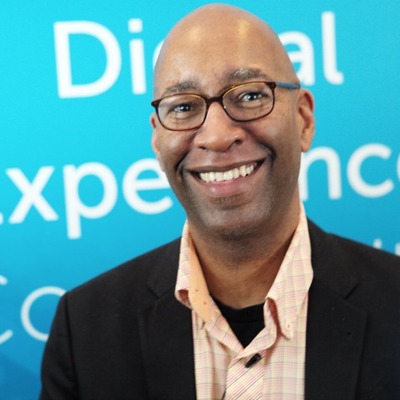
Pierre DeBois
Zimana Analytics
Gary, Indiana, United States
Actions
Pierre DeBois is the founder and CEO of Zimana, an analytics services firm that helps organizations achieve profitability improvements in marketing, Web development, and within their business operations. Zimana has provided services for businesses from many industries. Pierre’s articles are among CMSWire's Top 10 Digital Marketing Articles for 2018, 2020, 2021 and 2022.
Pierre has provided digital marketing and analytic workshops. His first major workshop was for the City of Chicago Treasurer’s Office as part of the 2014 Small Business Expo (SBE). He has also conducted several workshops since the 2014 SBE, including the following:
• A general marketing workshop and panel for General Assembly in Chicago
• CivicBLUE workshops for BlueLacuna, a business incubator in the Pilsen neighborhood of Chicago; CivicBLUE explained the importance of data science for developing community solutions
• The DX Summit, a marketing conference hosted by CMS Wire in 2015, 2016, and 2017
• R programming workshop at Interop ITX in Las Vegas
• Analytics workshop for Content Marketing World in Cleveland (2017).
• Google Analytics and R programming at Indy.Code and Nebraska.Code, developers conferences in Indianapolis, Indiana, and Council Bluffs, Iowa (Omaha), respectively.
• Sentiment Analysis at O’Reilly OSCON in Portland Oregon (2018).
• Tensorflow in R Programming; A Primer at DevFest KC 2019, Kansas City, MO.
• Tensorflow in R Programming; A Primer at Tom Tom AML, Charlottesville, VA
• Exploratory Data Analysis in R Programming, CodeMash, Sandusky, OH
• Juneteenth Conference (online)
• Signals, Cheetah Digital Media (online)
• CodePalousa, Louisville, KY (online)
• IndyCode, Indianapolis, IN - 2022
• CXSummit, Simpler Media, Austin, TX -2023
• Conversion Conference, Las Vegas, NV 2023
• Content Marketing World, Washington, DC 2023
• Marketing Analytics and Data Science conference, Washington, DC 2023
• CodeMash, Sandusky, OH 2024
• CommerceNow24 (online webinar), 2024
• Black Is Tech conference, Houston, TX 2024
His workshops have covered the gamut of business, data science, and programming topics, with a focus on JavaScript frameworks, Google Analytics, and R Programming.
Pierre is also an analytics tech and business intelligence writer. He has contributed articles to CMS Wire and ITProToday. He is also an associate editor of business book reviews for Small Business Trends, as well as credit as a technical editor for two Pearson/Que digital marketing publications.
Pierre has been featured in the Chicago Sun-Times, and was a presenter for the Google Get Your Business Online program. He successfully brought the program back to Gary Indiana in 2017.
Pierre is a Prairie View A & M University graduate (mechanical engineering) and a Georgia Tech graduate (MBA). He is a native of Gary, Indiana, serving small businesses and organizations throughout the United States.
Area of Expertise
Topics
Graph This: Connecting the AI Dots With Knowledge Graphs
You've written the JOIN. Then the JOIN on the JOIN. Then the subquery that made your DBA question your life choices. Relational tables are brilliant for storing data — but they were never designed to model relationships as first-class objects. That's the job of a knowledge graph.
In this session, we'll build intuition and hands-on familiarity with graph data modeling using Python and R programming, with a side-by-side look at other tools that aid the visualization. You will see exactly where the structural difference lives. We'll connect graph thinking to a topic you're already hearing about — Retrieval-Augmented Generation — and show why GraphRAG produces smart AI results.
By the end of the session, you'll know:
How to model a dataset as nodes and edges instead of rows and columns
When a graph database earns its place in your stack (and when it doesn't)
How to visualize a graph for teammates who don't speak graph
How to add graph thinking to your next sprint without rebuilding your architecture
DuckTales: How To Best Use DuckDB With R Programming and SQL
Discover how DuckDB transforms analytics workflows by bridging SQL and R programming in this hands-on exploration. DuckDB is an embedded analytical database that runs queries blazingly fast on datasets too large for memory—without the overhead of traditional databases. Learn how to query CSV files, Parquet datasets, and R data frames using familiar SQL syntax directly within your R scripts.
The session will demonstrate concepts against solid use cases: analyzing multi-gigabyte files on a laptop, combining SQL's expressiveness with R's statistical power, and eliminating the "export-import-transform" workflow that slows analysis.
The session is helpful for programmers and analysts comfortable with SQL who want R's capabilities, or R users who need efficient large-data handling. Leave with practical strategies for using DuckDB in your analytics stack.
Raiders of the Lost Query: Learning Best Practices for Exploratory Data Analysis in R Programming
Indiana Jones had his hat, his whip, and his wits to save the day. But developers and managers need a lot more to program data models.
With so many dataset tools for data science available, managers and developers can create statistical programming models, but are overwhelmed as to how to best explore the dataset. Most professionals conducting data science spend a majority of their time exploring and cleaning data. Databases are increasingly containing semi-structured data, thanks to varied sources such as social media, mobile devices, geolocation, and attributes describing real-world structures. Being able to blend data from a range sources and create useful correlation require some knowledge as to know when to apply exploratory steps effectively.
This brief talk will show how attendees can better plan for speedier analysis of datasets so that developer/manager teams can develop better regression and machine learning models. This session will cover the querying features in popular data repositories (Kaggle, data.world), data exploration techniques using libraries and functions in R Programming, and ideas to systematically communicate with team members on the data exploration process.
The end result is a faster means to establish a better quality dataset, leading to better analysis for regressions, machine learning models, and other data science projects.
FasteR Workflow from AI: Time-Saving Prompts, Tools, and Tips
Discover how AI tools transform data analytics workflows in this hands-on exploration of AI-enhanced R and Python development. Learn where Ai solutions such as Claude, ChatGPT, Gemini, can help, along wtih AI tools such as NotebookLM. Each offer ways to accelerate exploratory data analysis, generate documentation, and debug code error messaging.
The session will demonstrate how a multi-language analytics stack can bring value, such as using Python for data engineering and R for stakeholder communication. Examples wiull feature libraries and packages as well as modern AI prompt engineering. Perfect for data scientists, analysts, and developers looking to establish new techniques into their existing workflows.
Now That Everybody's Selling Online: Digital Marketing Tactics For Startup Developer Teams
The COVID-19 pandemic has ushered online commerce into a new era. Competition to gain and retain customer attention is high, while consumers who have increased social media usage have raised all kinds of service expectations from the brands they work with. Marketers of all kinds must adjust how to demonstrate a product or service that benefits customers' needs.
But for a startup team, creating a marketing team and scaling an audience with a large marketing budget is not an option. Yet the few marketers in your start-up may be overwhelmed to reach your customers. What can your team do to keep the messaging around your app or services on track?
This session will cover tactics that will keep the team on track. By using analytics and project management wisely, a small team can get a better handle on where to invest their many digital marketing options. They can also explore techniques for improving communication within their team, partners, and customers. They will learn ideas for engaging with customers the right way that supports genuine interest in a product or service - all of which leads to better quality sales.
Three main themes will be explored:
1. The changing digital landscape – what’s new in digital media, creator trends among influencers, digital marketing tools, and project management tools for collaborations
2. Tips for applying analytics tools to manage media images and information effectively
3. Tips for learning where to efficiently partner with marketers that leads to building an enthusiastic community of customers
Topics will be covered with an emphasis on organizing your time across social media platforms, digital analytics (Google Analytics), written content ideas to support a product or service under development, and marketing options. Attendees will also learn the order to approach analytics reports in social media and for their app via Google Analytics, learn what to expect to work with reports on a regular basis, and how developer teams can organize collaboration with marketers as needed.
No specific prior knowledge of business or marketing will be expected for attendance.
Learning Objectives
- Crafting a message that complements a customer need for a product or service
- Brainstorming blog posts, email, and video ideas against your product or service development schedule
- Learning the definition of paid, earned media, owned media and how they influence sales
- Tips for managing images and video, including a content calendar
- Learn which reports in Google Analytics can guide users to the content that is engaging customers and ideas to create more or less content based on the topics
- Dashboard tips to plan content regularly
Tools like GitHub Projects and Notion to keep marketer teams informed of mechanical changes that impact customer experiences with apps and solutions
Takeaways
- Attendees will learn how to delve into analytics reports to determine what evergreen content is best suited for further engagement
-Attendees will learn how social commerce trends from the COVID-19 will impact their social media and digital marketing strategies
- Attendees will learn how to organize a marketing workflow with a small team to leverage tools and communicate the next steps without straining team resources
Placing The Right Machine Learning Bets: Understanding MonteCarlo Markov Chain in R programming
Markov Chain is a probability theory that has been gaining popularity in modeling the likelihood of customer behavior. Monte Carlo Markov Chain (MCMC) is a particularly useful variation in marketing and finance problems involving a probability analysis of data, especially when machine learning is a factor in delivering a solution. In this presentation, attendees will learn about creating a Monte Carlo Markov Chain model using R programming libraries. Attendees will learn the best use cases to apply these techniques for marketing and financial data models.
This session is meant for developers using R with an interest in statistical data models or machine learning. The session will cover a few basic data type concepts, thus having prior experience with R or data science is not necessary.
"Building AI-Powered Analytics: From R Fundamentals to Local LLMs and Interactive Dashboards"
Master the complete analytics workflow from data exploration to AI-powered interactive applications in this comprehensive hands-on workshop. Learn R programming fundamentals, exploratory data analysis with modern libraries (tidyverse, janitor, funModeling), and when to blend with Python using reticulate. Build professional Shiny dashboards with bslib, then extend them with AI capabilities using local models via Ollama and elmer/shinychat packages. Discover how to run LLMs locally for data analysis, create AI-enhanced dashboards, and build intelligent chatbots within your Shiny apps—all without cloud dependencies or API costs.
This workshop is for analysts, data scientists, and developers ready to integrate AI into their analytics stack while maintaining control over their own code and data infrastructure. Participants will leave with working code examples and practical strategies for deploying AI-powered analytics applications. Prerequisites: Basic programming experience helpful but not required; laptops with R and RStudio/Positron IDE installed.
Detailed 6-Hour Workshop Structure (Tentative Schedule -- can refine for conference or update steps with libraries as necessary)
Module 1: R Fundamentals & Environment Setup (60 minutes)
Topics:
Workshop overview and learning objectives
R and RStudio/Positron IDE setup verification
R basics: data types, vectors, data frames, lists
Installing and loading packages
Working directory and project organization
Hands-On Activities:
Create first R project
Install essential packages: tidyverse, here, janitor, funModeling (libraries may change before final schedule is established)
Load sample dataset (retail/marketing data)
Basic data manipulation: filtering, selecting, mutating
Deliverable: Working R project with organized file structure
Module 2: Exploratory Data Analysis (EDA) with R (75 minutes)
Topics:
EDA philosophy and workflow
Data quality assessment with janitor package
Automated EDA with funModeling::df_status()
Identifying outliers, missing data, and distributions
Data visualization with ggplot2
Statistical summaries and correlations
Feature engineering basics
R Libraries Covered: (may change before final deck is complete)
janitor - data cleaning and tabulation
funModeling::df_status() - quick data profiling
ggplot2 - visualization
dplyr - data transformation
skimr - summary statistics
Hands-On Activities:
Clean messy dataset using janitor (may change wit
Run df_status() to identify data quality issues
Create exploratory visualizations
Engineer new features from existing variables
Document findings in R Markdown
Deliverable: Complete EDA report identifying data patterns and quality issues
BREAK: 15 minutes
Module 3: Blending R and Python for Analytics (60 minutes)
Topics:
The polyglot analytics stack philosophy
When to use R vs. Python (and why)
Introduction to reticulate package
Calling Python from R
Data interchange between languages
Use case: Python for data engineering, R for analysis
Math/Code/Domain separation architecture
Python Integration:
Setting up Python environment for R
Using pandas in R via reticulate
Passing data frames between R and Python
Leveraging Python ML libraries (scikit-learn) from R
Hands-On Activities:
Install and configure reticulate
Import Python libraries
Load data with Python pandas, analyze in R
Create hybrid workflow: Python preprocessing → R visualization
Practice calling Python functions from R code
Deliverable: Hybrid R/Python analysis script demonstrating language interoperability
LUNCH BREAK: 60 minutes
Module 4: Building Interactive Dashboards with Shiny (75 minutes)
Topics:
Shiny architecture: UI and Server
Building reactive applications
Layout with bslib (modern dashboard design)
Interactive widgets: inputs and outputs
Reactive programming concepts
Shiny modules for reusable components
Performance optimization and caching with memoise
Deployment options (ShinyApps.io, Posit Connect, ShinyLive)
Shiny Features Covered (may change before final deck is complete)
bslib - modern UI components, tooltips, popovers
shinyjs - JavaScript integration
plotly/ggplotly - interactive visualizations
Reactive expressions and observers
Caching with renderCachedPlot() and memoise
Hands-On Activities:
Create basic Shiny app with input controls
Build dashboard with bslib cards and layouts
Add interactive plots with plotly
Implement caching for expensive calculations
Create reusable Shiny module
Test app locally
Deliverable: Functional interactive dashboard displaying analytics results
BREAK: 15 minutes
Module 5: Local LLMs and AI Integration (60 minutes)
Topics:
Introduction to local LLMs (Ollama)
Why use local models vs. cloud APIs
Setting up Ollama on your machine
Available models: llama3, mistral, phi, etc.
R packages for LLM integration: elmer, rollama
Prompt engineering for data analysis
Using LLMs for:
Data exploration and pattern identification
Code generation and debugging
Automated EDA narration
Feature engineering suggestions
Technical Setup:
Installing Ollama
Pulling local models
Installing elmer package
Configuring model connections
Hands-On Activities:
Install Ollama and download models (llama3, mistral)
Connect R to local LLM using elmer
Send prompts from R scripts
Use LLM to analyze dataset
Generate code for visualizations using AI
Debug R code with AI assistance
Create automated data summary using LLM
Deliverable: R script that uses local LLM for automated data analysis and insights
Module 6: AI-Powered Shiny Apps with shinychat (60 minutes)
Topics:
Introduction to shinychat package
Building chatbots in Shiny apps
Integrating local LLMs into dashboards
Chat interface design patterns
Context management for conversations
Use cases:
Data exploration assistant
Natural language query interface
Automated report generation
Interactive data Q&A
Architecture:
Shiny UI + Chat interface
Server logic connecting to local LLM
Streaming responses
Conversation history management
Tool calling from chat (e.g., "plot this data")
Advanced Topics:
Retrieval Augmented Generation (RAG) concepts
Embedding your data documentation for LLM context
Agentic workflows: LLM decides which analysis to run
Hands-On Activities:
Install and configure shinychat
Create basic chat interface in Shiny
Connect chat to Ollama local model
Build data exploration chatbot
Enable LLM to query data and generate plots
Implement conversation memory
Deploy complete AI-powered dashboard
Deliverable: Working Shiny app with integrated AI chatbot for data analysis
Module 7: Integration, Deployment & Best Practices (45 minutes)
Topics:
Bringing it all together: Complete workflow
Project organization and documentation
Version control with Git
R package development basics (creating your own analytics packages)
Deployment strategies:
ShinyApps.io (cloud)
Posit Connect (enterprise)
ShinyLive (browser-based, no server)
Docker containers
Performance optimization
Production readiness checklist
Golem framework for production Shiny apps
Best Practices:
Readable code and documentation
Error handling and logging
Testing Shiny apps
Monitoring and maintenance
Security considerations with local LLMs
Hands-On Activities:
Organize complete project structure
Create GitHub repository
Document code and analysis
Prepare app for deployment
Test on ShinyLive (free hosting option)
Deliverable: Production-ready, documented analytics project with deployment plan
Wrap-Up & Q&A (15 minutes)
Topics:
Workshop recap and key takeaways
Resources for continued learning
Community resources (R-Ladies, Posit Community)
Advanced topics to explore
Open Q&A
Resources Provided:
Complete GitHub repository with all workshop code
Curated list of R packages and tutorials
Ollama model recommendations
Deployment guides
Sample datasets for practice
Slides and reference materials
Technical Requirements
Participants Should Have Installed:
R (version 4.3+)\
RStudio or Positron IDE (latest version)
Ollama (with at least one model downloaded, e.g., llama3)
Git (for version control)
Python (3.9+) with pandas (for Module 3)
Laptop with 8GB+ RAM (16GB recommended for local LLMs)
10GB free disk space (for Ollama models)
Stable internet connection
Learning Outcomes
By the end of this workshop, participants will be able to:
Conduct thorough exploratory data analysis using modern R libraries
Integrate R and Python in a single analytics workflow using reticulate
Build interactive dashboards with Shiny and modern UI components
Run local LLMs for data analysis without cloud dependencies
Create AI-powered applications that combine analytics with conversational interfaces
Deploy analytics projects
Follow best practices for production-ready analytics code
The Google Analytics Suite - From Tag Manager to Data Studio
Many business owners and teams know they need analytics for their marketing, but become overwhelmed with the choices available. This session will explain the choices that arise from applying Google Tag Manager for email, social media, and e-commerce marketing, and Google Analytics & Google Data Studio for reporting and understanding the results.
Aimed at startups, small businesses, online retailers, and independent developers, this workshop will help businesses better understand their marketing results, gain meaningful sales and build their business for the long haul. Come to learn the basic steps from Google Analytics reports to the advanced analytics available.
Learning R Programming and Python Together - Data Science Primer for Everyone
Both R programming and Python have become workhorse languages in the field of data science. They have allowed practitioners to apply statistical frameworks to a vast array of data models. Today, new tools allow a combination of principles from both languages. How can tech professionals gain the right overview, especially as tools like Generational AI, Posit Cloud, VSCode, and Python In Excel introduce exciting and provocative ways to use of R and Python.
This workshop will go through the key functions of R programming and Python with respect to data models. Tips and lessons will include many of the latest libraries and how to develop models to explore data for business applications * The basic programming protocols for importing data * The basics of RStudio (the IDE used for R as well as Python via reticulate * Incorporating * Data sources and ideas for creating models, from regression to sentiment analysis * Data visualizations * Tips for using AI tools ethically * Best data model practices
CodeMash 2024 Sessionize Event
Code PaLOUsa 2022 Sessionize Event
CodeMash 2022 Sessionize Event
JuneteenthConf 2021 Sessionize Event
Code PaLOUsa 2020 Sessionize Event
CodeStock 2020 Sessionize Event
CodeMash 2020 Sessionize Event
Beer City Code 2019 Sessionize Event
Nebraska Code
Please note that Sessionize is not responsible for the accuracy or validity of the data provided by speakers. If you suspect this profile to be fake or spam, please let us know.
Jump to top