
Christian Alexander Schreiber
Founder & Lead Architect of nVibes | Speaker on Responsible AI, Azure Architecture & Digital Sovereignty
Dresden, Germany
Actions
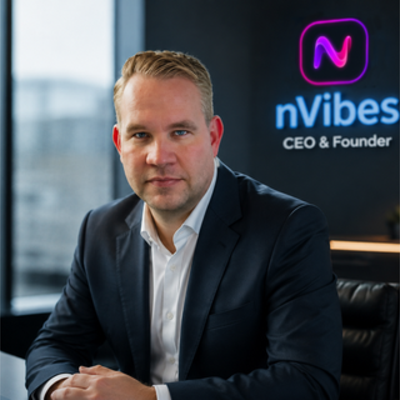
Christian Alexander Schreiber is the CEO & Founder and Lead Architect of nVibes, a next-generation European social platform based in Dresden, Germany, built around one central idea: Real Vibe. Real People.
With nVibes, Christian is building a social infrastructure for real human connection — a platform designed not for endless scrolling, but to help people feel less alone, find belonging, build trusted communities and create meaningful moments beyond the screen.
https://nvibes.de brings together social interaction, communities, events, real-world activities and intelligent digital experiences while placing privacy, trust, responsible AI and European digital sovereignty at the foundation of the platform.
With more than 30 years of experience in IT consulting, software architecture, Microsoft technologies and digital transformation, Christian combines deep technical expertise with the perspective of a technology founder building a new digital platform from Europe.
His work focuses on the intersection of human-centered technology, responsible and agentic AI, privacy-by-design, digital identity, platform trust, cloud architecture and European technological sovereignty. He explores how AI and modern platforms can strengthen human interaction instead of replacing it — and how technology can create genuine value when it is designed around people rather than attention.
Christian also speaks about AI-ready Azure architectures, responsible AI adoption, secure digital platforms, agentic systems and the practical realities of turning an ambitious technology vision into a real product.
As an international speaker, he brings together strategic leadership, hands-on architecture and real-world startup experience. His sessions are practical, technically grounded and driven by a clear conviction:
The future of social technology should not be about keeping people on a screen. It should help bring people together.
nVibes — Real Vibe. Real People.
A Social Infrastructure for Real Human Connection.
Badges


Area of Expertise
Topics
Beyond Vibe Coding: How Agentic AI Becomes a Real Member of Your Scrum Team
AI coding tools can produce an astonishing amount of code in very little time. But speed alone does not make software development better.
As AI agents become more autonomous, many experienced developers are facing a new problem: they feel they are losing control over their own codebase. Tasks happen across multiple files, agents make architectural decisions, documentation becomes outdated, and "vibe coding" can quickly turn into an unstructured development process.
There is another way.
In this session, I will show how we integrate an AI development agent into a real Scrum-based development workflow using GitHub, VS Code and Pi.dev.
The key idea is simple: the AI agent is not replacing the developer. It becomes another development team member working inside clearly defined engineering boundaries.
We will look at how backlog items, project goals, architecture documentation, GitHub issues, branches, pull requests, coding standards and Definition of Done can become the operating framework for an autonomous AI agent.
Instead of prompting an AI with "build this feature", we give it the same structured context and responsibilities we would expect from a professional developer.
The session includes a live demonstration of an agent working on a real software project:
nVibes — a social media platform made in Germany for Europe.
You will see how a development task moves from a Scrum backlog through GitHub into an autonomous AI development workflow, while the experienced developer remains responsible for architecture, review, governance and final approval.
We will also discuss where agentic development currently fails, what should never be delegated blindly, and why experienced software engineers may become even more important in AI-driven development.
What you will learn
How to integrate AI coding agents into an existing Scrum workflow instead of creating a parallel "AI workflow"
How GitHub issues, project boards, branches and pull requests can provide governance for autonomous development
How project documentation and architecture decisions can become persistent context for AI agents
How to define boundaries between human engineering responsibility and autonomous agent execution
How to avoid the loss of control often associated with vibe coding
How an AI agent can practically operate as a development team member
Why code review, architecture and engineering experience remain critical in an agentic development environment
Live Demo
During the session I will demonstrate a real development task using:
Scrum
GitHub
GitHub Projects
VS Code
Pi.dev
AI coding agents
Pull Requests
Architecture and project documentation
The demonstration will use nVibes, a real European social-media platform developed in Germany, as the example codebase.
The goal is not to show how much code an AI can generate.
The goal is to show how professional developers can let AI agents work autonomously without giving up control of the software engineering process.
Transformation ist kein Projekt: Was der Aufbau von nVibes über kontinuierlichen Wandel lehrt
Eine Social Platform von Grund auf neu zu entwickeln bedeutet nicht, einen fertigen Plan abzuarbeiten. Technologie verändert sich, Anforderungen verändern sich, Menschen reagieren anders als erwartet – und manchmal stellt sich eine vermeintlich gute Idee schlicht als falsch heraus.
Am Beispiel von nVibes, einer europäischen Social Platform für reale menschliche Verbindungen, zeige ich, wie aus Produktentwicklung ein kontinuierlicher Transformationsprozess wird.
Dabei geht es nicht um eine Hochglanz-Startup-Story. Ich zeige Entscheidungen, die wir revidieren mussten, den Einfluss von KI auf Produkt und Organisation und die Frage, wie man trotz permanenter Veränderung eine klare Vision behält.
Welche Teile einer Vision müssen stabil bleiben? Wo muss eine Organisation bereit sein, bisherige Annahmen aufzugeben? Und wie erkennt man den Unterschied zwischen notwendiger Beharrlichkeit und dem Festhalten an einer falschen Entscheidung?
Die Session verbindet konkrete Erfahrungen aus dem Aufbau einer neuen Social Platform mit übertragbaren Prinzipien für Transformation, Innovation und Produktentwicklung.
What We Got Wrong Building AI into nVibes — Lessons from a Real European Social Platform
AI architecture diagrams always look clean. Real products rarely are.
In this session, I will share the architecture decisions, experiments and mistakes behind integrating AI capabilities into nVibes, a European social platform designed around real-world human connection.
Instead of presenting a perfect reference architecture, we will look at the uncomfortable questions that appear once AI meets a real product: Which features actually benefit from AI? Where does an agent create unnecessary complexity? How do you keep AI services observable and affordable? How do privacy, identity and trust requirements change the architecture? And when should you simply not use AI at all?
I will walk through decisions that worked, approaches that had to be reconsidered, and the engineering principles that emerged from those lessons.
This is a practitioner session about building under real constraints — architecture, cost, regulation, security and product value — rather than another polished AI demo.
From Social Platform to Agentic Platform: Building nVibes with Azure, AI Agents and Trust by Design
Social platforms are traditionally built around feeds, profiles, messaging and recommendations. But what happens when AI agents become active participants in the platform architecture?
In this session, I will use nVibes, a European social platform focused on real-world human connection, as a practical architecture case study. We will explore how agentic capabilities can be introduced without turning the platform into an uncontrolled collection of AI features.
We will look at architecture patterns for Azure-based AI services, agent orchestration, identity boundaries, APIs, observability and responsible AI controls. I will also discuss where agents make sense, where deterministic services are still the better choice, and why trust boundaries become more important when autonomous systems interact with user data.
This is not a polished product demo. It is an architecture walkthrough of the decisions, trade-offs and constraints involved in evolving a real social platform toward an agentic architecture.
Attendees will leave with practical patterns for designing agentic systems that remain observable, governable and trustworthy.
From Cloud Architect to AI Architect: How Agentic Engineering Is Changing Our Jobs
For years, cloud architects learned how to design applications, infrastructure, identity, security and governance. Agentic AI changes the architecture — but it also changes the architect.
When AI systems can plan, call tools, generate code and operate across business processes, the role of developers, architects and consultants starts to shift. Technical knowledge remains essential, but skills such as system thinking, governance, verification, communication and human oversight become increasingly important.
Drawing from three decades in software architecture and my current work building nVibes, I will discuss how the transition from cloud engineering to agentic engineering changes everyday technical roles.
We will look at which skills remain valuable, which new ones are emerging, how coding agents change development workflows, and why architects may become even more important rather than less.
This session is aimed at developers, architects, consultants and IT professionals asking a simple question: where do I fit in an agentic future?
EU AI Act Meets Social Platforms: Governing Responsible AI in nVibes
The EU AI Act is often discussed as a legal framework. For architects and technology leaders, however, the harder question is much more practical: how do you translate regulation into architecture, governance and engineering decisions?
This session uses nVibes, a privacy-first European social platform, as a real-world case study for Responsible AI governance.
We will map AI use cases such as recommendations, content assistance, trust mechanisms and intelligent community features to governance requirements and risk categories. From there, we will examine practical controls around human oversight, data protection, transparency, model usage, documentation and operational accountability.
The focus is not on reading legislation slide by slide. Instead, I will show how teams can turn regulatory requirements into architecture decisions, engineering guardrails and repeatable governance processes.
Attendees will leave with a practical framework for connecting the EU AI Act, privacy-by-design and Responsible AI with real product development on the Microsoft Cloud.
Responsible AI for Business Central ISVs: Privacy, Trust, and Governance by Design
AI features are becoming a competitive requirement for Business Central ISVs, but adding AI to business applications also introduces new responsibilities. Customers will increasingly ask how their data is used, where decisions come from, who remains in control, and how AI behavior can be explained or audited.
This session provides a practical responsible AI framework for ISVs and partners building AI-enhanced Business Central extensions, integrations, or companion applications. We will cover core design principles such as data minimization, user consent, human oversight, logging, role-based access, explainability, and safe fallback behavior.
The focus is not legal theory, but implementation-oriented governance. Attendees will learn which questions to ask before building AI features, how to document design decisions, how to identify risk areas early, and how to communicate AI capabilities transparently to customers. The session helps partners build AI solutions that are not only innovative, but also trustworthy and enterprise-ready.
From Business Central to Agentic AI: Designing Secure AI Assistants for SMB Processes
Business Central partners are increasingly asked how AI can support sales, finance, service, operations, and customer communication without creating security, privacy, or governance risks. This session shows how to design practical AI assistants around Business Central processes using Azure, Microsoft 365, and responsible architecture principles.
We will walk through a reference architecture for agentic AI in an SMB context: how to connect business data safely, how to separate user intent from system actions, how to design approval workflows, how to avoid uncontrolled automation, and how to prepare customers for AI-assisted processes without losing trust or compliance.
The session is aimed at partners who want to move beyond “AI demos” and start designing real, customer-ready AI scenarios. Attendees will leave with architectural patterns, decision points, anti-patterns, and a pragmatic checklist for building secure, explainable, and useful AI assistants around Business Central ecosystems.
Building an AI-Ready Azure Architecture for Business Central Partner Solutions
AI-enabled partner solutions require more than a prompt and an API call. They need secure identity, reliable integration, data boundaries, observability, cost control, and a clear operating model. This technical deep dive shows how to design an AI-ready Azure architecture for Business Central partner solutions.
We will explore a practical architecture blueprint covering identity and access, API boundaries, data ingestion, event-driven integration, retrieval-augmented generation patterns, audit logging, monitoring, deployment, and operational safeguards. The session also discusses common failure modes: exposing too much data, mixing customer tenants, missing approval flows, weak prompt boundaries, and unmonitored AI costs.
Attendees should already understand cloud architecture basics and want a deeper view of how AI capabilities can be integrated responsibly into Business Central-adjacent solutions. The goal is to give developers and architects a reusable mental model for building secure, scalable, and maintainable AI-enabled solutions in the Microsoft ecosystem.
AI Readiness for Business Central Partners: From Hype to Customer-Ready Offerings
Many SMB customers are interested in AI, but they often struggle to identify where AI creates measurable business value and where it creates unnecessary complexity or risk. This session helps Business Central partners turn AI conversations into structured, customer-ready offerings.
We will explore how partners can assess AI readiness, identify high-value use cases, define responsible adoption paths, and position AI services without overpromising. The session connects business strategy with practical architecture: data quality, process ownership, privacy, user adoption, governance, and change management.
Attendees will learn how to build an AI opportunity framework for Business Central customers, how to qualify use cases, how to separate automation from augmentation, and how to create offerings that are realistic, trustworthy, and repeatable. The goal is to help partners move from AI hype to sustainable services that customers can understand, buy, and adopt.
The Next Web Will Be Trustworthy: Building Human-Centered AI Platforms in the Age of Agents
AI is changing the web again. We are moving from static websites and social feeds to AI-augmented digital ecosystems where agents understand context, support decisions, interact with services, and shape user experiences in real time.
But the defining question of this next web is not only what AI can do. It is who we trust, which data we share, who stays in control, and how digital platforms must be designed when intelligent systems become part of everyday interaction.
In this keynote-style session, Christian Alexander Schreiber uses nVibes as a real-world scenario to explore how human-centered AI platforms can be built with trust, privacy, sovereignty, and security at their core. Instead of presenting Azure as the main story, the talk shows how cloud architecture, identity, responsible AI, data boundaries, and platform design come together to enable trustworthy digital ecosystems.
Attendees will leave with a strategic mental model for the age of agents: AI should augment people, not replace their agency; platforms should earn trust, not demand it; and architecture must protect human control, privacy, and digital sovereignty from the beginning.
Azure Architecture for Responsible AI: Building nVibes as a Sovereign Social Platform
nVibes is a real-world case study for building a modern, AI-enabled social platform on Azure with sovereignty, privacy, and security at its core.
In this session, Christian Alexander Schreiber, CEO & Founder and Lead Architect of nVibes, walks through the architectural decisions behind a production-adjacent Azure platform: Cloudflare Edge in front of Azure, Azure Standard Load Balancer, Frontend VM Scale Set, dedicated API and database tiers, a private AI VM, Azure Private DNS, Network Security Groups, Managed Identity, and a self-hosted LLM approach.
The talk focuses on one central question: how can we integrate responsible AI into a digital platform without giving models direct access to databases, secrets, internal services, or uncontrolled user data?
Attendees will learn how nVibes separates frontend, API, database, and AI runtime responsibilities; how private networking and controlled backend authorization reduce risk; and how MVP infrastructure can evolve toward hardened, reproducible, least-privilege cloud architecture.
This is not a theoretical cloud diagram session. It is a practical architecture story about building, securing, and scaling a real platform where Azure, AI, privacy, and European digital sovereignty must work together.
Beyond Likes and Logins: Building Real-World Trust into a Next-Generation Social Platform
This session takes the audience behind the scenes of nVibes, a next-generation social platform designed around real-world trust, privacy and responsible digital interaction.
Instead of treating every follow, like or connection as equal, nVibes explores how verified real-world encounters can become a stronger foundation for digital relationships. Using the MeetNow architecture as a concrete example, we will look at how QR-based interaction, short-lived sessions, geo-consent, server-side distance validation, device context and privacy-by-design can work together to create a “Real Friend” trust signal without turning the system into a tracking machine.
The talk also discusses the next architectural step: ephemeral trust exchange patterns, why secrets should not live inside QR payloads, how public material can be fetched safely through APIs and why standard cryptographic primitives and external review matter when designing security-sensitive social features.
Attendees will leave with practical architecture patterns for building trust-centric features, handling privacy and security trade-offs, and designing modern social platforms that are more human-centered, sovereign and resilient.
Converse with your dataverse data: Retrieving Data with Natural Language and Power Platform CoPilot
Join me for a 100% hands-on session that will enable you to harness the potential of Natural Language and Power Platform CoPilot to build powerful applications and streamline your business processes. I will walk you through creating an application, developing a flow with Power Automate and CoPilot, and seamlessly retrieving data in Dataverse using only Natural Language and CoPilot.
Key Highlights:
I'll begin by introducing you to the Power Platform CoPilot, demonstrating its capabilities and potential to simplify your interactions with data in the Dataverse.
Learn how to quickly build an application using CoPilot, making it easier than ever to develop user-friendly interfaces that increase your productivity.
Discover the power of automation as we walk you through the process of creating a flow using Power Automate and CoPilot. See how you can automate tasks and integrate different processes effortlessly.
Experience the magic of retrieving data in Dataverse using natural language commands and CoPilot. I'll share real-world scenarios and demonstrate how CoPilot can save you time and effort.
I'll leave time for your questions, so you'll leave with a clear understanding of how to use these tools effectively.
Efficient Software Delivery: Power Platform loves Azure DevOps
If you are involved in building Power Apps and automation flows, you need to deliver software faster, more reliably, and with higher quality by integrating development, testing, and operations into a seamless process. You also need to ensure that the software development lifecycle is fully managed, from planning to deployment and maintenance.
In my session, I will set up an entire Azure DevOps project and cover how to export your Power Platform Apps, Flows, and Connectors from a development environment to test and production environments using pipelines, triggers, CI/CD, Microsoft Teams approvals, and release management.
You will have the opportunity to work on real-world scenarios and apply the concepts to your own projects. By the end of the session, you will have a solid understanding of how to implement agile development using the Power Platform and Azure DevOps, and you will be able to start applying these practices in your organization.
Building a Power Virtual Agent with CoPilot: Empowering Automation
Join us in this session as we embark on a journey to create a powerful Power Platform Virtual Agent using the groundbreaking capabilities of CoPilot. Discover how to leverage CoPilot's AI assistance to build an intelligent and interactive virtual agent that operates within Microsoft Teams.
We will dive into the seamless integration between the PVA and Power Automate. Explore how you can trigger Power Automate flows directly from the virtual agent, enabling streamlined automation and effortless data retrieval.
Through hands-on demonstrations, I will guide you in constructing a PVA that interacts with users, understands their inquiries, and effectively executes flows to fetch data.
By leveraging Co-Pilot's intelligent suggestions and coding assistance, you will gain valuable insights into how to optimize the development process and accelerate the deployment of your Power Platform Virtual Agent. Learn how to harness the power of AI to enhance automation, improve customer experiences, and drive productivity within your organization.
Efficient Software Delivery: Power Platform, Azure DevOps, and Business Central Integration
If you are involved in building Power Apps and automation flows for Business Central, you need to deliver software faster, more reliably, and with higher quality by integrating development, testing, and operations into a seamless process. You also need to ensure that the software development lifecycle is fully managed, from planning to deployment and maintenance.
In my session, I will set up an entire Azure DevOps project and cover how to export your Business Central Power Platform Apps, Flows, and Connectors from a development environment to test and production environments using pipelines, triggers, CI/CD, Microsoft Teams approvals, and release management.
You will have the opportunity to work on real-world scenarios and apply the concepts to your own projects. By the end of the session, you will have a solid understanding of how to implement agile development for Dynamics 365 BC using the Power Platform and Azure DevOps, and you will be able to start applying these practices in your organization.
CoPilot in Power Platform: Revolutionizing Application & Flow Development for Business Central
In this session, we will explore the exciting potential of CoPilot in the context of building Power Apps and flows for Business Central. Co-Pilot, an AI-powered coding assistant, has revolutionized the development process by providing intelligent suggestions, generating code snippets, and offering valuable insights.
Join us as we delve into how CoPilot can streamline your development. I will demonstrate how AI can assist you in writing code more efficiently, reducing errors, and accelerating the overall development cycle. Discover how CoPilot's contextual understanding and code generation capabilities can enhance your productivity and help you build robust solutions.
Gain insights into the evolving role of AI and how it can contribute to creating smarter, more intelligent Power Apps and flows.
Building a Solid Foundation: Governance and Compliance in Power Platform & Business Central
In this session, we will dive into the crucial aspects of Data Loss Prevention, Governance, and Power Platform Environment Management for Apps built for Dynamics 365 Business Central.
As organizations increasingly rely on the Power Platform to build and deploy apps, it becomes essential to implement effective measures to prevent data loss, ensure proper governance, and manage Power Platform environments efficiently.
During this session, we will explore best practices and practical strategies to safeguard your data and maintain control over your Power Platform ecosystem.
I will discuss the importance of establishing data loss prevention policies, implementing governance frameworks, and leveraging the power of Power Platform Environment Management to streamline app development and deployment processes.
You will gain insights into how to protect sensitive information, establish role-based access controls, and enforce data compliance regulations within your Power Apps for Dynamics 365 Business Central. Additionally, we will explore various techniques and tools for managing Power Platform environments, enabling you to create, configure, and administer environments effectively.
Building a Power Virtual Agent with CoPilot: Empowering Automation with BC integration
Join us in this session as we embark on a journey to create a powerful Power Platform Virtual Agent using the groundbreaking capabilities of CoPilot. Discover how to leverage CoPilot's AI assistance to build an intelligent and interactive virtual agent that operates within Microsoft Teams.
We will dive into the seamless integration between the PVA and Power Automate. Explore how you can trigger Power Automate flows directly from the virtual agent, enabling streamlined automation and effortless data retrieval from Business Central.
Through hands-on demonstrations, I will guide you in constructing a PVA that interacts with users, understands their inquiries, and effectively executes flows to fetch data from Business Central.
By leveraging Co-Pilot's intelligent suggestions and coding assistance, you will gain valuable insights into how to optimize the development process and accelerate the deployment of your Power Platform Virtual Agent. Learn how to harness the power of AI to enhance automation, improve customer experiences, and drive productivity within your organization.
Enhancing Data Security and Compliance with Double Key Encryption
In this session, we will be discussing Double Key Encryption (DKE) as part of Azure Purview, a security technology developed by Microsoft that uses two keys to access protected content. One key is stored in Microsoft Azure, while the other is held by the user, giving them complete control over their data. We will cover the benefits and limitations of using DKE, including its relevance for highly regulated industries such as finance and healthcare, and the specific scenarios in which it is recommended to use this solution. Additionally, we will go through the necessary steps to deploy DKE, including installing software prerequisites, creating sensitivity labels, and enabling DKE in your client. This session will be useful for anyone looking to enhance their data security and compliance measures, especially those who handle highly sensitive information.
Unleashing the Power of Hybrid with Azure Arc-enabled servers
With Azure Arc-enabled servers, you can manage Windows and Linux physical servers and virtual machines hosted outside of Azure, on your corporate network, or on another cloud provider. For the purposes of Azure Arc, these non-Azure hosted machines are considered hybrid machines. The management of hybrid machines in Azure Arc is designed to be consistent with how you manage native Azure virtual machines, using standard Azure constructs such as Azure policies and applying tags. When a hybrid machine is connected to Azure, it becomes a connected machine and is treated as a resource in Azure.
In my 30 min. session, I will show you how to connect hybrid (Windows and Linux) machines to Azure using the Azure Connected Machine agent on each machine, and review and customise the pre-built installation script for at-scale deployment of the Connected Machine agent to support your automated deployment needs.
Optimieren Sie die Effizienz Ihres Projektmanagements mit Microsoft Planner, Teams & Power Automate!
Von der Post-it-Wand zum digitalen Kanban-Board: Entdecken Sie in dieser 50-minütigen LifeHack-Session die Möglichkeiten der Automatisierung in Microsoft Planner & Teams und wie Sie durch den Einsatz von Power Automate zu einem erfolgreicheren Projektmanager werden. Agilität 2.0! Profitieren Sie von praxisorientierten Anleitungen zur Implementierung von Workflows und Optimierung Ihrer Arbeitsabläufe
Zero To Hero with Azure DevOps & Power Platform
Power Platform solutions can be easily exported from one environment and imported to other with manual efforts. Azure DevOps pipelines make it easy to automate to move your solutions from one environment to other. In my 45 min. Session I will set up Azure DevOps pipelines for this scenario and cover how to export and import the Power Platform solution from development environment to the Q&A environment and then export to the production environment using the key principles of: application lifecycle management, CI/CD, software tests & releasemanagement.
aMP Montpellier 03-10-2024 Sessionize Event
CollabDays Finland 2024 Sessionize Event
Power Summit 23. + 24. Juli 2024 Sessionize Event
Technical Summit 2024 Sessionize Event
Developer Week '24 Sessionize Event
AI Summit 11. + 12. Juni 2024 Sessionize Event
Days of Knowledge Central 2024 Sessionize Event
ColorCloud Hamburg 2024 Sessionize Event
Days of Knowledge Nordic 2024 Sessionize Event
Business Central Day ES Sessionize Event
aMS Lausanne 2024 Sessionize Event
Days of Knowledge UK 2024 Sessionize Event
Modern Workplace Conference Paris 2024 Sessionize Event
MCT Summit 2024 Sessionize Event
Global Power Platform Bootcamp 2024 | Hamburg Edition - PPHHUG Sessionize Event
aMS Luxembourg 2024 Sessionize Event
Teams Summit 23.-24. Januar 2024 Sessionize Event
Dev-Cloud Conference '23 Sessionize Event
aMS Aachen - 16/11/2023 Sessionize Event
Directions EMEA 2023 Lyon Sessionize Event
aMS Manila 24-10-2023 Sessionize Event
aMS Montpellier 28-09-2023 Sessionize Event
Dev & Donuts
Tech-Talk & Special Event namens AI & Aperol für Softwareentwickler*innen und tech-begeisterte um uns über Trends der künstlichen Intelligenz in der Softwareentwicklung zu unterhalten.
aMS Paris 06-06-2023 Sessionize Event
Days Of Knowledge Nordic 2023 Sessionize Event
Global Azure 2023 @ Microsoft Reactor Berlin Sessionize Event
einfachM365 PowerWeek | Produktivitäts-Lifehacks Sessionize Event
Global Power Platform Bootcamp 2023 | Hamburg Edition - PPHHUG Sessionize Event
Please note that Sessionize is not responsible for the accuracy or validity of the data provided by speakers. If you suspect this profile to be fake or spam, please let us know.
Jump to top