
When a session ends, attendees walk away with insights and opinions. Event organizers and speakers rarely get to hear those impressions, even though they’re exactly what helps them improve. The Feedback feature makes it easy to collect those insights quickly and reliably, without extra tools or complicated steps. Attendees scan a simple QR code to check in, confirming their presence, and can then submit feedback within 24 hours. This ensures every session is evaluated while impressions are still fresh.
There are two types of QR codes used for attendee check-in. You're welcome to use either or both:
Session QR Codes - These are typically shown in the presentation, most often at the end. They're session-specific and automatically check attendees into the session they’re linked to. Once checked in, attendees can submit feedback for that session within 24 hours
Room QR Codes - These are printed or displayed inside the room and are assigned to rooms rather than individual sessions. Scanning a room QR code checks attendees into the session currently in progress. If multiple sessions overlap, attendees can select which one they want to check into
On top of rating individual sessions, attendees can also rate your event as a whole, and you can reward everyone who took the time to leave feedback with a prize draw. Both are optional, and both are explained in detail below.
Using the Feedback feature is optional, but its benefits are threefold: speakers gain direct access to their audience’s thoughts, organizers gain a clearer view of audience engagement, and attendees have a simple way to share their opinions and help improve future events.
Speakers can use the Feedback feature for their own sessions even if the event organizer chooses not to collect it for the entire event. This flexibility allows individual speakers to gather feedback directly from their audiences, regardless of the event’s overall feedback setup. Speakers can find their session’s QR code in the Feedback tab of the Speaker Dashboard, accessible by opening the event from the Events menu. For more information, check out the following article: Speakers – use the Feedback feature for your sessions.
Why QR codes are tied to sessions and rooms
The purpose of scanning a QR code isn't just convenience - it's attendance verification. When an attendee scans a session or room code, Sessionize confirms they were actually present before allowing them to submit feedback. This is what makes session and speaker ratings in Sessionize meaningful: they reflect the opinions of people who were in the room, not just anyone with a link.
That's also why there's no single QR code or public link that covers all sessions at once. A shared link would make it easy for anyone to leave feedback for sessions they didn't attend, which could lead to inaccurate ratings, feedback on the wrong session, or even intentional misuse. The result would be data that's less useful for organizers and less valuable for speakers.
By tying feedback to verified check-ins, Sessionize ensures that speaker ratings carry real weight. A speaker should be able to point to their Sessionize rating and know it's based on genuine attendee feedback - not guesswork, not spam, not ratings from people who weren't there.
Set up the feedback form
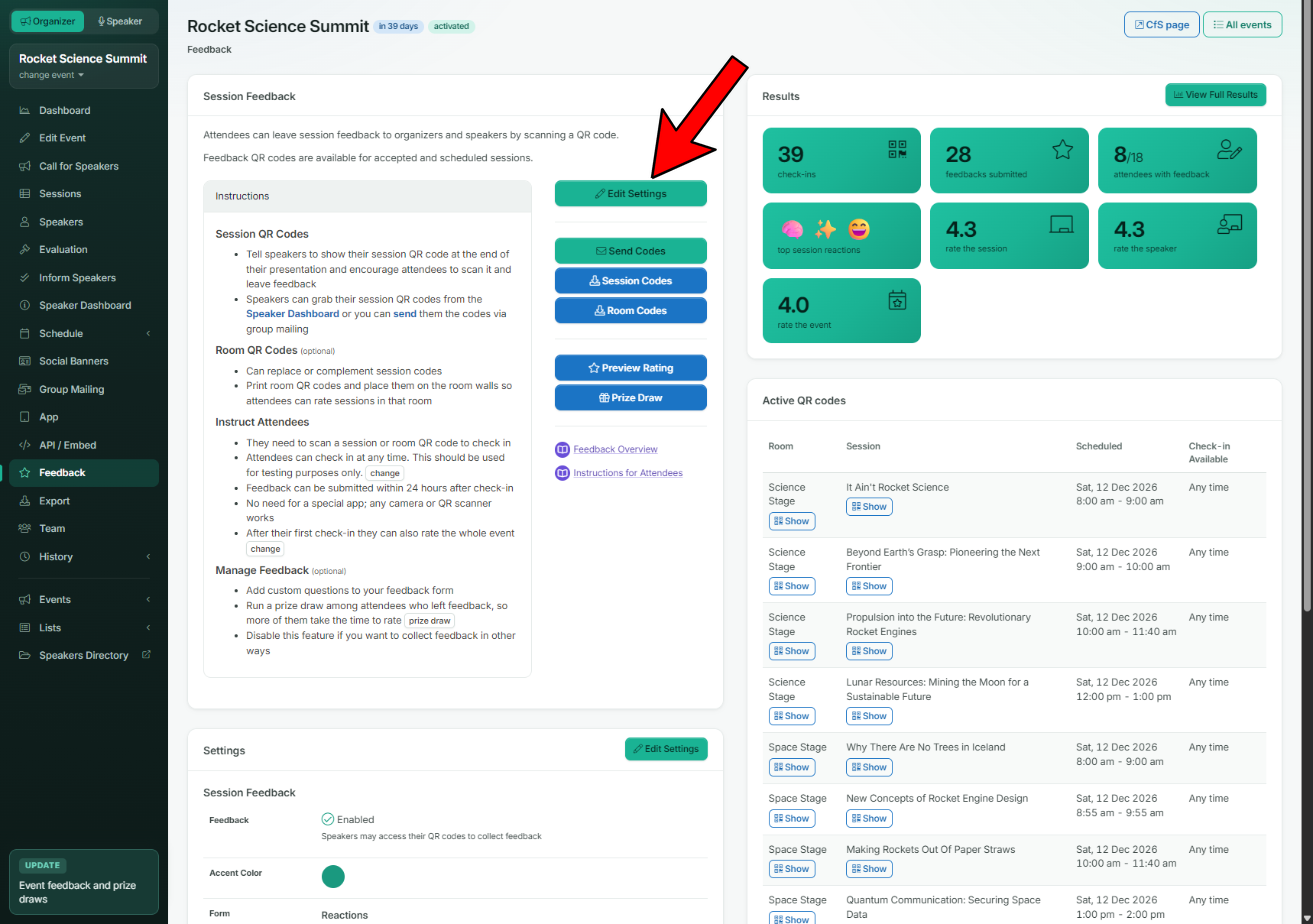
You don't need to set up anything - the Feedback feature comes preconfigured and ready to use as-is. All you have to do is distribute the QR codes to your speakers or display them in the rooms.
The Instructions panel on the main Feedback page sums up everything you need to tell your speakers and attendees, and doubles as a checklist. Settings you're most likely to adjust, such as the check-in time and whether attendees can rate the whole event, show their current value with a change button right next to them, so you can jump straight to the relevant setting. Next to the panel you'll find quick links to this article and to the guide you can share with your attendees.
If you want to fine-tune how feedback works, open the Feedback menu and select Edit Settings. The page is split in two. Everything related to session feedback is on the left, in the Session Feedback, Session Reactions and Session Questions sections. Everything related to the event as a whole is on the right, in the Event Feedback and Event Questions sections.
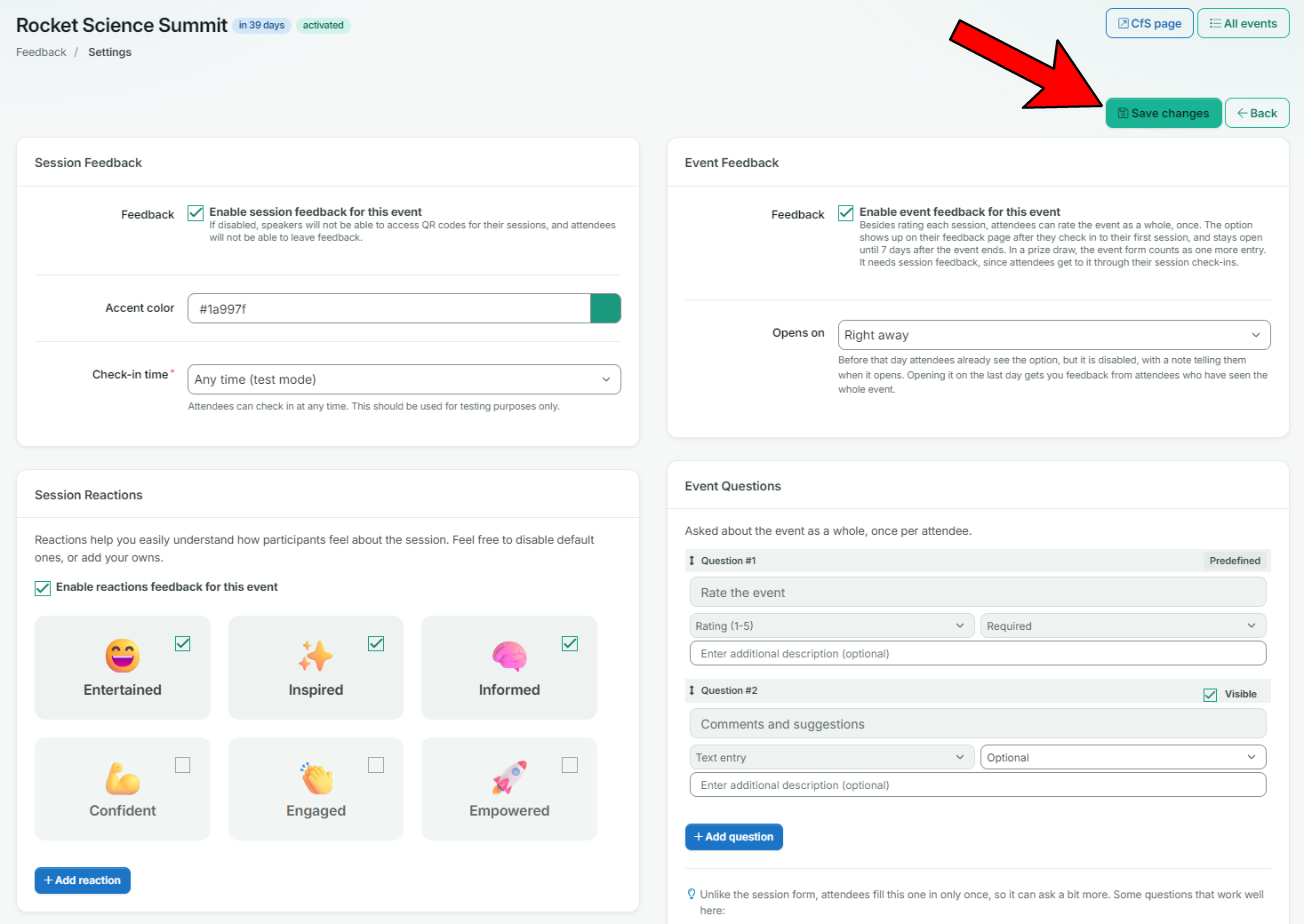
Session feedback is enabled by default, but you can disable it in the Session Feedback section by clearing the Enable session feedback for this event checkbox. Disabling it prevents speakers from generating QR codes for their sessions. While possible, this is strongly discouraged - speakers value the ability to gather feedback on their own, even if you don't plan to collect it event-wide.
You can also customize the accent color of the feedback form. The feedback form automatically adapts to the theme your attendees use on their device, whether light or dark. Sessionize adjusts the accent color you select to ensure it looks good in both versions, so you don’t need to worry about theme compatibility.
The Check-in time option defines when attendees can scan a QR code to become eligible to leave feedback. Four modes are available:
During the session (recommended) - attendees can scan the QR code during the session or immediately after it ends. This option produces the most accurate feedback and minimizes incorrect data. However, it works as intended only when your event stays on schedule
During the day - attendees can check in at any time on the day the session takes place. This mode provides more flexibility if you expect schedule deviations or changes
During the entire event - attendees can check in at any time while the event is active. This setting likely increases the total number of feedback submissions but could lower feedback quality
Any time (test mode) - allows check-ins at any time. Use this mode only for testing, then switch to one of the other three options for the live event
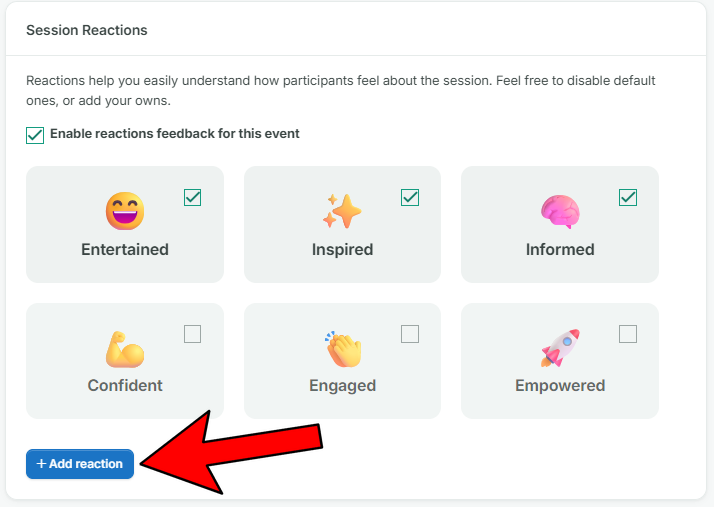
Session Reactions are short, predefined responses that attendees can choose from when leaving session feedback. Six default reactions are available, and you can toggle each one on or off as needed. To create your own, click the blue Add reaction button and assign its name, as well as an appropriate emoji. If you'd rather not use reactions at all, clear the Enable reactions feedback for this event checkbox.
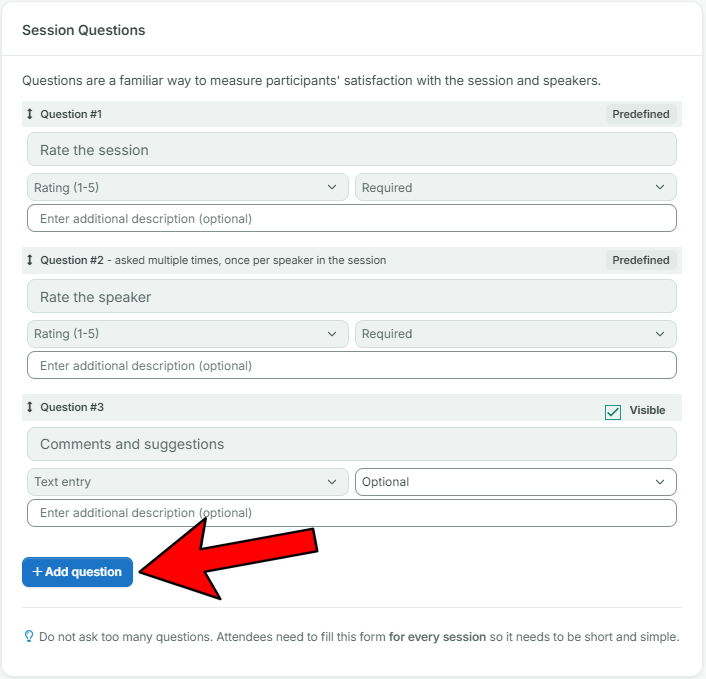
The Session Questions section lets you fine-tune the feedback form. You can add custom questions, but avoid adding too many. Attendees fill in this form for every session they attend, so it works best when it's short, clear, and quick to complete - concise forms receive the most responses and produce higher-quality feedback.
Once you're done setting everything up, confirm by clicking the green Save changes button at the top-right corner of the page.
Session and speaker star ratings are always included and cannot be disabled, as they're the foundation of the feedback form. The speaker rating is asked once per speaker, so in sessions with more than one speaker, each of them gets a separate rating. The Comments and suggestions field is also added by default and set to Optional, allowing attendees to submit feedback without filling it out. You can change it to Required or hide it completely by clearing the Visible checkbox, though keeping it optional is generally recommended.
Send QR codes
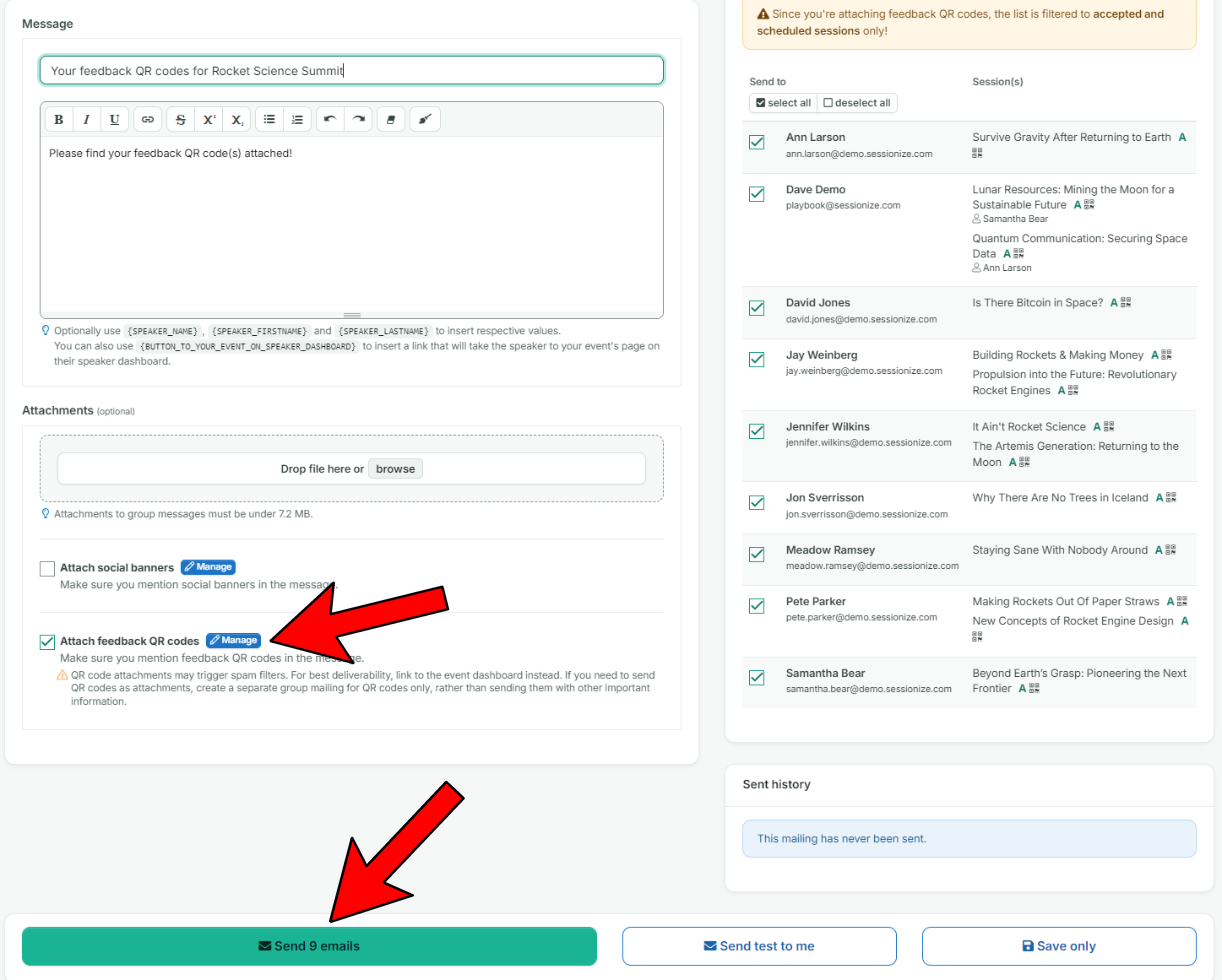
Speakers can download their feedback QR codes directly from their Speaker Dashboard, but it's often more convenient to send them by email. The easiest way to do that is through Group Mailing. Go to the Feedback menu and click Send Codes. This opens a new group mailing that's already set up for the job: the message is prefilled and the Attach feedback QR codes option in the Attachments section is already checked. Add a mailing name and the subject of your email, and adjust the message if you like. Since you're attaching QR codes, the recipient list automatically includes only speakers with accepted and scheduled sessions, and you can narrow it down further with filters. Finally, click the green Send emails button at the bottom of the page.
When sending QR codes to your speakers, it's best to send them in a separate email, not bundled with other event information. Send them a few days before the conference (or the presentation submission deadline), after the speaker list is final, to ensure no one is missed.
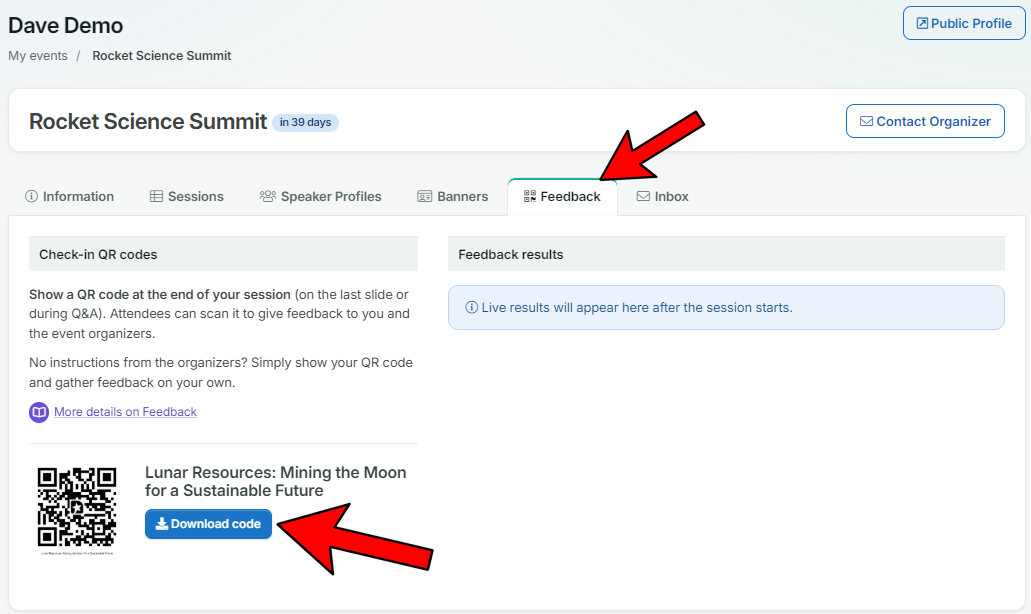
Eligible (accepted) speakers can also download their session's QR codes in their Speaker Dashboard, in the Feedback tab. This is also where they'll be able to see the feedback results.
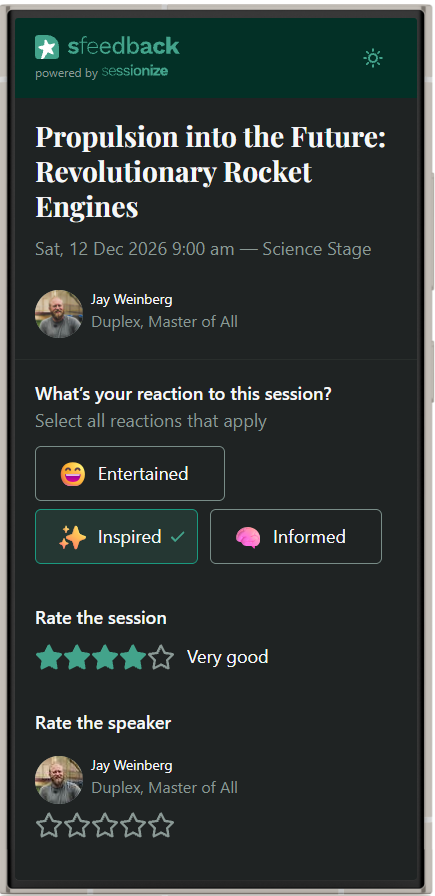
To see what your feedback form looks like, click the Preview Rating button in the Feedback menu. You can track which QR codes are currently active in the Active QR codes section on the right side of the Feedback page. QR codes become active once the corresponding sessions are scheduled. Sessions must be scheduled for the active QR codes to appear.
Encourage your speakers to include their feedback QR code in their presentation. Displaying it on the big screen at the end of the session is the most effective way to gather feedback from attendees.
Let attendees rate the whole event
Session ratings tell you how individual talks landed. Event feedback answers a different question: how did attendees experience your event as a whole? The venue, the food, the networking, the organization, the program as a whole.
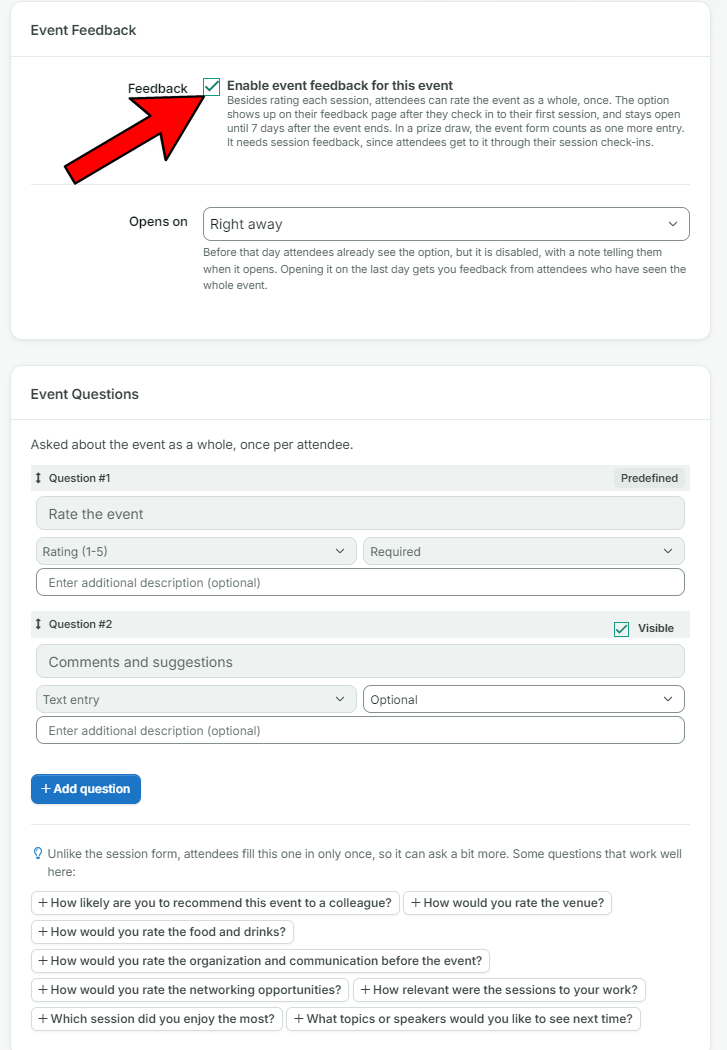
To turn it on, open Edit Settings in the Feedback menu and check Enable event feedback for this event in the Event Feedback section on the right. Event feedback works on top of session feedback, because attendees reach it through their session check-ins. There's no separate QR code or public link for it, for the same reason explained above: only people who were actually at your event should be able to rate it.
Here's how it works for attendees. The first time they check into any session at your event, an option to rate the event appears on their feedback page at SFeedback.com. Each attendee fills in the event form only once, and it stays open until 7 days after the event ends.
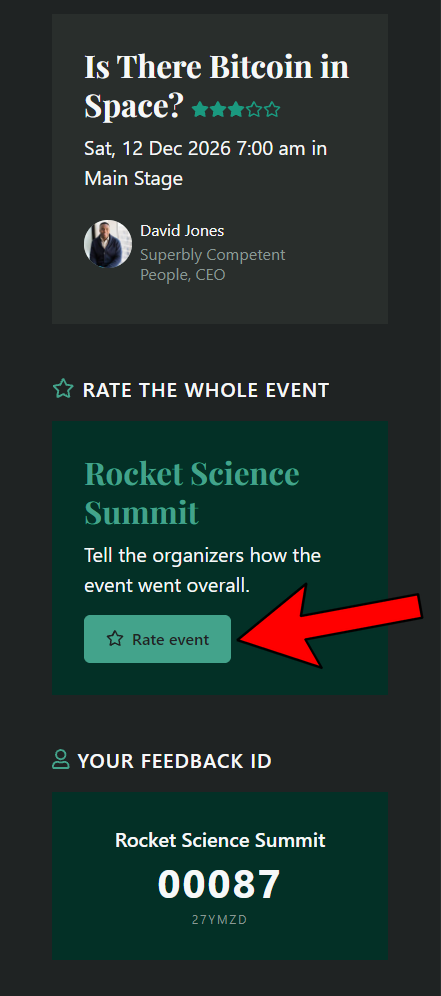
The Opens on setting lets you decide when the event form becomes available. By default, it's available right away, but you can pick any day of your event instead. Before that day, attendees will already see the option, but it will be disabled, with a note telling them when it opens. Opening it on the last day of your event is usually the smart choice, since you'll get feedback from attendees who have seen the whole thing.
The Event Questions section works just like the session one. Rate the event (1 to 5 stars) is predefined and always included, and Comments and suggestions is added as an optional field. The big difference is that the session form gets filled in again and again, once for every session, while the event form is answered only once. That means you can afford to ask a bit more. Below the questions, Sessionize suggests several that work well here, such as how likely attendees are to recommend the event to a colleague, how they'd rate the venue, food and drinks, or networking opportunities, and which session they enjoyed the most. Click any suggestion to add it to your form, or write your own with Add question.
If you run a prize draw, the event form counts as one more entry for every attendee who fills it in.
Run a prize draw
Feedback is valuable, but not every attendee feels like spending a minute on it. A small reward goes a long way. With the Prize Draw, you can draw winners among attendees who left feedback and hand out whatever you've prepared - gift packages, books, conference swag, tickets for next year's edition.
Feedback IDs, not names
Attendees don't need an account to leave feedback, so Sessionize doesn't know who they are, and it doesn't need to. Privacy first. Instead, every device that leaves feedback at your event gets its own feedback ID, a five-digit number. In most cases, one feedback ID equals one person (someone who rated sessions on both their phone and their tablet, however, will have two).
Every submitted form is one entry in the draw. An attendee who rated five sessions has five entries, and if event feedback is enabled, the event form counts as one more. The more they rate, the better their odds, which is exactly the point.
Drawing the winners
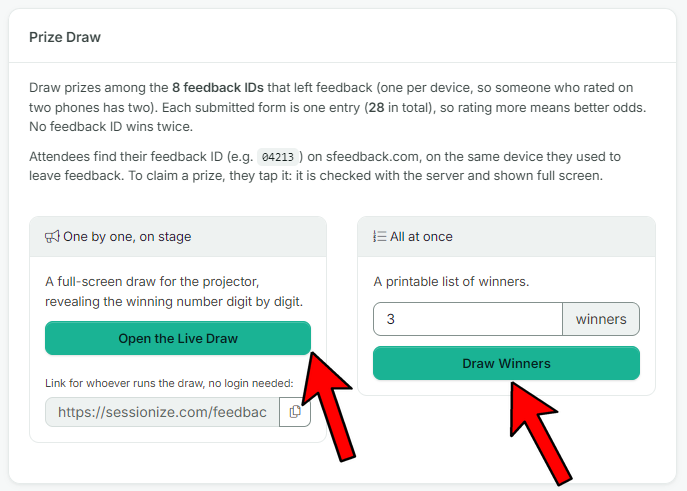
Open the Feedback menu and click Prize Draw. You'll see how many feedback IDs are eligible and how many entries there are in total. Then choose how you want to draw:
One by one, on stage - a full-screen live draw made for the big screen, for example during the closing session. Click Open the Live Draw, and each winning number is revealed digit by digit. Below the button, you'll also find a link to the live draw that works without logging in, so you can hand it to whoever is running the stage
All at once - enter how many winners you need, click Draw Winners, and you'll get a printable list
The All at once option is pretty self-explanatory, and it's the more practical choice when your event doesn't have a closing session or another moment when everyone is gathered in one room. Publish the winning feedback IDs, for example on your website, on social media, on a screen near the registration desk or in an email to attendees, and ask the winners to come to the info desk or get in touch within a few days to claim their prize.
If you do have a moment like that, the live draw is a lot more fun. Here are a few details worth knowing.
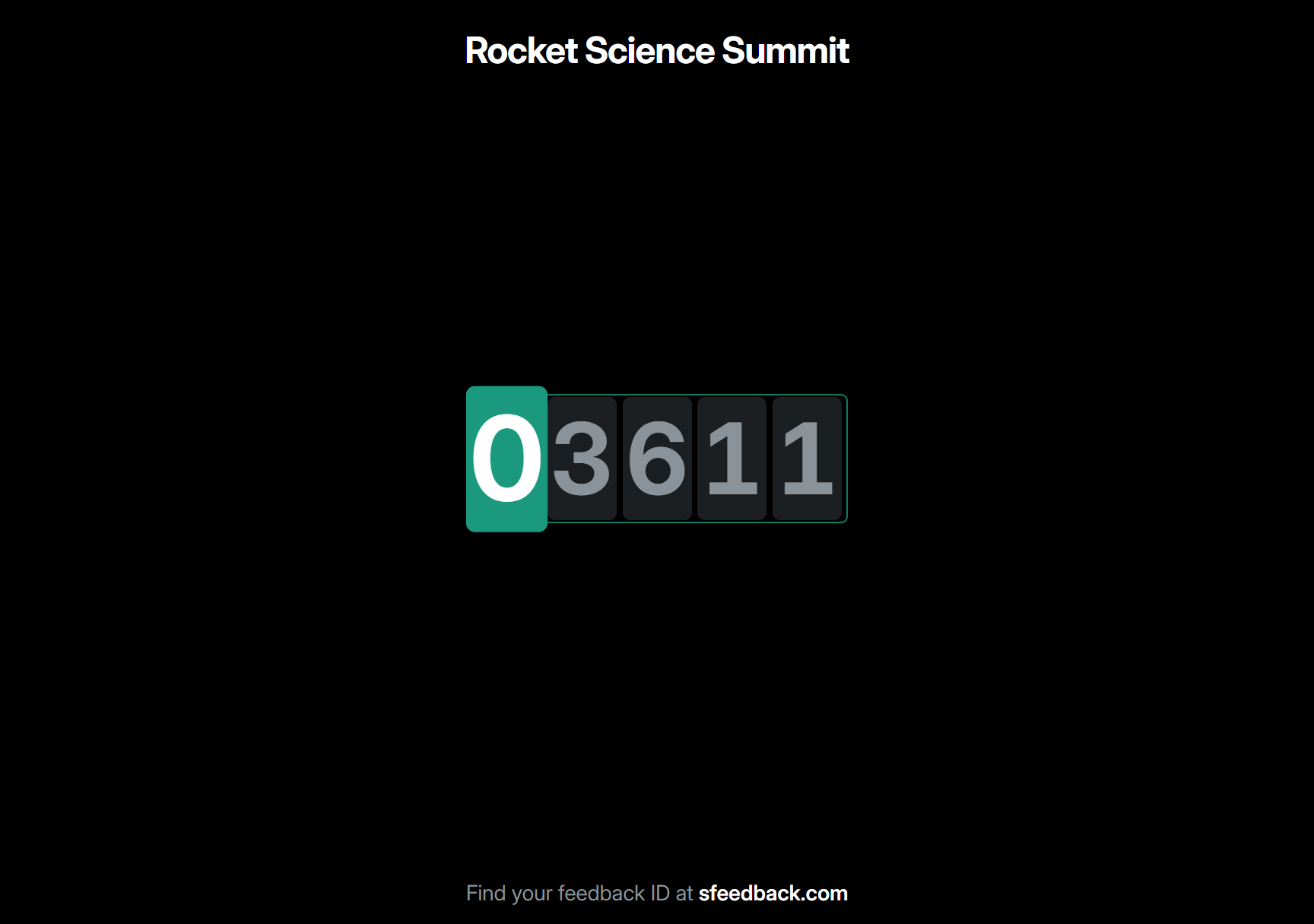
The live draw shows your event logo at the top (the one set in your event settings), or your event's name if there's no logo, and uses the accent color from your feedback settings. To draw the next winner, click the mouse or press the space bar. Small buttons in the bottom-right corner let you open the list of all numbers drawn so far (handy when someone clicks too fast and nobody catches the number), switch between a black and white background, and go full screen.
Within a single draw, no feedback ID can win twice. Keep in mind that reloading the live draw page, or clicking Draw Winners again, starts a new draw, and an ID that has already won could come up again. So once the draw is underway, don't refresh the page.
Tell attendees where to find their feedback ID
This is the step that makes or breaks the whole draw. Attendees find their feedback ID at SFeedback.com, at the bottom of the page, on the same device they used to leave feedback. Every event has its own feedback ID, so someone attending several events will have a different number for each one.
Make sure attendees know this before the draw starts. Mention it in your opening and closing remarks, put it on a slide between sessions, and include it in any reminders you send. The live draw screen also displays a reminder of where to find the feedback ID, but by then it's a good idea that everyone already has it ready.
Verifying the winners
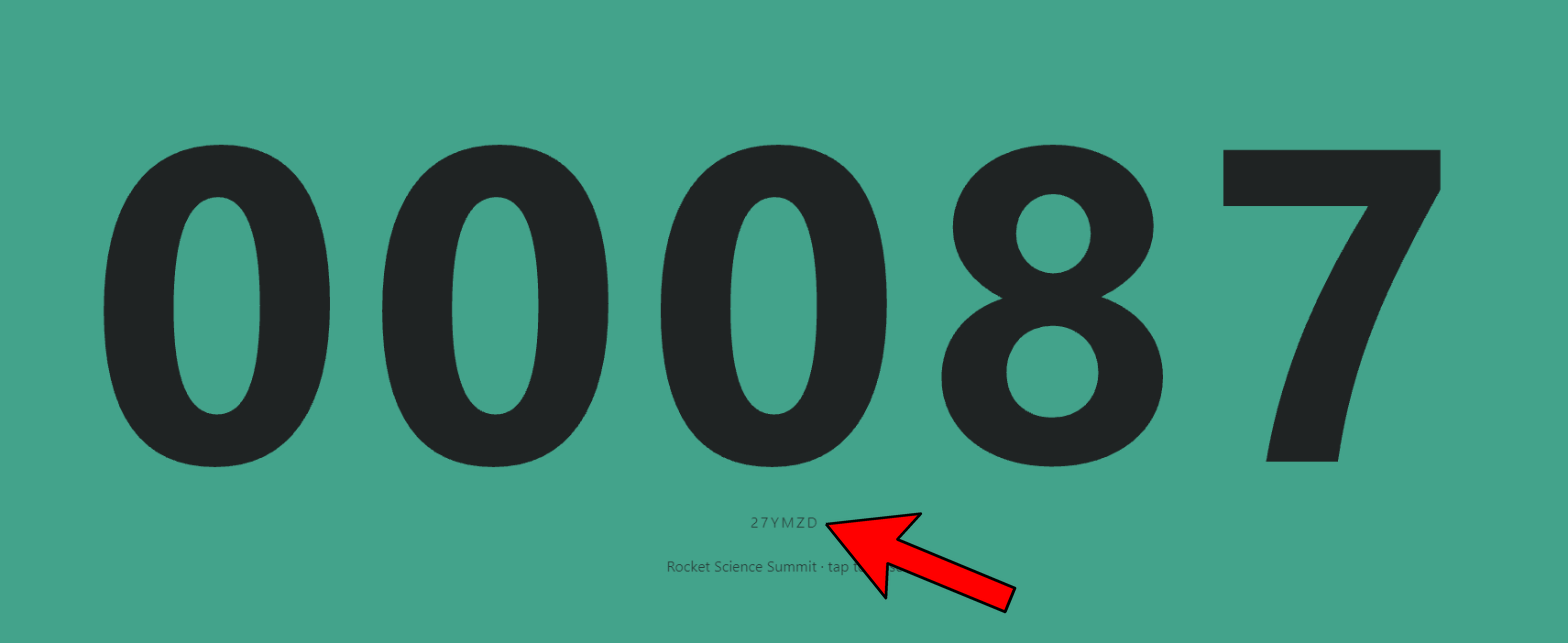
Verifying the winners is optional. In most cases, you can simply trust your attendees. But if you want to be absolutely sure everything is in order, or you suspect someone is trying to cheat, here's how to check. Ask the winner to open SFeedback.com and tap their feedback ID. The ID is checked with our server and shown full screen, so it's easy to see even from a distance. Because the check happens on the server, a screenshot or a made-up page won't do the trick. A short control code is shown below the number as well, for extra certainty.
View and analyze results
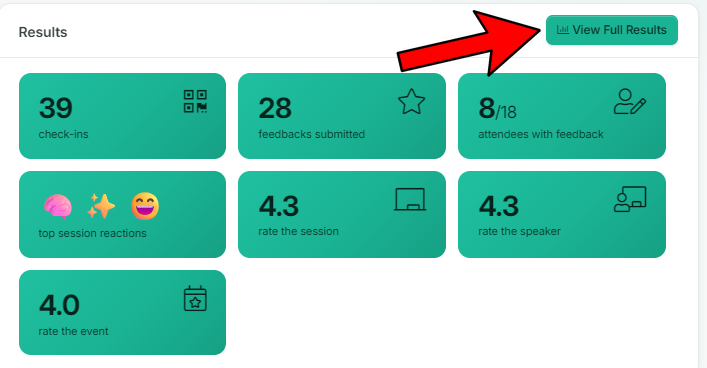
A quick overview of feedback results is available in the main Feedback menu. Here you can view the total number of check-ins, the number of feedback submissions, how many attendees (feedback IDs) have left feedback, the most popular session reactions, and the average session and speaker ratings. For a much deeper insight, click the View Full Results button.
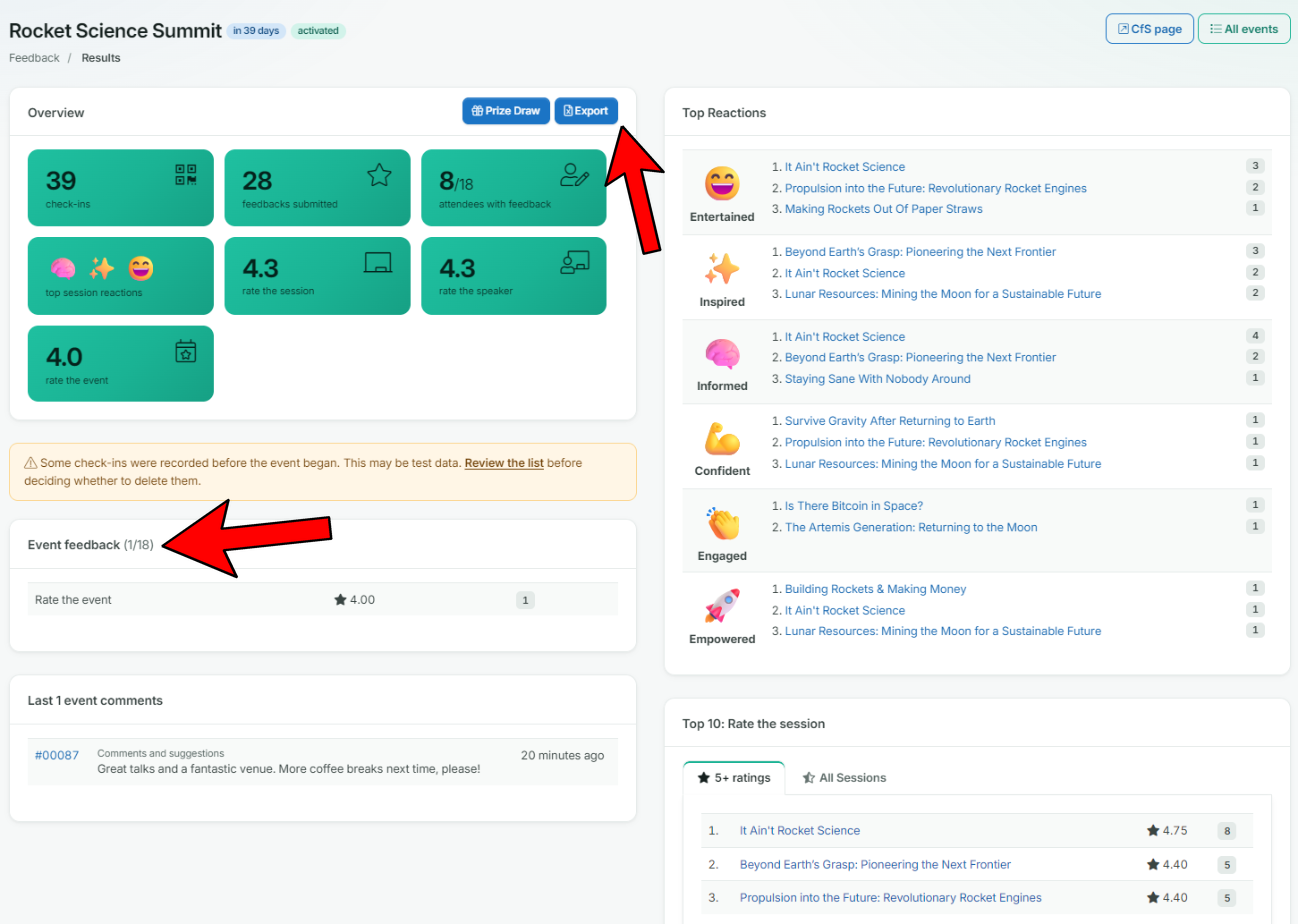
When viewing full feedback results, we provide you with a detailed overview of all feedback collected during your event. The Top Reactions section shows which sessions earned each reaction most often, followed by the Top 10 lists of the highest-rated sessions and top-rated speakers, giving you a good idea of what resonated most with your audience. Only sessions and speakers with 5 or more ratings are included in the top lists. To see everyone, click All Sessions or All Speakers.
Also included is a list of the 20 most recent session feedbacks, showing feedback IDs, session titles, and reactions. You can click a feedback ID to view its activity across all sessions, or select a session to see a detailed breakdown of how, when, and by whom both the session and its speaker were rated.
If event feedback is enabled, the results page also includes an Event feedback section, showing how many attendees rated the event and the average answer to each event question, followed by the latest event comments.
If you'd rather analyze data in an Excel table, simply click the Export button at the top-right corner of the Overview section to download an appropriate file. The Prize Draw button is right next to it.
If any check-ins were recorded before the event started, which can happen if Any time (test mode) was selected as the check-in time in Feedback settings, Sessionize automatically marks them as potential test data and offers the option to delete them. Look for the warning message below the Overview section and click Review the list. You'll be taken to a page listing all such check-ins, where you can remove them in bulk.
Try it out
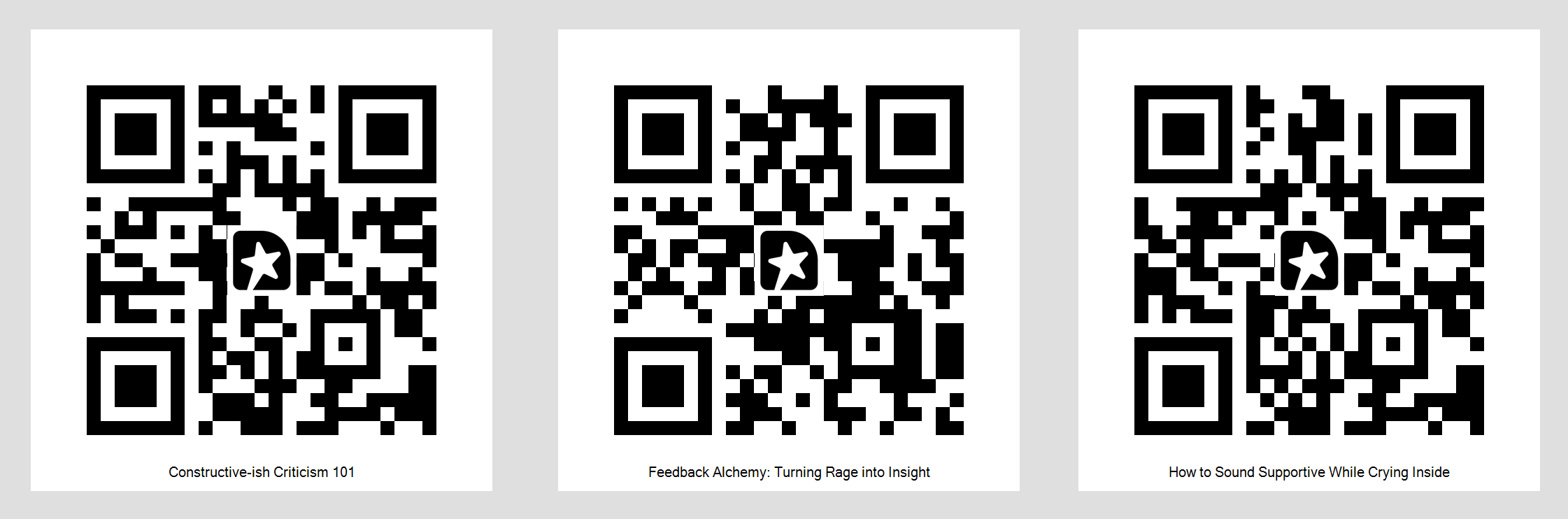
You’re welcome to try out the Feedback feature on RatingCon 3000: Because Feedback Never Sleeps, a fictional, never-ending event created for testing purposes. Scan any of the QR codes above to see how the feedback system works in practice.